A Toast to Music and History: Guest post from Melanie Gall

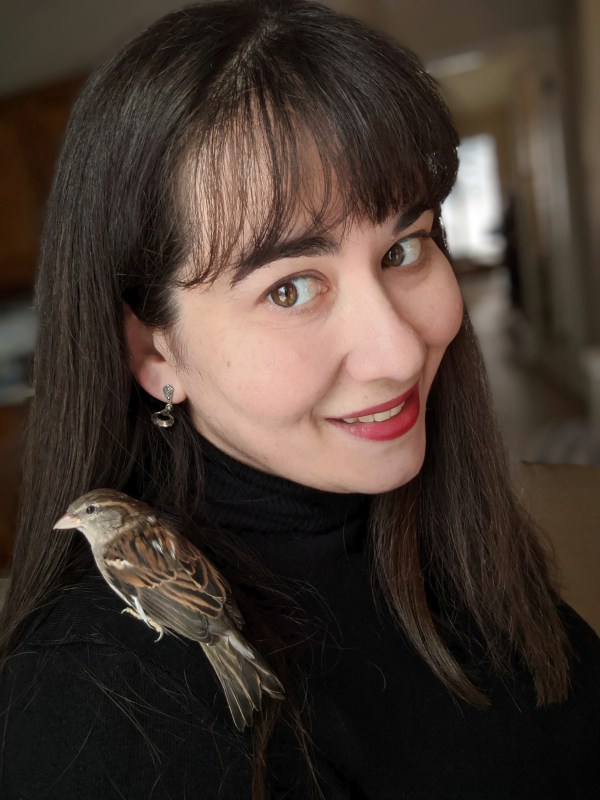
Melanie Gall is a woman of many talents. She is an author, an editor, a historian, a musician, a performer, and more. She tours within and outside of the U.S., putting on shows full of razzle and dazzle and all that jazz: A Toast to Prohibition and A Talent to Amuse: The Noel Coward Story are just the latest. Check out her albums on her website, and preorder her book Deanna Durbin, Judy Garland, and the Golden Age of Hollywood here.

The other day, I was at New York’s Museum of Natural History with a couple of friends. Safely masked and vaxxed, for the first time since the pandemic began, we had a regular girls’ day out. As we wandered through the Hall of Gems and Minerals and then the Hall of Biodiversity, my friend noted that one of the stuffed bears had been in the collection since 1892.

“That’s a hundred and thirty years ago,” she said. “I wonder what New York was like back then?”

Without thinking I replied, “Easy. That’s the year Eddie Cantor was born in the tenements of the Lower East Side. It was when the anti-sparrow protection laws in New York were in full force, and the year Merry Gotham opened on Broadway.”

One friend was a lifelong New Yorker, so she took this all in stride. But the other gave me a look that made me pause. I was suddenly aware that it was a bit odd to have so many seemingly random bits of historic tidbits at the ready. At least, it would seem that way to someone whose writings didn’t center around presenting and preserving history.

You see, I’m a music historian. Over the pandemic, I wrote and secured a book deal for Deanna Durbin, Judy Garland, and the Golden Age of Hollywood, a biography of 1930s Hollywood star Deanna Durbin. And to properly understand and recount life of a forgotten historic figure—in a way that both serves history and presents the material in a compelling and relatable manner—there needs to be context. And to effectively build that context, I immersed myself in the popular culture of the time. And learned a lot of, well, unusual history.

Wondering about millinery trends in the early twentieth century? I got it. Pondering when the first “morality clauses” were introduced into Hollywood contracts? I’m your gal. Feel like hearing about the litigious nature of inventor Thomas Edison? Oh, don’t get me started…. So many random facts, and it’s all just part of the job.

You see, every writer needs the skills and tools to properly serve their genre, and this is something a lot of people don’t sit down and think about. If you’re writing Science Fiction, Fantasy, or any sort of Apocalyptic or Dystopic novel, you need to be able to build a world, defining and remaining consistent with the rules that govern your universe. There’s memoir, where the writer needs to be able to tell a personal story while looking beyond their often still-raw emotions to create a work that is both relatable and marketable. A mystery has to be mysterious. Erotica needs to actually be scintillating. And so on.

I recently edited a manuscript where the writer fully admitted that he had never read any other books in the genre. Not one. My first piece of advice (after “don’t capitalize every word you happen to like in the next draft or I’ll stab myself in the eye with a fork”) was, of course, for him to research the genre. Understand the conventions. Understand what is trite and what is original. And learn what tools you already have or that you need to gain to write the best book possible. And for a history book (and no matter how much I’d love to craft a world with magic gerbils and flying toasters, I know my strength is non-fiction) one of the strongest tools needed is an in-depth knowledge of the history surrounding and influencing the events in the book. Because as a author/historian, I’m not just preserving history, I’m making vital decisions about how it will be remembered. And that is a heavy responsibility.

It’s probably a good thing that there haven’t been any parties for the past two years, because I’d
probably be that person expounding upon the most random things while other people chat about the weather and the most recent Marvel film. But meanwhile, I’ve just finished my second book, which is a history of house sparrows in North America. And oh, you have no idea the crazy things I’ve learned….

Should you create an author website? Yes.

I’ll keep this one short.

Recently, I stopped waffling about whether or not I should create a website and did it. Or, rather, I paid someone else to do it, because I’m from that in-between generation that didn’t grow up with computers but now we’re forced to use them for everything and to be honest, we’re still a little disoriented. (I had a word processor in high school that was, for then, top of the line.)

I dragged my feet about it because I thought, well, I don’t have a book. I’ll make one if I get my collection published. In the meantime, I racked up publications one by one, here and there, in smaller journals and online magazines, anthologies and even on podcasts (two of those forthcoming!). I realized I had plenty to put on a website, BUT, even if I didn’t, it still would have been worth making one. Create a website for the writing life you want, not for the writing life you have? Something like that?

If you create a website, you are basically making yourself “findable” via internet search. You are giving people a way to contact you. You are creating a professional presence, so that WHEN you get published (gotta believe, right?), you already have that piece in place. When you get stories or poems picked up by journals, small or large, you can actually fill in the “website” box on the bio form. And if you’re a blogger (whether it’s shouting into the void or talking to a few people or to many), it gives you a handy place to keep posts.

One of my favorite things about having a website, though, is a thing just for me. I love having one place where all of my publications and little accolades get to live. It’s like a digital creative resume. An online scrapbook. It’s nice to see all of my work together–like the last, oh, decade and a half of writing and revising and submitting has amounted to more than nothing.

If you don’t have money to spend on a website right now, create one for free on WordPress or a similar platform. You can upgrade it later and update it as you go.

(Also, it’s worth noting that there have been very few days with zero website visitors.)

If nothing else, I bet your mom/partner/best friend/dog/cat will think your website is cool.

“Comparisons are a waste of time,” an interview with Ellen Birkett Morris

Award-winning author Ellen Birkett Morris, whose titles include Lost Girls, Abide, and Surrender, shares here her philosophy on writing and the ways in which her career has continued to change and evolve, always coming back to words and their power. Find out more about Ellen, see her list of publications, and check out other interviews at ellenbirketmorris.ink.

Q: One thing I often remind myself and cheer on other writers with is this idea of determination and resilience–belief in one’s work, stubbornness even. Your own publications and projects are impressive in both their number and variety–you write and teach and publish in so many genres. How have you developed persistence? What can you share with others on the topic? 

A: My work is fueled by the fact that I really love to write.  Before I pursued creative writing seriously I worked my way into jobs in journalism and freelance writing that allowed me to write. Once I started to write creatively I learned how hard it is to get published and how much rejection was involved. I started by taking classes and working with a writing group. I made my work the best it could be. Then I reminded myself that each writer brings a different style and level of talent to the work so comparisons are a waste of time. I focus on what I do best. When it comes to rejection I realize that different editors like different things. It isn’t a reflection of my worth as a writer. If I get a no then I revise the work and send it elsewhere. No one is going to work harder than me to get my voice in the world, so I believe deeply in my work.

Q: Do you have a “home genre,” one you are more comfortable with than others? If so, which is it, and what about it appeals to you? 

A: I love the short story form the most and think I am good at it, but poetry is where I began as a writer. Poetry is my home. I love how crystalized poems are, how they capture experience through just the right image and in so few words. As a writer you have to bring the camera in very close in poems so you reflect both an outer world and an inner existence. Each poem is a beautiful puzzle. I have a new chapbook out called Abide from Seven Kitchens Press.

Q: What are your current projects or undertakings, and why are they energizing you right now? 

A: I am currently working on a collection of stories centered on the theme of home. Home is something we can all relate to and it can be looked at through so many different viewpoints.

I am also working on revising novel-length work. I just hired a developmental editor and I can’t wait to learn a lot from him about how to make my novel work better.

Q: If developing and writing and revising are one side of a coin, the other side is submitting and querying and promoting. That second side is the one many of us struggle with–either because we don’t have the skills or the inclination. How have you found a balance between the two over the years, or at least the tools and time needed to market and publicize your work? Do you have any advice for the rest of us? 

A: I had the advantage of working in journalism and getting used to seeing my work in print. I brought that same drive to my creative writing. As a reporter, I was on the receiving end of pitches and got to learn a bit about marketing. I’ve spent over 15 years doing contract public relations for a women’s foundation so that has helped build my promotion skills. I remind myself that my work won’t get published unless I put it in front of an editor. Once it is published it won’t catch reader’s eyes unless I promote it. That keeps me going. It is hard to find the time, but worth it. There are great resources on social media, especially The Writer’s Bridge run by Allison K. Williams and Ashleigh Renard. I also love “Before and After the Book Deal” by Courtney Maum.

“Not Yet”

Published by 50-Word Stories (fiftywordstories.com)

***

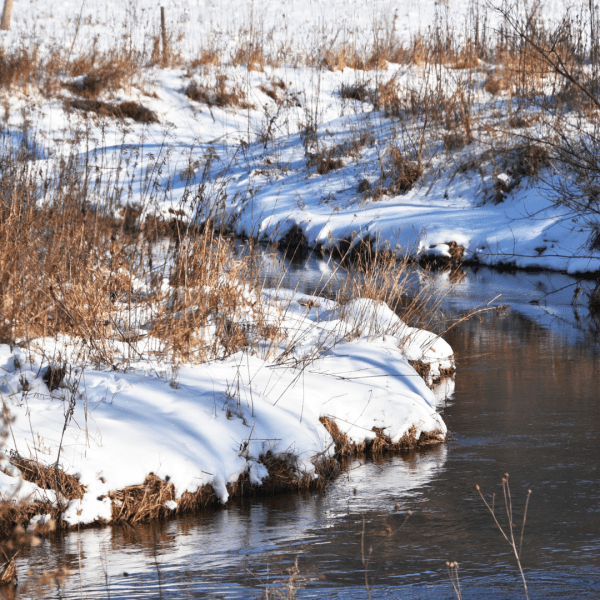
Where the creek bends is as good a place as any, pills in your pocket, short note signed. Cold in January, lonely too, but that feels right. Until you notice those bare stalks are forsythia, dried seed heads—rudbeckia? Ironweed? And you think you can wait, like them, for spring.

A WordPress.com Website.

Up ↑