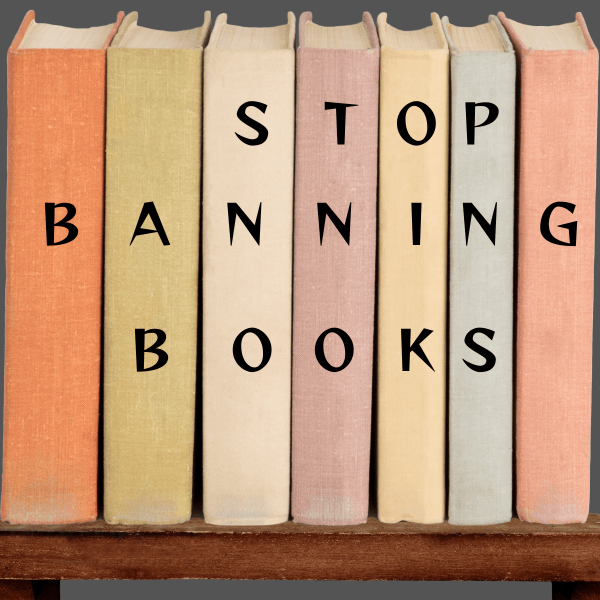
Once upon a time, I had a dusty utility room with shelves full of books. These ranged from horror to fantasy to science fiction–genre fiction, the types of stories which allow us to explore other worlds, incredible circumstances, and alternate perspectives from characters thrust into unique situations.
Ours is a universe of colors and perspectives, and in exploring it with an open mind, we may gain another slice of the larger picture, the grand palette that comprises the world and the imagination.
Diversity of background and perspective enriches the history and scope of storytelling. We all have stories, factual and fictional, and it may be that we are indeed destined to become stories, as indicated by that line from Margaret Atwood’s Moral Disorder.
Some seek to control the narrative, wishing to eliminate those stories that bring discomfort or imbue confidence in dissenting narratives, and to silence the storytellers who embolden and defy. Classic examples of banned books include those from and depicting Black authors and culture, those told from the viewpoints of women oppressed by patriarchal society, those with LGBTQ+ content, and works challenging society’s shortcomings by a myriad of approaches, including dystopian fiction.
Speaking again of Margaret Atwood, The Handmaid’s Tale is one such offering, banned for sexual content, violence, profanity, and a perceived anti-religious message. Another is Thirteen Reasons Why, which broaches the topics of sexual assault and suicide, situations that exist in our own world and must be discussed to be addressed, whether by conversation or through the vehicle of fiction.
Here we have the reality of fiction and its challenges—as storytellers, readers, and individuals, we are exposed to an uncomfortable world with awful truths, and ignoring those issues does not dispel them. Seeking to squash the conversation and avoid these topics merely contributes to the issues which inspired them, in many cases.
As readers, we deserve to have the stories that not only appeal to us, but those that challenge us, should we dare to explore uncomfortable themes.
In watching the final season of Stranger Things, I was reminded of one of my early influences as an author, Madeleine L’Engle’s A Wrinkle in Time. Often described as a work of young adult science fantasy, I’ve found it to be a blend of science fiction, fantasy, and horror as well, geared toward younger readers and weaving a remarkable tale across worlds and dimensions.
Though written by a Christian author, the book was challenged by Christian fundamentalists for its scientific angles, perceived occult elements, and its strong, independent female protagonist, and has been removed from schools and libraries since its release in 1962. Despite this, the book earned the Newbery Medal, the Sequoyah Children’s Book Award, and the Lewis Carroll Shelf Award, but a few indications of many that a book worth banning is indeed a book worth reading.
Another example is Ray Bradbury’s Fahrenheit 451, which explores the very concept of censorship and book banning imposed by a tyrannical government. Should it be any surprise that this dystopian work has also been banned for its themes, or should it be unexpected that individuality and resistance stand firm at the core of so many banned books, past and present?
As readers, we have choices. Consider that those who would steal our choices are not allies, but opposition seeking to wrest the power of imagination and conversation from us, the readers, and the writers as well, because we will not be silent.
Dissenting voices have the right to speak, regardless of those who disagree.
Reading is its own form of resistance, in the end, and whether by requesting banned books from your local library or bookstore, discussing these works and their themes with your local book club or friends, or simply reading what you will, I urge you—read and resist.
Tommy B. Smith is a writer of horror and dark fiction, author of The Mourner’s Cradle, Poisonous, and Anybody Want to Play WAR? as well as the short story collection Pieces of Chaos. A two-time Imadjinn Award-winning author and 2023 Michael Knost Wings Award nominee, his work has been featured in numerous magazines and anthologies to span the years.
He has previously worked with Morpheus Tales as editor of the Dark Sorcery and Urban Horror special issues of the magazine.
Road Between Worlds: A Horror Author’s Chronicle is a documentary of the creative journey, that of the author and others including writers, artists, and filmmakers of varying backgrounds and persuasions. It begins in a cemetery and spans the book tour of 2018 across eleven cities.
In 2019, The Mourner’s Cradle received the Imadjinn Award for best horror novel, and in 2020, Anybody Want to Play WAR? for best literary fiction novel.
He currently resides in Fort Smith, Arkansas with his wife and five cats.
Learn more by visiting his website.

