On not self-rejecting…

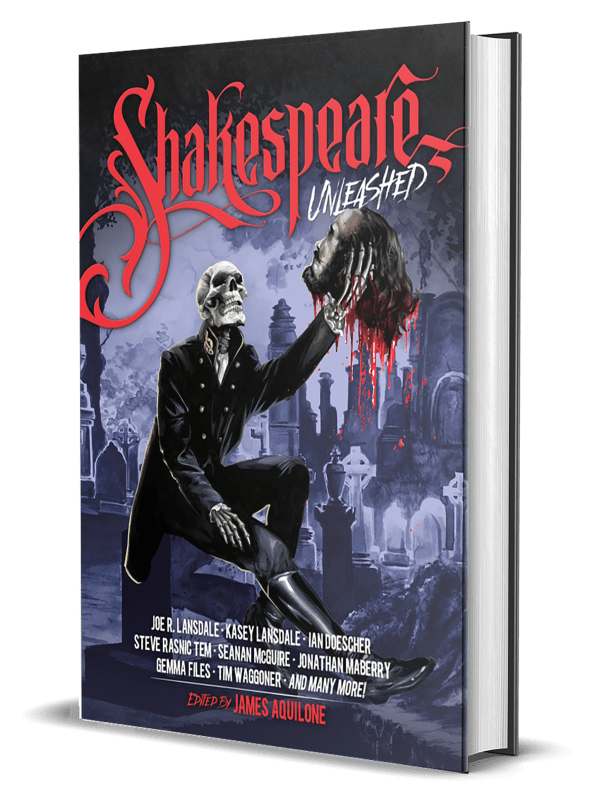
Photo: Shakespeare Unleashed, edited by James Aquilone for Monstrous Books and Crystal Lake Publishing, which I submitted to AND THEY LET ME IN!

It’s mid March, the sun is shining, I’m in a relatively good mood, and I’m thinking about self-rejecting–or, more accurately, NOT self-rejecting.

I hear a lot, and I used to say sometimes, “I’m not going to bother submitting to that. I’ll never get in.” Now I’m like, “How do YOU know? You aren’t the editor. Submit that story!” (Or poem or essay or manuscript.)

Have you ever submitted a story to a submissions call that seemed like it was MADE for your story? Like they were a perfect match–everything the editors wanted, your story had? And then, your story got rejected anyway? And you were thinking, WTF, I gave you everything! Yeah. I think we’ve all been there.

So here’s the thing: IT WORKS THE OTHER WAY AROUND, TOO.

You might think your piece isn’t “good enough,” or that it doesn’t quite fit a theme, or does in a WAY, but not in all the ways. Maybe you think the editor has a pronounced different style or aesthetic.

But. Like. What if your piece is just the variety they need? What if they don’t have that narrative arc or subject or theme in any of the other stories they chose?

Jenny Kiefer, author of That Wretched Valley (Quirk Books, 2024) and owner of the popular Kentucky horror bookshop Butcher Cabin Books, has gotten several publications with just that line of though. “Honestly most of my acceptances have been things where I just sent a story to a market I didn’t think would like it. I’ve experienced rejections more when I’ve thought it was perfect for the place I submitted to. I was recently accepted to F&SF for a body horror story–I would have never thought they would like it, but I submitted anyway.”

Especially if there is no submission fee (and whoa should I write a post just about submission fees), SEND IT. There is, for real, no risk. And, see blog post about #100rejections for why we should be trying to send out enough submissions to rack up 100 Rs by the end of the year, be they form or personal.

Rae Knowles, whose novel The Stradivarius will be out soon with Brigid’s Gate Press, knows this, too. “There was a pro-pay call that I knew was getting a ton of submissions,” she said. “It was outside of my usual genre, and I wrote a story, tweaked it, tweaked it, and tweaked it some more. I stressed so much, feeling it had NO chance of being accepted, but on one of the last days of the submission window, decided to send it in. To my SHOCK, it was accepted. Lesson learned, never self-reject!”

Author and editor Alexis DuBon keeps a hand over the mouth of her inner critic:

“Try to think about whose voice it is telling you your story doesn’t work,” she recommended. “Is it your own? Or is the reason you’re hesitant something other than ‘Yeah, this story about biblically accurate angels probably doesn’t fit this call about swamp monsters.’ We bring a lot of baggage into decisions where it doesn’t belong.”

Waylon Jordan, author, horror journalist, and EIC of Off Limits Press, talks over his self-rejection impulses; he drowns them out. “I don’t know how many times I’ve had to tell myself, ‘You have just as much right to submit your story as anyone else.’ I see authors invited to calls and talk myself out or submitting because I’m not ‘in their league.’ The imposter syndrome is alive and well and I deal with it all the time. The other thing I have to tell myself is: I’m not Stephen King (or whoever famous author your want to insert). I can’t do what he does. But you know what? He can’t do what I can. Someone wants to read what I can give them.”

Author Katherine Silva (The Wild Oblivion series) picks what she submits to carefully–if she needs to get other things done, or needs to take time for herself, she’ll skip a sub call. So, ask yourself: Are you self-rejecting because of a low-self-esteem day, or, do you just have other things that need to come first?

Zach Rosenberg, author of the forthcoming Hungers As Old As This Land, gives himself a pep talk: “This is a story only you can tell and it should be told.”

Also, related to the topic self-rejection, remember that if you burn yourself out or get too discouraged by a particularly rough R (or a volley of them), and you decide to QUIT writing altogether, you are self-rejecting from the entire world of publishing.

Kiefer has a way to manage that feedback–because yes, you will get more rejections than acceptances. That’s just reality. But, if you don’t want to see those Rs every day, do what she does:

“What did help [with rejections] though was to set up a separate author email address, so I could control how much I saw. At one point I even had a friend who would monitor it and only tell me good news so I could submit without having to see the waves of rejections.”

Final decisions on publication come down to the EIC or a small team. So, it’s not like the industry voted on your work. It’s one person’s subjective decision, in most cases. And subjectivity could mean anything: maybe they’re sick of zombies or whatever tropes your narrative features. Maybe they already have something similar for that issue or anthology. Maybe they just–and this sucks, but it’s also OKAY–didn’t’ like your story enough to put it in.

But someone else will.

Unless you don’t send it to them because you self-reject.

I guess what it comes down to is this, which I said to more than one struggling writing friend: Does writing (and everything that comes with the process–drafing and revision and feedbacking and submissions and rejections) bring you more pain or more joy?

If it’s the first one, go ahead and quit. Life is short. Find something you like better.

But if it’s the second one…

DRAFT, REVISE, EDIT, and SEND IT!!

OMG I’m Writing a Novel

Photo of shark by freepik.com

During NaNoWriMo 2022, I wrote 20,000 words of absolute crap. But for the first time, I took an idea that had been swirling around my brain for a year and put some of it down on paper (the screen).

In December, I returned to an almost-finished novella and revised/edited/proofread hard, getting that sent out before the year’s final clock struck Done. Which meant that in 2023, I was ready to focus almost entirely on that pile-of-shit novel draft. (And Mae Murray’s goal-setting workshop in early January was great!) I got to work. I revised. I deleted (I deleted SO MUCH). I rewrote. I made note cards, which ended up being so helpful.

I signed up for a little writing retreat at the campus where I teach (thank you, Dawn!), and made quick progress. By the time that retreat ended, I had 70-ish pages of worthwhile draft. Not final, but promising.

Then, in an online horror group (sorry can’t share that, it’s Top Secret), I asked if anyone would novel-buddy with me. Because asking someone to slog through your novel draft with you is a HUGE ask–so someone else asking you to do the same makes the whole thing less heavy, and you don’t have to give anyone your first-born child, or in my case, your beloved chubby beagle. It’s a bartering of slogging. And I got a novel buddy! (Thank you, CO!)

To my utter amazement, he LIKED WHAT I HAD. He said it was interesting, engaging, and that the pacing worked. In fact, after he read the chunk I sent him (about 50 pages), his only suggestions were additions and expansions–which was wonderful, because the thing with novels is that you need a lot of words in them, and that can be tricky (you wouldn’t think it would be tricky for me–most of the time I can’t shut the fork up). I added a short scene near the beginning and expanded two others. Then I moved forward, revised some more, and I can’t wait to send him the next chunk–but, I want to hit 100 pages of decent material before I do. Then I will be at roughly the halfway point with the manuscript–I will end up with something like a 60k-word novel. It will not be a 400-pager–I’m a Chatty Cathy, but not that chatty.

In Mae’s workshop on Jan. 6, I wrote out a timeline–goal months by which I would have so many chapters done, because at that time, I thought I would try to get the novel done (a spiffy draft to send out to publishers for consideration) by the end of the year.

Now I have moved up those goals. I want to finish this sucker by the end of the summer. And I think I will actually do it. And that thought has had me floating around for a week.

I’m writing a novel.

I’m writing a novel.

I’m writing a novel.

(And it’s the first of a trilogy.)

Hard Work Works (thank you 2022!)

This is basically a “part two” to my recent “Failing at NaNoWriMo & Winning at Rejections” post.

This year (2022) has been pretty incredible. I’ve met dozens of cool writers, joined writers’ groups, and I’ve gotten more acceptances than I have in several past years combined. What made this magic? I worked my ASS off.

Which is really good news. That there is nothing ethereal or fate based that leads to writing success. Just good old-fashioned sweat and tears. And that also means there are no shortcuts (at least not for most folks).

Success is relative, I know. And people take different paths to the same or similar places. Mine went like this:

-Joined the Horror Writers Association in early 2022 (March?) after earning an Honorable Mention in the 2021 Etched Onyx Winter Contest. That story, “A Bargain at Twice the Price,” (a ghost story) earned enough that I qualified to join the HWA as an Affiliate Member.

-After joining, figured “What the hell? I’ll go to StokerCon” (May). I knew no one. I mean no one. But I had the best time there, and met so many wonderful people, from big-name authors like Brian Keene to other people like me, struggling to find a path.

-Was so inspired by StokerCon—the people and the presentations and the panels—that I decided on the way home to quit my second job as the managing editor of Leapfrog Press. I deserved time to write, and my writing deserved my time and attention. This realization hit me with a stunning clarity at about midnight on the plane from Atlanta to Buffalo.

-Wrote. Wrote and wrote and wrote. I produced so much new content in 2022, especially over the summer, when I was finishing up with Leapfrog and before the fall semester started (I teach at SUNY Fredonia).

-But I didn’t just write. I joined a workshop with other writers in the horror community who ended up with me the same way folks end up owning cats—I was dumb and hungry; they were kind. I started another workshop with a few people I’d met at StokerCon. I workshopped with other students from Lindsay Merbaum’s independent studies (we are her happy little cult members). And I continued to workshop with my friends from grad school. Outside of those groups, I also beta read for people who needed it and joined social media groups of people with similar goals. I learned so much from those other writers, by reading their work, getting feedback on my own stuff, and sharing our successes and challenges.

-Took every chance I got for affordable independent education. With Lindsay, I learned about Feminist Horror and Queer Speculative Realism, and more recently, witches. I’ll be taking another independent study with her in 2023 on ghosts. (If you are interested in joining us, let me know and I’ll connect you with Lindsay.) I paid for a few developmental editing sessions with an awesome writer and friend. I took workshops through Defunkt Magazine’s Litfest. And I went to other one-off virtual workshops and panel discussions I found through Event Brite.

-Along with all that, I submitted a ton, too. My goal for 2020 was #100rejections. That meant I’d have to submit over 100 times, because I had to factor in the likelihood of a few acceptances. I just hit 150 submissions, with about a ten percent acceptance rate. I sailed past 100 rejections. A friend called submitting work “sending tiny missives of hope out into the universe,” and that’s exactly what it feels like.

-Finished my manuscript of speculative and slipstream stories—you can call it quiet horror or eerie horror or feminist horror or dark fiction. It’s a collection of 13 stories, and I’m currently trying to find a home for it. Some of those stories patiently waited to be revised for ten years. I’m so glad I kept my faith in them.

-I also put together a poetry chapbook manuscript, after being surprised I had enough poems to do so. (I’m primarily a fiction writer.) But I saw a chapbook contest being advertised by Mausoleum Press, and I took a chance. My poetry made their shortlist, but did not ultimately get selected. Getting that far, though, told me my poems had merit. That was further proved by Nocturne Magazine nominating my poem “Still Love” for a Pushcart Prize. The second press that got my poetry manuscript said it came close. Then I got an acceptance! More on that when I have details to share.

-There were so many “firsts” for me in 2022. In addition to being nominated for the Pushcart Prize, I was nominated for a teaching award at work. I was invited to be a part of an upcoming anthology-magazine hybrid (and my story was accepted). I was invited to be a guest on a podcast (still in the works, so no details right now). I made it into a dream anthology that I thought was such a longshot (Shakespeare Unleashed). And of course, there’s the to-be-published poetry collection that I’m so happy about.

-Oh! And I started and abandoned a novella, then started another novella that I’m happy with (and still need to finish), and the novel notes I mentioned before from my first NaNoWriMo.

I’ve got big hopes for 2023. I hope to get my collection picked up. I hope to finish my novella (spicy ghosty gothic), “Forgive Us Our Trespasses.” I hope to make lots of progress on the novel I tried to start during NaNoWriMo.

And I hope I will get another #100rejections.

Happy Writing to you all!

“Dear Editor, thank you for considering…”

(Image: www.freepik.com)

I have 42 submissions out.

I want to say something about Schrodinger’s cat here, but I’m shit at anything to do with math or science, and would probably screw it up. My point is that I have 42 unknowns floating in the universe. They could get accepted, rejected, or languish in an abandoned email folder.

(Running total for the year is 70-something, with a handful of acceptances. Your girl can take rejection.)

All I want to do is write and revise, or chat with my writer friends about writing and revising, or read cool books. Every sub call sparks an idea, several of which I actually try to draft because I’m finally making time for it. I stay up late, ignore other obligations, and put off chores. I work with a mentor, enroll in classes and workshops, and have applied for a poetry scholarship. I have one story ready to go on the first, and another under construction for a different sub call.

And ideas for 4-5 book-length manuscripts, that I’ll write fuck-knows-when.

(This week, I’ve spent head time with a monster in a hotel, two women flirting over a fresh corpse, an amorous portrait, an Irish sea creature, and other creeps, I guess making me the biggest creep of the bunch.)

I hope there’s quality in all this quantity.

My “become a writer” game plan has three prongs. 1. Write and submit so damn much that by laws of probability, some stuff has to get accepted. 2. Write so much that my craft improves bit by bit. 3. Don’t stop.

Submitting work to magazines and anthologies is a demonstration of hope and stubbornness (and once or twice for me, spite). At this point, stubborness is in the lead.

Go, stubborness, go.

Writing Ninety-Nine Fire Hoops: Guest Post from Allison Hong Merrill

The blog took a spring break, but is back with Allison Hong Merrill, author of the bestselling and award-winning memoir Ninety-Nine Fire Hoops. Here, Allison tells us about the process of rebuilding and restructuring her memoir after receiving beta reader feedback, and shares some of her best writing tips. Thank you, Allison!

When reading a book, I like to see the hook, setting, character, and conflicts of the story set up within the first few pages. So I make sure to offer my reader the same gift.

Originally, my memoir, Ninety-Nine Fire Hoops, was written in a nonlinear structure. But several of my beta readers suggested that I revamp the entire manuscript and change the narrative into a chronological timeline, so I did. It was a huge undertaking. The manuscript went through twelve full revisions. On average, each pass took two weeks. And when I say, “I revamped the entire manuscript,” I mean I even changed the title. It went from Grafted Mandarin to Ninety-Nine Fire Hoops because the new structure is in ninety-nine short sections. But even after this major overhaul and subsequent edits, the first ten pages remained unchanged from the first draft to the published book. It’s because the inciting incident, setting, main characters, and conflicts of the story are established within those pages.

When writing a book, I like to do the following:

1. Imagine my book adapted into a film, then I write scenes and dialogue as if describing them from the movie.

2. Do book research and save images on pinterest.com to create a mood board for reference. For a visual person like myself, this method works really well.

3. I make myself a different writing-related promise and a reward every week. This is not a goal; it’s a promise. A goal is for reference, a promise is to be kept. Some examples of my promises are: write an hour every day, revise a chapter, create social media content. If I keep my promise that week, I reward myself. My top three rewards are: watch a movie, buy a cute notebook, sleep in on Sunday morning. If, for any reason, I fail to keep my promise, then I give myself a second chance in the following week to restore my integrity and try again. Sometimes it’s necessary to promise myself to practice the art of self-care. I’ll take a week off from writing to recharge my creative energy. I work with another writer as accountability sisters. We check in every Saturday morning to support each other and to celebrate our victories, big and small.

4. I’m a memoirist. To dive deeper into my memory, I keep a tin box of NIVEA crème on my desk. Its distinctive scent takes me back to my childhood years and, from there, I get to explore the past and find inspirations for my writing projects. Smell triggers memory. If you’re writing about your past, please consider keeping something (lotion, soap, shampoo, perfume, scented candle, essential oil, etc.) on your desk with a scent that reminds you of the olden days.

5. Because I’m a visual person, instead of setting a timer on my phone, I flip over a sixty-minute hourglass on my desk to help me stay focused on one-uninterrupted-hour of writing.

I hope you find these tips helpful. Happy writing!

Juggling WIPs

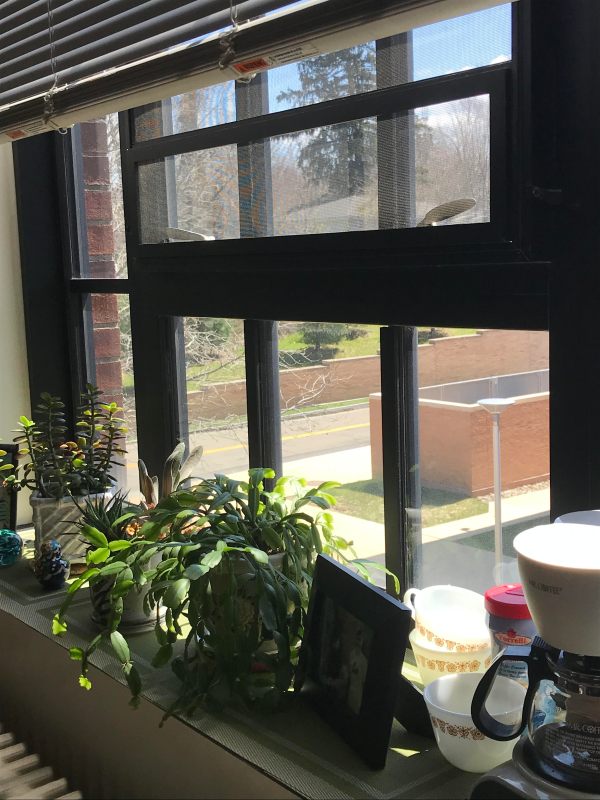
The view from my office window.

This is not trying to be instructional. This is more or less a rambling cry for help.

How do you decide what to work on and when, if you have lots of writing projects started? Especially if demands in your life are all grabbing at your legs like toddlers? (Some of you likely have actual toddlers grabbing at your legs.) I have to get a lesson plan ready for Intro to CW class at 4 today and proofread a typeset novel for my other job. But I’m distracted by thoughts of the last two stories I need to finish for my speculative fiction collection, and the poem that’s almost done but not quite, and the essay about writing I started yesterday that today I’m thinking might be garbage (and if it is, how much time I spent on it).

I also saw a sub call yesterday for ghost stories (Can I write one by the end of May?) and a horror poetry collection that doesn’t accept simsubs (Where do I have that one poem out? Must remember to check my sub list). There are several titles I’m trying to read before StokerCon, too, so, of course, add reading to the to-do list.

How do you focus? How do you organize your projects? Do you have an order of importance, and if so, is that by deadline or by interest? I’m excited about everything, and I love having a lot going on, but instead of doing any of it, I’m staring out the window.

Emissaries

Published on 50-Word Stories

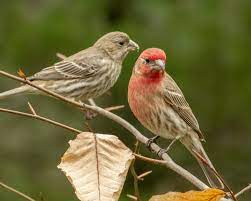
Photo from Cornell’s feederwatch.org.

They first came during Covid, the only bright spot of lockdown, one brown head, one red, building their nest in a faded holiday wreath. Every morning I said hello and made small talk, maybe to remind myself I still knew how, and the house finches cocked their heads and listened.

Should you create an author website? Yes.

I’ll keep this one short.

Recently, I stopped waffling about whether or not I should create a website and did it. Or, rather, I paid someone else to do it, because I’m from that in-between generation that didn’t grow up with computers but now we’re forced to use them for everything and to be honest, we’re still a little disoriented. (I had a word processor in high school that was, for then, top of the line.)

I dragged my feet about it because I thought, well, I don’t have a book. I’ll make one if I get my collection published. In the meantime, I racked up publications one by one, here and there, in smaller journals and online magazines, anthologies and even on podcasts (two of those forthcoming!). I realized I had plenty to put on a website, BUT, even if I didn’t, it still would have been worth making one. Create a website for the writing life you want, not for the writing life you have? Something like that?

If you create a website, you are basically making yourself “findable” via internet search. You are giving people a way to contact you. You are creating a professional presence, so that WHEN you get published (gotta believe, right?), you already have that piece in place. When you get stories or poems picked up by journals, small or large, you can actually fill in the “website” box on the bio form. And if you’re a blogger (whether it’s shouting into the void or talking to a few people or to many), it gives you a handy place to keep posts.

One of my favorite things about having a website, though, is a thing just for me. I love having one place where all of my publications and little accolades get to live. It’s like a digital creative resume. An online scrapbook. It’s nice to see all of my work together–like the last, oh, decade and a half of writing and revising and submitting has amounted to more than nothing.

If you don’t have money to spend on a website right now, create one for free on WordPress or a similar platform. You can upgrade it later and update it as you go.

(Also, it’s worth noting that there have been very few days with zero website visitors.)

If nothing else, I bet your mom/partner/best friend/dog/cat will think your website is cool.

“A Bargain at Twice the Price”

Published by Etched Onyx Magazine by Onyx Publications. Honorable Mention in the Winter Contest, 2021. Onyx Publications

If you had known Beth would leave two months after the closing date, you never would have bought the shoebox starter home on Oak View Drive in a sleepy commuter town with one shitty pizza joint and two convenience stores and nothing to do on weeknights but hang out at the rat-hole townie bar drinking too much bottom-shelf whiskey. [Click link for more.]

In My Room: Guest Post from Lara Tupper

Lara Tupper is the author of A Thousand and One Nights, Off Island, and Amphibians. She is also an accomplished folk singer. Photo by Elaina Mortali.

“All of humanity’s problems stem from man’s inability to sit quietly in a room alone.”

– Blaise Pascal, French philosopher

I learned, from an early age, how to stay in my bedroom. Not always quietly, but alone. As my parents read in silence or watched Masterpiece Theater, I closed my bedroom door and tried to draw shapes with crayons. I made a collage of one wall, taping aspirational slogans and faces from Guess Jeans ads—those pouty models of the 80s. I acquired dozens of journals and filled them. I listened to Godspell and A Chorus Line on a record player from Sears and memorized every note. 

I was an only child, as you may have guessed. Was I lonely? Other children confused me. When forced to interact at school, I didn’t understand their jokes or secret handshakes. They were skilled in starting friendships and chasing balls around in gym. I knew how to talk to adults and belt out “Day By Day.” 

And so my room was the most comfortable space. I was allowed to be introspective and odd there, excellent circumstances for a writer in training. I continued to play the musicals on loop—I couldn’t seem to stop. They brought out something the journals didn’t. Joy, I’d call it now. 

I kept listening through high school and beyond, though I understood my soundtracks were uncool. In my college music library I disappeared with headphones and scratchy LPs for hours at a time. I became a jazz fan, a radio DJ. Then I found the courage to audition for an a cappella group called Quasimodal. I started to think of myself as a singer. I made this part of my vocation too. 

Little has changed, by which I mean I’d rather watch tick, tick…BOOM! than anything else on Netflix. I like to unwind by singing Simon and Garfunkel harmonies with my husband on the couch. It’s the necessary antidote to a writing life. Singing with others gets me out of myself. It has to, because it’s a collaborative effort. 

It provides instant gratification too. When performing live, I can gauge the audience reaction and understand if I’ve hit the mark. Or not.

Writing is the opposite. It’s the delicious, maddening strain of working and reworking the sounds in my head until I have no sense of them anymore. And there’s no guarantee the words will be read.

I require both modes to sustain my sanity now. I need the quiet room to hear myself think but I can’t stay there, alone, for too long. I need the small stage, or couch, to let myself be heard.

I give this prompt in my writing classes: Describe your childhood room. There’s good material there. The secrets under the bed, the tchotchkes on the shelf, the view out the window, the sounds of grown ups in rooms beyond. It’s a space that reveals something crucial about us, if we care to look. It’s the basis of who we become. 

A WordPress.com Website.

Up ↑