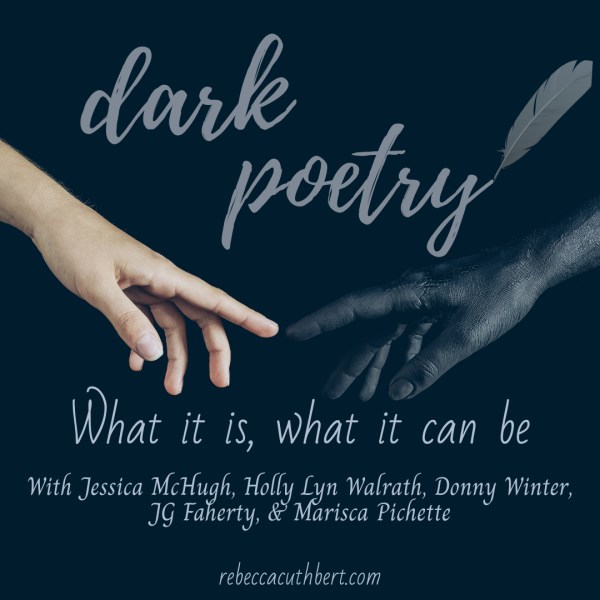
Dark Poetry: What it is, what it can be

With thoughts from Jessica McHugh, Holly Lyn Walrath, Donny Winter, Marisca Pichette, and JG Faherty

Definitions

The term “dark poetry” is vague and amorphous—try to pin it down, and it will slip away. Some people may find that frustrating, but writers (like me, like those who shared their thoughts with me), love the freedom of the term. While details of our individual definitions may differ, we agree on the overall concept: dark poetry is, well, dark.

Jessica McHugh, a 2x Bram Stoker Award-nominated poet (The Quiet Ways I Destroy You), says that dark poetry falls into a few categories:

“The explicitly dark, which borders and blends with horror poetry, maintaining a scary or unsettling vibe throughout. The surprisingly dark, which lulls the reader into a false sense of security before pulling out the rug. The emotionally dark, which tackles rough but relatable topics like death, isolation, mental illness, etc. through chilling metaphors and imagery.”

“But,” she says, “they also intersect and borrow conventions from each other. I’ve found gothic poetry can often embody many of these themes and techniques in one piece.”

Holly Lyn Walrath, author of Numinous Stones and publisher at Interstellar Flight Press, breaks her definition into two categories:

“One is horror focused and draws on the tropes of horror, with a goal of creating fear/ick in the reader. The other draws on dark themes, like death, depression/anxiety, trauma, violence, etc.”

Like McHugh, though, she says “Betwixt the two is a lot of overlap.”

Donny Winter (Feats of Alchemy) defines it more as one large subgenre with a lot of sub-subgenres:

“I’ve always defined dark poetry as an over-arching genre possessing messages, themes, and imagery related to what many may consider the darker side of human experience. Some sub-genres may include dystopian, cyberpunk, sci-fi, horror, gothic, nature, and many others.”

Author of Songs in the Key of Death JG Faherty explains that for him, dark poetry “[…] focuses on creating an unsettling mood. The associated emotions might be unease, concern, depression, anxiety, and yes, even fear. Dark poetry can make you think (a science fiction poem about the dangers of AI) or make you weep (a gothic romance poem about someone losing their lover to a tragedy. Or being haunted by their ghost!). Some of my poems in my collection Songs in the Key of Death deal with evil dentists, brain parasites, suicidal thoughts, alien invasions, serial killers, body dysmorphia, and the end of the world. It is the subject matter that is dark in dark poetry, but there doesn’t need to be anything horrific or supernatural about it.”

Conventions

As for qualifications, poet Marisca Pichette (Rivers In Your Skin, Sirens In Your Hair) says they’re pretty simple: “I think the qualifications for dark poetry are very basic: make the reader uncomfortable, lead them into shadow, and craft an image that disturbs in some way. There are the obvious themes of death, trauma, grief, and anger—but dark poetry can really take any form. It can be an empty room, whispering of something that was. It can be a throat raw from shouting, eyes red from crying. It can be a question posed without answer. That’s what I love about dark poetry.”

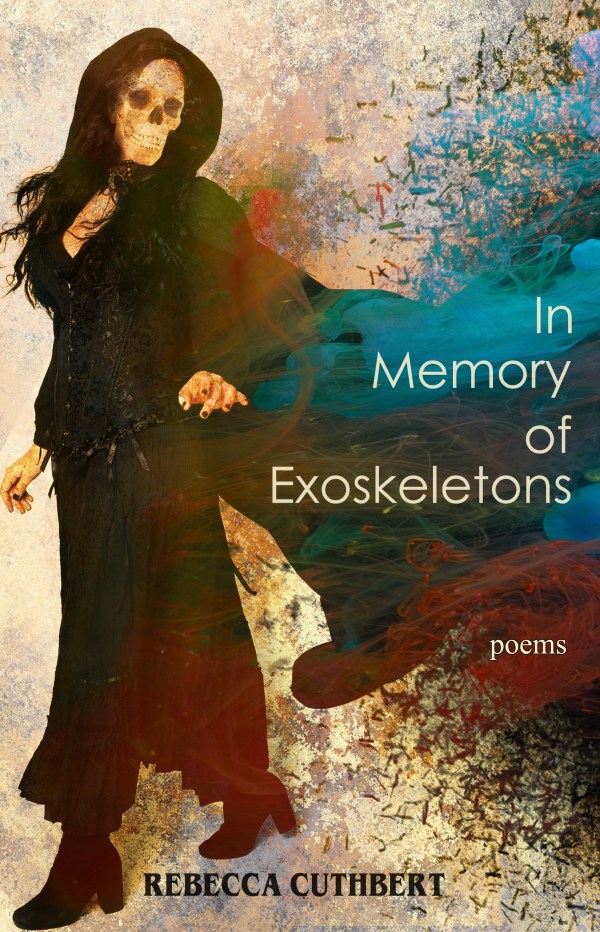
As for myself (Rebecca Cuthbert, In Memory of Exoskeletons), I think the vastness of the subgenre of dark poetry makes it difficult to call out necessary, or even likely conventions. Some of my poems in my first collection are about the topics mentioned: grief, depression, body image issues, trauma. Other topics are the pain that comes with hope, the disappointment a former self may find in a current self, and the unfairness of “No Dog Walking” signs in cemeteries.

Inspiration

As for why I write it, my thoughts align closely with McHugh’s. She says dark poetry is “[…] simply what tumbles out when I’m trying to articulate a certain subject or feeling. That said, I do find the vocabulary of the dark and terrifying provides colors I enjoy painting with most. Evocative, visceral verses. Poetry you can hear and smell, even when you don’t want to. Scenes with teeth that scrape and gnaw the brain long after you’re done reading. It sounds demented, but that’s what sparks artistic joy in me.”

Pichette suffers from the same wonderful condition.

“I can’t seem to write about something without showing the darker nature lurking under the surface,” she says. “Whether real or imagined, you can find horror in just about anything. As for reading dark poetry, I gravitate to it for much the same reasons. Poetry is often confrontational, and I love when a piece sends a shiver through me, or creates that tingling realization that more is being said than I originally thought. Layers are so important in poetry, and darkness is one of the best to explore.”

Winter writes dark poetry because he’s able to share his story, the good parts and difficult parts. “Additionally,” he says, “I think dark poetry is a more powerful vehicle for creating social commentaries about societal atrocities, considering it roots itself in that vulnerability.” And from the other side, “[R]eading dark poetry [is great] because experiencing the vulnerability can be incredibly cathartic, especially if you’ve experienced similar trauma. Other peoples’ healing experiences, including the darker aspects, can act as roadmaps for our own healing.”

Misconceptions

“I think people imagine all dark poetry as Edgar Allan Poe-esque descents into madness and self-loathing, which is obviously not true,” says Pichette. “The best dark poetry grapples with something very real, and doesn’t settle for shock value. In all writing, we’re striving to go deeper, view problems from new angles and imagine other solutions. Rather than simply offering a known horror, the best work spurs some kind of epiphany. What if Poe’s Raven wasn’t a bird, but a manipulative partner, orchestrating the narrator’s downfall? Such a revision can shed light on modern issues and give the reader a different thrill as the truth is revealed.”

Me again (Cuthbert). I’m going to say something here others may very well disagree with: I think dark poetry can be kinda happy, and not just for those aspects like catharsis and connection. Some dark poems are farewell letters, and there’s joy in saying goodbye. Others are funny—in my next hybrid collection (Self-Made Monsters, 2024), I have a feminist horror poem called “Mistress Meg O’Malley,” about a vampire sex worker who definitely eats people, that sort of cracks me up. But, I guess one person’s emotional disturbance is another person’s sick joke.

You don’t have to take our word(s) for any of this, though. If you’re interested in dark poetry, read a bunch of it. If you like it, emulate what you see, then revise it to be something entirely yours.

A few recommendations…

The Raven” by Edgar Allan Poe

Goblin Market” by Christina Rossetti

Rainy Night” by Dorothy Parker

Voices of the Dusk” by Fenton Johnson

The End of Little Dreams” by Julia August

History of Orconectes” by Dyani Sabin

Crow Daughter” by Gabriela Avelino

Submission Etiquette for Writers & Editors

Most writers and editors have received more than their fair share of less-than-polite treatment: from getting ghosted to being cursed in social media posts to finding angry email replies in their inboxes. Recently, I have been stunned by a mean rejection email and disappointed by the sound of crickets in the wake of follow-up queries. I thought it would be helpful to ask seasoned writers and editors for their thoughts, in hopes that this little blog post can help us all be kinder to one another. (Also, reading this is better than learning through trial and error, as I have!)

Manners for Writers:

Follow submissions guidelines. Yes, we all make mistakes, myself included–overlooking a detail or not double-checking the news from one of those submissions round-ups–but do make an effort to read the rules and follow them.

From Leon Perniciaro, Editor of Haven Spec Magazine and reader for Uncanny Magazine: “[M]ake sure you follow our guidelines, whether for Uncanny or Haven Spec, and make sure that the cover letter is addressed to the right person and that you get people’s names and pronouns right.”

Do not respond to rejections, unless it’s a “Revise & Resubmit” situation. Take the R and move on.

From Alexis DuBon, co-editor of No Trouble at All by Cursed Morsels Press: “Please don’t respond to rejections. Don’t ask why. Don’t ask for feedback that wasn’t offered. Once a story is rejected, the interaction is over and your story is free to send back out. If you’re curious how it could be improved, seek out beta readers who will give you honest and helpful suggestions. This is not the job of an editor who has rejected hundreds of other stories that they also haven’t given feedback on. It’s only fair.”

From Evelyn Freeling, editor of Les Petites Morts by Ghost Orchid Press: “[Responding to rejections with] demands about why your story was rejected, why it took so long to get a response, etc.–isn’t okay. At the end of the day, most editors also have day jobs so be respectful of their time and energy.”

And if you do get an R&R, appreciate it for the opportunity that it is.

Perniciaro: “If you get a rewrite request, work through the story in good faith (editors can always tell half-assed edits!) and don’t be afraid to ask clarifying questions.”

-Do not tweet (X?) or post about a specific editor who rejects your story. I admit it was super hard not to publicly post the name of the press who told me writers like me are a dime a dozen. (I absolutely told my friends in a closed thread!) By the next day I didn’t feel so bad about it, and I would have regretted a public tantrum.

DuBon: “Authors, please don’t tag publishers when tweeting about story rejections. It’s super awkward.”

Be patient. If the press or publication states that the wait time might be eight months, give them eight months. Give them nine. Then send a polite query if you still haven’t heard back–and to make it easy on them to answer you, include the title of your submission, its genre, and the date on which you sent it.

From Julie Stevens, editor of Deathcap & Hemlock: “I suppose just being a bit patient with us is my favorite thing. I have batches of acceptances to publish and so sometimes people scheduled later on don’t hear from me for a bit.”

Include reader advisories if and where the editors ask for them. Lots of folks call these “content warnings,” though at work (I teach college creative writing classes) I learned that the word “warning” is problematic, as it implies readers may not be in control of their own feelings and reactions. The word “advisory” is neutral and acknowledges the reader’s power of self.

Send only edited, proofread work. Mistakes and typos distract editors and slow down reading. Swap drafts with writer friends so they can catch what you didn’t.

Ask before announcing. This is another thing I had to learn along the way. Sometimes editors want to make their own big TOC announcements, or perhaps they haven’t made it through all the subs yet, so putting the news out there yourself can step on their toes.

Perniciaro: “[I]f you get a story accepted, shout it from the rooftops as soon as the editor gives you the go-ahead! They are just as excited to see your story out in the world as you are.”

Manners for Editors:

Communicate with authors. Fortunately, many editors are already great at this. Those who aren’t might find good advice here.

Jonathan Gensler, author (stories in Cosmic Horror Monthly, Soul Scream Antholozine 2, etc.): “I appreciate it when they notify you that your submission has been received (not all do that, even in this digital age); I appreciate knowing if/when a first reader has passed a story along for a second round of consideration; and if a story doesn’t quite make it to publication, but was close, I appreciate any notes about what might have made the story a better contender.”

Freeling: “Because I’m a writer, I did try to provide generalized feedback [for rejected Les Petites Morts submissions] on why the piece was being rejected–typically it was pacing, atmosphere, or not meeting the call somehow–not erotic enough, not directly or obviously inspired by a fairy tale/myth/folklore. I also tried to name something I did enjoy about the piece in every rejection because again, I’m a writer and I know rejections sting.

Perniciaro: “For Uncanny, we try to respond to every submission within 30 days, either with a hold notice or a pass. For Haven Spec, we try to reply within 10 weeks, and at this point, we manage that for about 95% of submissions. Some months are tougher than others, though.”

Stevens: “My very first submission as a writer a few years ago was one where I got no response, and only found out when I saw the TOC on Twitter. I can’t do much about the sting of rejection but I absolutely would never want to put someone in that position–it did not feel like my work had been valued. I read every word, I’m thankful I’ve been sent what I’ve been sent.”

Christopher Ryan, editor of Soul Scream Antholozine: “I explained all of my intentions [to Soul Scream contributors], and then I repeated them in our contract that expressly says I am buying one time rights to publish, and they own the copyright and everything else. I’ve researched several different contracts to make sure I had fair and very clear contract language that would protect the writers and, of course, protect my company and myself.”

And provide updates when possible. Writers know time is limited, but even a quick mass email of “We haven’t forgotten about you; we’re still reading!” is great. And if it’s a contest, let readers know where they can find results as soon as they are posted.

Perniciaro: “For Uncanny and Haven Spec, everyone who submits gets a receipt acknowledgement, with Uncanny having a system for letting people know where they are in the queue (and if their piece is under review, if rewrites have been requested, if it’s been rejected, etc.).”

Stevens: “One thing I think that has helped communication is that I now send a note after the contract is signed to let authors know what to expect next. I’m sure some more seasoned writers get that email and wonder why I am over-explaining but I think it helps newer writers not feel like they’re missing something!”

Ryan: “[W]hen adjustments were made [in the Soul Scream publication timeline], I sent out emails so that people could stay current with what the situation was.”

Avoid publicizing impossible timelines.

DuBon: “[D]on’t advertise timelines you can’t adhere to. Don’t set dates that you might not meet. Only announce when people should expect something to happen once you are certain. […] I say that because it creates unnecessary stress on both sides.”

Ryan: “I was very careful not to give a specific timeline, because I know that it is easy for small independent companies to run into difficulty with, for example, Amazon or other platforms. I needed to have that flexibility.”

Please accept simultaneous submissions. Unless you are promising to have responses out within a week of submission (see above), it’s crummy to tie up people’s work and hold them back from other opportunities. Responses take a long time and rejection is the most likely result: Allow writers to cast a wide net.

DuBon: No simultaneous submission is archaic and unreasonable and unless you’re The Dark, no one is taking it seriously.

If you can, pay authors, and be upfront about that information.

Gensler: “[T]he biggest thing I appreciate is when a publisher values your work enough to pay, even a token rate. Publication for free copies, or perhaps even for mere ‘visibility,’ seems to devalue the whole writing process, and helps contribute to the situation we are in, where even the most financially successful creative outlets in the world feel empowered to devalue the creations of writers. Even a token payment [goes] a long way to establishing the inherent value in our work as writers.”

Don’t send mean rejections. I won’t explain more; adults should know better.

How the word “NO” made me a writer

Advisory 1: These thoughts are based on my own experiences; I am not a mental health professional. But if any of this sounds familiar, I encourage you to get professional help.

Advisory 2: This is a long story.

I’m a recovering people pleaser.

For those who don’t speak therapy, that means that I put others’ needs before my own, had a hard time saying no, and felt guilty when I did. I was overcommitted, but not to things I actually wanted to do.

I was miserable. And I came to resent the people around me.

Still, it took therapy to help me see this, and then, to make changes.

#

People pleasers are the way we are because long ago, often as children, we learned that our value (to others) came from being “good,” from not making trouble, and from helping whenever possible. It got us attention and recognition and love. Our self-worth came to depend on others being happy with us, and the way to make others happy with us was to smile, say yes, and never complain.

But what happens after decades of living this way, every day?

Negative returns.

I felt like a doormat. I WAS a doormat. I had trained people—friends, coworkers—how to treat me. Of course everyone asked me to do favors for them—I always said yes! And it’s important to note here, because friends might be reading this: they didn’t mean me harm. What’s a favor request here and there? To them, no big deal. But when ten of your friends are asking, it becomes a really big deal. It ruins your fucking life.

I’m not being dramatic.

I was ruining.

My own.

Life.

#

I don’t have my doctor’s permission to mention her name, so I’m going to call her Dr. Smith.

Dr. Smith asked me how saying yes to every request made me feel.

My answer? Used.

I resented my friends and coworkers. I resented the constant asks, even the invitations. I had very little time to myself, or to do the things I really wanted to do—hang out with my husband. Garden. Write.

“So why do you keep saying yes?” Dr. Smith asked.

“Because I feel bad saying no. Because I don’t really have anything else I have to do. Because he/she/they need me. Because he/she/they have no one else to ask. Because it’s only an hour/two hours/a day/the weekend…”

“But is there something you’d rather be doing?” she asked.

“Yes.”

“Then say no.”

Easier said than done. But I worked at it. We role played. At first, I said no with excuses or hedged my responses. Dr. Smith said no excuses—I needed to learn to say “No” or “No thanks” without feeling like I had to justify my response.

She taught me to give myself permission to have my own priorities. That not just my needs, but my wants, were more important than doing whatever other people were trying to get me to do. That the life choices they wanted my help with were not my life choices.

I worried people would like me less if I said no. I worried they would be mad.

“So?” Dr. Smith said.

Because, she explained, if they liked me less for having my own life, they weren’t my real friends to begin with. Also, if they were disappointed when I said no to favors and invitations, that was—and this blew my mind—okay.

I’ll say that again, for you and for me: It’s okay if people are disappointed.

And what she said next changed my life. It was like a thousand pounds fell off my shoulders:

“Your friends are allowed to have their own feelings,” Dr. Smith said. “But it’s not your job to manage those feelings for them.”

I cried then, mostly with relief, and with a little bit of sorrow for myself, too: at all the years I spent carrying what I didn’t have to.

#

Now, a little warning: If you have never had boundaries, and you start establishing them, there will be pushback. Some folks will be not just disappointed, but mad. Why are you saying no to everything all the sudden? Why don’t you want to do this or that favor, or go on this or that social outing? Why are you “ditching” them to just stay home? Ugh.

But, keep to your course. Do not give in to this pressure. Doing so will put you right back where you started.

(Oh! Know what I found out? Yes, I’m an introvert—which means while I like people, and can have fun out and about with others, it exhausts me—but I’m not antisocial. I socialize plenty. But these days, a lot of that socialization is online, through chatting with my writer friends in message threads or on group pages, or attending virtual workshops and classes with other writers, or exchanging feedback. These interactions give me energy rather than taking it away.)  

#

Saying no became easier and easier, and my life got better and better.

With encouragement from my husband (“Why not? Do it. Go.”) I applied for membership into the HWA in March of 2022 and got in, then went to my first StokerCon two months later, where I met a ton of fabulous people (who accepted me wholesale) and found so much inspiration.

So. Much. Inspiration.

So much that, on the plane ride home, at about midnight, realization hit me like a blessed punch to the face: If I was going to be a writer, I needed to prioritize that; to prioritize writing, I needed to quit my (stressful) part-time editing job.

This was a little scary, but I knew it was the right decision. I’d worked two or more consecutive jobs since I was a young adult, and money would now be tighter. (I grew up in a household that struggled with financial security, but that, and “class jumping,” is another topic.) It took me a few months to extract myself for a number of reasons, but in August of 2022, I was free.

And I threw myself into my craft. I took online classes, independent studies, and virtual workshops. I wrote and wrote and wrote (and revised and revised and revised).

It’s now July of 2023, and here’s what I have to show for it (since March ’22):

-Eighteen stories accepted and published/to be published in magazines, journals, anthologies, and read on podcasts

-Four Poems published in magazines, journals, and anthologies

-Two nonfiction pieces accepted; one published on a website and one read on a podcast

-A poem nominated for a Pushcart Prize (“Still Love,” by Nocturne Magazine)

-A win for Story of the Week (“Emissaries,” 50-Word Stories)

-A story chosen for a “Best of” anthology (“Falling to Pieces,” Defunkt Magazine; We’re Here: The Best Queer Speculative Lit 2022, Neon Hemlock Press)

-A collection of poetry (In Memory of Exoskeletons) accepted and published by Alien Buddha Press (My first book!)

-A second hybrid collection (Self-Made Monsters, fiction and poetry) accepted for publication by ABP in fall of 2024

-Plans for a co-edited anthology in the early stages (more news on this when I have it!)

-A novel more than halfway written (the first of a planned trilogy)

-A genre-blending, trope-celebrating novella manuscript written that’s now out on submission (Forgive Us Our Trespasses)

-Another novella halfway written (I’ll get back to it after I sell my other one)

-Two writers’ trips taken

-Two StokerCons attended

-Tickets bought for VoidCon and AuthorCon

-& more in the works!

#

None of these things would have happened if I hadn’t (with Dr. Smith’s help) taken a hard look at my life, realized what I was doing to actively harm myself (and what I was doing to allow others to harm me), taken responsibility, and decided to make changes—even when that was hard.

The best part of my recovery is that my self-esteem is now high and real. It doesn’t depend on anyone else’s valuation of me. I’m actually proud of myself for my own accomplishments (and my failures, too). I’m more resilient, I catastrophize less, and when bad stuff does happen, I can put it in perspective.

So much power in such a little word.
Book Reviewers’ Raffle

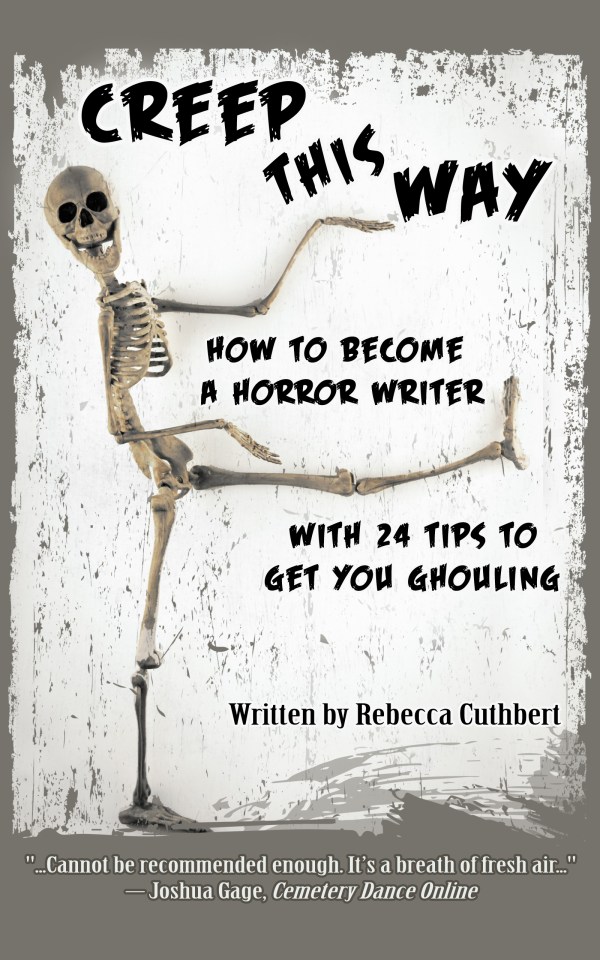
Just a quick post to thank everyone for their book reviews of IN MEMORY OF EXOSKELETONS on Amazon and Goodreads. When SELF-MADE MONSTERS comes out in 2024, I will enter all the IMOE reviewers’ names into a raffle to win a free signed copy and book swag.

If you would like to leave a review and be entered into the raffle, click on the links above! Thank you!

“Writing with Friends,” a guest post by N. West Moss

Soon I’ll be going on my own writers’ retreat, so I invited my friend, N. West Moss, to tell us about her recent writing trip to Florida.

I just got back from a great writing retreat.

What made it so great? Well, it was in Key West, where I was visiting an old college friend who’s also a writer. The people you choose to go on retreat with are vitally important to the success of the retreat. Here, I was with a serious writer who wanted to write as much as I did.

I once went on a writing retreat that was a disaster because I invited someone who had different goals than I did. She wanted to socialize, and I wanted to write like crazy. She got mad at me for going back to my bedroom so I could more work done, and the retreat tanked. I felt guilty, tried to entertain her (unsuccessfully), didn’t get much writing done, and our budding friendship stalled and never recovered.

This time in Key West was heaven, though. I was with a friend I’ve known for over thirty years, so I am relaxed around him. I don’t have to dress up. I don’t have to be anyone but who I am, and that kind of relaxation is great for creative pursuits. He’s also a serious, professional writer, who (unlike me) writes for TV. What we have in common, writing-wise, is that we both had several projects with looming deadlines, so we were equally motivated to put in the hours needed to get real, tangible work done.

Every morning around 7am, one of us would text the other and ask, “Ready for coffee?” We’d meet at the Starbucks on Duvall, and then walk back to his place together, chatting and caffeinating. His computer was set up at one end of his dining room table, and I’d set up my laptop and my stack of index cards at the other end. We’d chat a bit, and then get to the writing, and we’d both write for a few hours  before one of us might say, “I need coffee,” or, “I need a walk,” or, “I can’t figure out this scene.” We’d take a small break together, walking around the block and talking about the work, and then we’d get back to it. That’s how the day would go, with hours and hours of writing punctuated by coffee or a walk around the block. In the evenings we’d do something fun – go out to dinner or to a movie, or to a friend’s porch for cocktails.

Why was this better for me than writing at home? Well, I do most of my writing at home, but home for me is full of distractions. There’s the chair covered with cat hair that needs to be cleaned, and the pile of mail to be sorted. Everywhere I look is a chore or an obligation. When the writing gets difficult (which is often), I’ll choose to vacuum or clean the vegetable crisper rather than face the complex problems in my 300-page Work-in-Progress. Being on foreign turf means I am not thinking about anything but the writing all day long, for 7 or 8 hours at a stretch.

I crave this dedicated writing time, and I suspect that most writers do, and while I do apply and attend formal writing residencies whenever possible, I now try to have as many of these do-it-yourself writing retreats as I’m able to every year.

West (N. West Moss) will be at a month-long residency in Scotland during the summer of 2023, and will be Writer-in-Residence at Gladstone’s Library in Wales for a month in the fall. Her most recent book, Flesh and Blood: Reflections on Infertility, Family, and Creating a Bountiful Life (Algonquin 2021) was drafted at a friend’s house in Holland. She can be reached on Instagram @NWestMoss or via email at scoutandhuck@gmail.com.

On not self-rejecting…

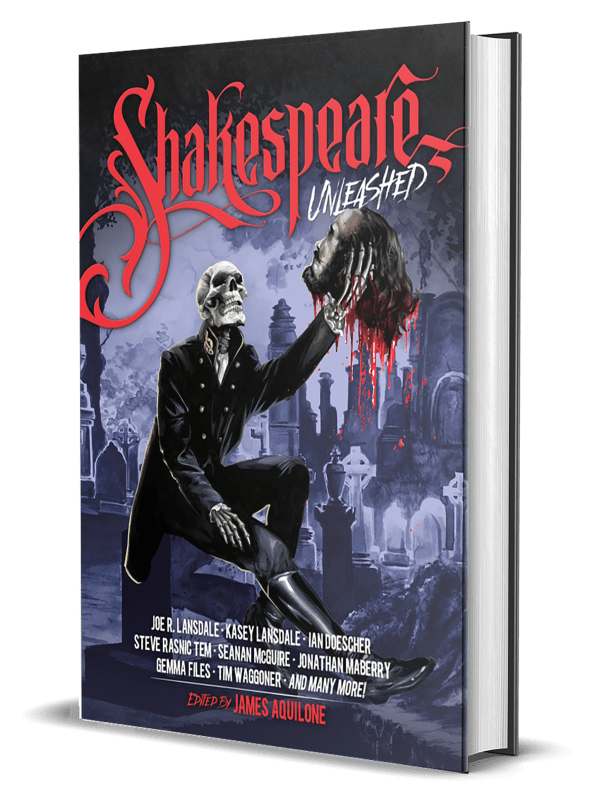
Photo: Shakespeare Unleashed, edited by James Aquilone for Monstrous Books and Crystal Lake Publishing, which I submitted to AND THEY LET ME IN!

It’s mid March, the sun is shining, I’m in a relatively good mood, and I’m thinking about self-rejecting–or, more accurately, NOT self-rejecting.

I hear a lot, and I used to say sometimes, “I’m not going to bother submitting to that. I’ll never get in.” Now I’m like, “How do YOU know? You aren’t the editor. Submit that story!” (Or poem or essay or manuscript.)

Have you ever submitted a story to a submissions call that seemed like it was MADE for your story? Like they were a perfect match–everything the editors wanted, your story had? And then, your story got rejected anyway? And you were thinking, WTF, I gave you everything! Yeah. I think we’ve all been there.

So here’s the thing: IT WORKS THE OTHER WAY AROUND, TOO.

You might think your piece isn’t “good enough,” or that it doesn’t quite fit a theme, or does in a WAY, but not in all the ways. Maybe you think the editor has a pronounced different style or aesthetic.

But. Like. What if your piece is just the variety they need? What if they don’t have that narrative arc or subject or theme in any of the other stories they chose?

Jenny Kiefer, author of That Wretched Valley (Quirk Books, 2024) and owner of the popular Kentucky horror bookshop Butcher Cabin Books, has gotten several publications with just that line of though. “Honestly most of my acceptances have been things where I just sent a story to a market I didn’t think would like it. I’ve experienced rejections more when I’ve thought it was perfect for the place I submitted to. I was recently accepted to F&SF for a body horror story–I would have never thought they would like it, but I submitted anyway.”

Especially if there is no submission fee (and whoa should I write a post just about submission fees), SEND IT. There is, for real, no risk. And, see blog post about #100rejections for why we should be trying to send out enough submissions to rack up 100 Rs by the end of the year, be they form or personal.

Rae Knowles, whose novel The Stradivarius will be out soon with Brigid’s Gate Press, knows this, too. “There was a pro-pay call that I knew was getting a ton of submissions,” she said. “It was outside of my usual genre, and I wrote a story, tweaked it, tweaked it, and tweaked it some more. I stressed so much, feeling it had NO chance of being accepted, but on one of the last days of the submission window, decided to send it in. To my SHOCK, it was accepted. Lesson learned, never self-reject!”

Author and editor Alexis DuBon keeps a hand over the mouth of her inner critic:

“Try to think about whose voice it is telling you your story doesn’t work,” she recommended. “Is it your own? Or is the reason you’re hesitant something other than ‘Yeah, this story about biblically accurate angels probably doesn’t fit this call about swamp monsters.’ We bring a lot of baggage into decisions where it doesn’t belong.”

Waylon Jordan, author, horror journalist, and EIC of Off Limits Press, talks over his self-rejection impulses; he drowns them out. “I don’t know how many times I’ve had to tell myself, ‘You have just as much right to submit your story as anyone else.’ I see authors invited to calls and talk myself out or submitting because I’m not ‘in their league.’ The imposter syndrome is alive and well and I deal with it all the time. The other thing I have to tell myself is: I’m not Stephen King (or whoever famous author your want to insert). I can’t do what he does. But you know what? He can’t do what I can. Someone wants to read what I can give them.”

Author Katherine Silva (The Wild Oblivion series) picks what she submits to carefully–if she needs to get other things done, or needs to take time for herself, she’ll skip a sub call. So, ask yourself: Are you self-rejecting because of a low-self-esteem day, or, do you just have other things that need to come first?

Zach Rosenberg, author of the forthcoming Hungers As Old As This Land, gives himself a pep talk: “This is a story only you can tell and it should be told.”

Also, related to the topic self-rejection, remember that if you burn yourself out or get too discouraged by a particularly rough R (or a volley of them), and you decide to QUIT writing altogether, you are self-rejecting from the entire world of publishing.

Kiefer has a way to manage that feedback–because yes, you will get more rejections than acceptances. That’s just reality. But, if you don’t want to see those Rs every day, do what she does:

“What did help [with rejections] though was to set up a separate author email address, so I could control how much I saw. At one point I even had a friend who would monitor it and only tell me good news so I could submit without having to see the waves of rejections.”

Final decisions on publication come down to the EIC or a small team. So, it’s not like the industry voted on your work. It’s one person’s subjective decision, in most cases. And subjectivity could mean anything: maybe they’re sick of zombies or whatever tropes your narrative features. Maybe they already have something similar for that issue or anthology. Maybe they just–and this sucks, but it’s also OKAY–didn’t’ like your story enough to put it in.

But someone else will.

Unless you don’t send it to them because you self-reject.

I guess what it comes down to is this, which I said to more than one struggling writing friend: Does writing (and everything that comes with the process–drafing and revision and feedbacking and submissions and rejections) bring you more pain or more joy?

If it’s the first one, go ahead and quit. Life is short. Find something you like better.

But if it’s the second one…

DRAFT, REVISE, EDIT, and SEND IT!!

Book Launch!

The day is here–and like most long-anticipated events, ot came on slowly and then all at once. I have a book in the world. It’s real. It exists. People are ordering it. (You can too: click here!)

Stephen King says, in On Writing, that publishing books requires talent, desire, ambition, and luck.

Luck.

He’s right. And I’m a lucky gal.

The collection only exists because, by chance, I saw a submission call from Mausoleum Press for their 2022 chapbook contest. I realized I had enough poems to form a little collection, and sent it in. While I didn’t win the contest, the editors wrote to me to say I made their shortlist (that’s like a final round, to some degree), which was very kind and also encouraging. I thought, why not send it to some other presses?

And I sent it to something like ten of them. Not long after I did, the publisher at Alien Buddha Press wrote back to me to say he’d like to publish it. When I opened that email I went into a kind of elation-panic. I was so happy that I was short-circuiting (I do that a lot, emotionally). I didn’t know what to DO.

But, luck gave me many wonderful friends in the writing community, and they guided me through what to say and send to whom, and in what order (I had to notify the other presses that I’d had an offer, give them a chance to make one or cut me loose, all while assuring Alien Buddha Press that I was excited and eager to get back to them). All was taken care of in a week or a bit more, and I signed a contract with ABP!

More luck: I’d come across the lovely cover art of Chad Lutzke, and it turns out that a cover I liked was available.

More luck: Every single person I asked to read an early copy of the collection and write me a blurb said yes. So I ended up with something like eleven or twelve blurbs that make me want to cry, they’re so kind.

More luck: The publisher at ABP just happens to be endlessly patient, and worked through lots of formatting questions and adjustments with me.

More luck: I have lots of supportive friends and family members, and as soon as they could, many of them ordered a copy. One friend ordered five copies!

Thank you to each and every person who has made these fabulous things happen for me, and who has cheered me on throughout the process (especially Joel). You all are my good luck.

OMG I’m Writing a Novel

Photo of shark by freepik.com

During NaNoWriMo 2022, I wrote 20,000 words of absolute crap. But for the first time, I took an idea that had been swirling around my brain for a year and put some of it down on paper (the screen).

In December, I returned to an almost-finished novella and revised/edited/proofread hard, getting that sent out before the year’s final clock struck Done. Which meant that in 2023, I was ready to focus almost entirely on that pile-of-shit novel draft. (And Mae Murray’s goal-setting workshop in early January was great!) I got to work. I revised. I deleted (I deleted SO MUCH). I rewrote. I made note cards, which ended up being so helpful.

I signed up for a little writing retreat at the campus where I teach (thank you, Dawn!), and made quick progress. By the time that retreat ended, I had 70-ish pages of worthwhile draft. Not final, but promising.

Then, in an online horror group (sorry can’t share that, it’s Top Secret), I asked if anyone would novel-buddy with me. Because asking someone to slog through your novel draft with you is a HUGE ask–so someone else asking you to do the same makes the whole thing less heavy, and you don’t have to give anyone your first-born child, or in my case, your beloved chubby beagle. It’s a bartering of slogging. And I got a novel buddy! (Thank you, CO!)

To my utter amazement, he LIKED WHAT I HAD. He said it was interesting, engaging, and that the pacing worked. In fact, after he read the chunk I sent him (about 50 pages), his only suggestions were additions and expansions–which was wonderful, because the thing with novels is that you need a lot of words in them, and that can be tricky (you wouldn’t think it would be tricky for me–most of the time I can’t shut the fork up). I added a short scene near the beginning and expanded two others. Then I moved forward, revised some more, and I can’t wait to send him the next chunk–but, I want to hit 100 pages of decent material before I do. Then I will be at roughly the halfway point with the manuscript–I will end up with something like a 60k-word novel. It will not be a 400-pager–I’m a Chatty Cathy, but not that chatty.

In Mae’s workshop on Jan. 6, I wrote out a timeline–goal months by which I would have so many chapters done, because at that time, I thought I would try to get the novel done (a spiffy draft to send out to publishers for consideration) by the end of the year.

Now I have moved up those goals. I want to finish this sucker by the end of the summer. And I think I will actually do it. And that thought has had me floating around for a week.

I’m writing a novel.

I’m writing a novel.

I’m writing a novel.

(And it’s the first of a trilogy.)

Hard Work Works (thank you 2022!)

This is basically a “part two” to my recent “Failing at NaNoWriMo & Winning at Rejections” post.

This year (2022) has been pretty incredible. I’ve met dozens of cool writers, joined writers’ groups, and I’ve gotten more acceptances than I have in several past years combined. What made this magic? I worked my ASS off.

Which is really good news. That there is nothing ethereal or fate based that leads to writing success. Just good old-fashioned sweat and tears. And that also means there are no shortcuts (at least not for most folks).

Success is relative, I know. And people take different paths to the same or similar places. Mine went like this:

-Joined the Horror Writers Association in early 2022 (March?) after earning an Honorable Mention in the 2021 Etched Onyx Winter Contest. That story, “A Bargain at Twice the Price,” (a ghost story) earned enough that I qualified to join the HWA as an Affiliate Member.

-After joining, figured “What the hell? I’ll go to StokerCon” (May). I knew no one. I mean no one. But I had the best time there, and met so many wonderful people, from big-name authors like Brian Keene to other people like me, struggling to find a path.

-Was so inspired by StokerCon—the people and the presentations and the panels—that I decided on the way home to quit my second job as the managing editor of Leapfrog Press. I deserved time to write, and my writing deserved my time and attention. This realization hit me with a stunning clarity at about midnight on the plane from Atlanta to Buffalo.

-Wrote. Wrote and wrote and wrote. I produced so much new content in 2022, especially over the summer, when I was finishing up with Leapfrog and before the fall semester started (I teach at SUNY Fredonia).

-But I didn’t just write. I joined a workshop with other writers in the horror community who ended up with me the same way folks end up owning cats—I was dumb and hungry; they were kind. I started another workshop with a few people I’d met at StokerCon. I workshopped with other students from Lindsay Merbaum’s independent studies (we are her happy little cult members). And I continued to workshop with my friends from grad school. Outside of those groups, I also beta read for people who needed it and joined social media groups of people with similar goals. I learned so much from those other writers, by reading their work, getting feedback on my own stuff, and sharing our successes and challenges.

-Took every chance I got for affordable independent education. With Lindsay, I learned about Feminist Horror and Queer Speculative Realism, and more recently, witches. I’ll be taking another independent study with her in 2023 on ghosts. (If you are interested in joining us, let me know and I’ll connect you with Lindsay.) I paid for a few developmental editing sessions with an awesome writer and friend. I took workshops through Defunkt Magazine’s Litfest. And I went to other one-off virtual workshops and panel discussions I found through Event Brite.

-Along with all that, I submitted a ton, too. My goal for 2020 was #100rejections. That meant I’d have to submit over 100 times, because I had to factor in the likelihood of a few acceptances. I just hit 150 submissions, with about a ten percent acceptance rate. I sailed past 100 rejections. A friend called submitting work “sending tiny missives of hope out into the universe,” and that’s exactly what it feels like.

-Finished my manuscript of speculative and slipstream stories—you can call it quiet horror or eerie horror or feminist horror or dark fiction. It’s a collection of 13 stories, and I’m currently trying to find a home for it. Some of those stories patiently waited to be revised for ten years. I’m so glad I kept my faith in them.

-I also put together a poetry chapbook manuscript, after being surprised I had enough poems to do so. (I’m primarily a fiction writer.) But I saw a chapbook contest being advertised by Mausoleum Press, and I took a chance. My poetry made their shortlist, but did not ultimately get selected. Getting that far, though, told me my poems had merit. That was further proved by Nocturne Magazine nominating my poem “Still Love” for a Pushcart Prize. The second press that got my poetry manuscript said it came close. Then I got an acceptance! More on that when I have details to share.

-There were so many “firsts” for me in 2022. In addition to being nominated for the Pushcart Prize, I was nominated for a teaching award at work. I was invited to be a part of an upcoming anthology-magazine hybrid (and my story was accepted). I was invited to be a guest on a podcast (still in the works, so no details right now). I made it into a dream anthology that I thought was such a longshot (Shakespeare Unleashed). And of course, there’s the to-be-published poetry collection that I’m so happy about.

-Oh! And I started and abandoned a novella, then started another novella that I’m happy with (and still need to finish), and the novel notes I mentioned before from my first NaNoWriMo.

I’ve got big hopes for 2023. I hope to get my collection picked up. I hope to finish my novella (spicy ghosty gothic), “Forgive Us Our Trespasses.” I hope to make lots of progress on the novel I tried to start during NaNoWriMo.

And I hope I will get another #100rejections.

Happy Writing to you all!

“It’s about my own roots,” an interview with NIGHTLIGHT podcast’s Tonia Ransom

Tonia Ransom, creator of the NIGHTLIGHT podcast and Afflicted: A Horror Thriller Audio Drama, talks about the importance of showcasing Black horror authors and their work, and explains her own personal connection to her passion projects.

Q: How did you get started in podcasting, and what led to NIGHTLIGHT?

A: I’ve known since the early 2000s that I wanted to bring back old-time radio, but that was before podcasting so I knew I’d have an uphill battle to climb to make that happen. When podcasts were first introduced, I realized I could create shows just like old-time radio without having to convince studio or radio execs to give me a chance. It still took another 15 years or so for me to actually do it, but I finally started podcasting in 2018. NIGHTLIGHT was a compromise between my original vision of old time radio, and something that could be produced for less money, hence the sound effects and music over a narrated story. I always knew I wanted to start a horror podcast, so that was never a question. I wasn’t quite sure what shape that would take, but after a report came out detailing the demographics of short story authors and I saw how underrepresented Black folks were, I knew I wanted to create a space that gave Black writers opportunities, and for readers/listeners (and Hollywood!) to find more Black writers.

Q: Afflicted, your forthcoming audio drama, has been getting a lot of attention. What is most exciting about this project? What can fans look forward to?

A: The most exciting thing about Afflicted is that it’s the show I’ve wanted to make since before I started NIGHTLIGHT. Not just because it’s a full-cast audio drama, but because it’s about my own roots—the superstitions I grew up with and living in a rural town in East Texas. For me, it’s a love letter to the family I’ve lost over the years, and many characters are named after or modeled after loved ones that have passed. It’s me sharing my heritage with the world, and honoring those I’ve loved and grieved. As for what fans can look forward to—we’re premiering on Halloween, so if they’re missing Lovecraft Country or True Blood, Afflicted is a great way to scratch that itch.

Q: Your projects have brought together Black authors, voice actors, and production team members, and given them an important platform in the horror community. How can friends and fans continue to support you in that?

A: The biggest thing that supports this work is the NIGHTLIGHT Legion—that’s what I call our patrons. They fund this whole operation, and if not for them, I wouldn’t be able to do what I do. Secondary to that, sharing the podcast with friends and on social media is huge. Podcasts need listeners to get more patrons, and to better monetize their shows. Without people writing reviews, telling folks about the podcast, and sharing it on social media, NIGHTLIGHT doesn’t grow, and our platform is limited. So basically, money and word of mouth—both ideally, but either helps immensely and is always deeply appreciated.

Q: You are busy with NIGHTLIGHT and Afflicted, but your brain never stops. What are some other project ideas you’re considering? And how can people stay up to date on your latest news?

A: Oh boy! I’ve got tons of other ideas for podcasts that’ll just have to wait a bit because producing a podcast is lot of work! Aside from that, I’m working on a book about the biology of mythical creatures, and how they could exist in the real world. I’m also working on adapting a short story of mine to a short screenplay. During October, I’m usually all over the place, so folks can attend online events, or in-person events to connect with me and learn about writing, podcasting, and more. The best way to keep up with what I’m doing is to follow me on Twitter @missdefying. One day, I’ll update my website (tonia ransom.com) with a list of appearances and such, but I’m so busy doing things that I don’t have time to document the things I’m doing 😉 It’s a good predicament to have, though.

Support Afflicted through IndieGoGo here.

Are you a Black horror author? Are you interested in submitting your work to Tonia and NIGHTLIGHT? Visit nightlightpod.com/submissions for details.

A WordPress.com Website.

Up ↑