Love Us, Love Our Books!

Today I read a post on Facebook that made me so, so sad for a stranger.

A woman posted anonymously in an all-women authors’ group on Facebook, wanting advice and comfort. She has self-published two novels, and has done a few local events. She is proud of herself, or should be able to feel proud of herself. But her husband? Anytime she or anyone else brings up her books or her writing, even in passing, her husband sighs, makes a noise of disgust, rolls his eyes, turns his back or walks away. Like it makes him physically sick to hear it mentioned that his wife poured her heart into two works of literary art. The woman said, in her post, that her husband is “usually kind and loving;” just not about THIS.

But girl? If he doesn’t support your writing and isn’t excited about your books, he doesn’t support YOU.

My husband is awesome. He goes to all my author events, helps me carry boxes of books, helps set up and pack it in afterward, and then he schleps whatever’s left back to the car. He has a special stack of my books and anthologies containing my stories in his office, and he has me sign them all. He’s proud of me, and tells his coworkers about what I’m doing. In short, he’s a fantastic partner and my biggest fan.

When I thank him for this, he kind of shrugs and says he’s just doing what anyone else would do. That he doesn’t deserve praise for responding like a normal person to their partner’s success.

But that post I mentioned? In the comments, the number of “Me toos” and “Sames” that accrued as I scrolled showed me how many people are NOT responding to their partners’ successes like, well, like normal loving human beings.

So I asked a few authors friends: What does support look like from your families? When and how have you felt supported? Because maybe, if we tell more folks what is EXPECTED of “normal,” supportive, loving friends and family members, we can show authors like that anonymous poster what is actually and absolutely unacceptable behavior.

This is what author Tobin Elliott shared with me:

“My wife and daughter have both read and enjoyed my novels, and neither read horror, but they made the effort, which means so much for me. I’ve also had two cousins read them, one of whom also loved them, and the second who texted me after hitting about halfway through the first book: ‘Tobin, I just got to the part with the baby sister, and I had to close the book and put it down. I won’t be reading any more of your stuff. Tobin, I love you, but I can handle only so much of your madness.’ And I loved that. Because she tried, and then was honest, without being critical. Hey, it’s horror, and I horrified her. I win!”

Joshua Loyd Fox (who is an author but also one of my publishers!) shared his experiences:

“My wife read, reviewed, and then edited all of my books. I’ve read all of hers and re-published them. The only family member who has read my books is [my wife] Heather [Daughrity]’s father. Literally no one else in either of our families, including siblings, children, extended family…have read our books. And even though I dedicated one of my novels to the Boys Home I grew up in, they don’t support my work. But the strangers I’ve met in the book world!!!! THAT’s where I’ve gotten all of my fans and supporters!”

And from author Joe Scipione:

“My wife reads most of my novels before they’re published. She helps with endings and plot point that don’t quite work. She’s always been supportive and talks up my books any chance she gets.”

Support means different things to different people. This is what author and artist Susan Roddey said on the subject:

“My husband intentionally doesn’t read my stuff because he feels like he’s going to be ‘too honest’ and hurt my feelings (he won’t, but he doesn’t listen). But he often helps me brainstorm and get myself unstuck. He’s also good for heckling when he knows I’m getting too close to deadlines. As for friends–our little writers group meets once a week. We don’t take ourselves seriously AT ALL, but we’re constantly talking each other through plot holes and helping fix things. I count myself very lucky to have the little network that we do.”

The importance of those “found families” and friend-based support systems can’t be overstated (especially for those who aren’t getting reinforcement at home). I’ve got an embarassment of riches there, too: Jonathan Gensler, Moaner Lawrence, Lindsay Merbaum and the whole Study Coven, grad school MFA friends (Kelly, Keema, Heather, Sara), my buddies and partners at Undertaker Books (DL and Cyan), and the whole Watertower Hill Publishing authors’ group–thank you.

I want to add an extra note here, because in addition to the “me too” social media comments I referenced above, I am also seeing things like “expect nothing from others.” Those statements make me sad, too. I think we SHOULD expect our loved ones to support our passions and dreams, even if in small ways. Having someone say “Good job” or “I’m proud of you” or “I’m happy for you” is not asking too much.

So, here you go, even if I’m the only one saying it to you: You deserve to feel loved and appreciated by those you love and appreciate. You deserve for those people to encourage your passions. You deserve to have your heart’s work supported by those who tell you they love you.

And if they don’t or won’t? Don’t settle for less. Go find more.
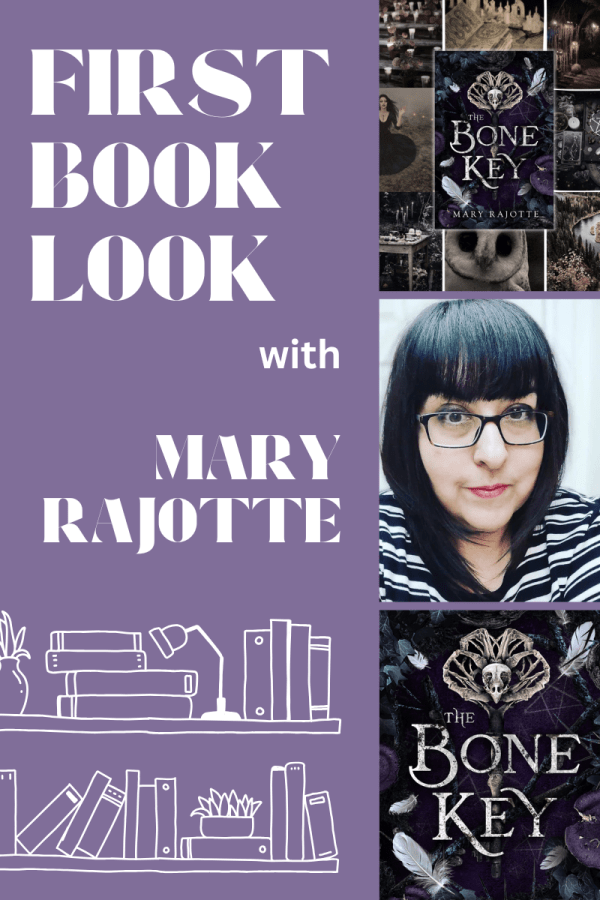
FIRST BOOK LOOK: Mary Rajotte’s THE BONE KEY

First Book Look is an ongoing interview series that gives new authors a chance to talk about their debut titles.

Q: What is your new book called, and what is it about?
A: It’s called The Bone Key, a dark fantasy novel about a coven of owl shifters that came out in October 2024 from Quill & Crow Publishing House. It follows my main character Valeria Salcedo as she goes on a journey of self-discovery, both within her Craft, and in exploring her heritage. Valeria is of mixed ethnicity (French Canadian and Mexican American). She has always identified more with her French Canadian side, which makes her feel somewhat guilty for not fully honoring the other cultural aspects of her life. So, I wanted to show this exploration she goes on, and how it reveals hidden truths about her family legacy, something that directly ties to her magical powers.

Book Blurb:
To fight for her future, she’ll have to embrace her past…
Valeria Salcedo is a member of the Aquelarre Buho, a coven that shares the magical ability to transform into owls.

When a ruthless faction of hunters known as Los Cazadores closes in on the witches with the intention of stealing their magic, Valeria must master the powers of both light and dark to defend her coven’s gifts against those who have pursued them for generations.

Q: What was your biggest challenge in writing this book or in getting it published?
A: I always struggle with drafting, so just getting that first draft done was a challenge. I’ve been writing professionally since 2014, and I’ve drafted quite a few books. I’m a plotter by nature, so I had the entire book planned before I started, but I honestly prefer editing to the blank page/screen. Luckily, I wrote this book while taking a novel-in-a-year course, so I had my classmates and instructor to help keep me motivated and offer their thoughts on my book throughout the entire process, which was invaluable. My book wouldn’t be what it became without their insight.

Q: What are you hoping readers will get from your story? What do you hope to leave them with?
A: I hope they enjoy Valeria’s personal journey, even if she can be a little frustrating at times (yes, my editors told me they found themselves screaming at the page when Val doubted herself or did something to self-sabotage). And I hope they see that by embracing every facet of her gifts and trusting in herself, she recognizes her own magic and her own power.

Q: What has been your favorite part of being a new author, so far?
A: Honestly, just seeing people read my book! Whether they buy a copy, take it out of the library, or even snap a photo of it on their TBR pile, it’s such a thrill to see them interested in my owl witches! I also love sharing with readers that this was my debut, and that it came out the year I turned 50, something I’m so proud of.

Publishing is such a grueling journey. All that work, all that waiting…and sometimes feeling like you’re never going to achieve your dreams or that you’ll never find those readers you’re writing for. Seeing even one person choose my book makes all the struggles and self-doubt worth it.

Q: What are you working on next?
A: I’m currently deep into revisions for the sequel to The Bone Key, with a planned 3rd book in the series. I’m also shopping around a dystopian horror novel, and outlining a sequel to that as well. Plus, a few folk horror novella ideas whispering to me from the sidelines…always busy, but loving every day I’m able to pursue my dreams.

Q: Where can people learn more about you?
A: I’m MaryRajotte on all social media platforms, and they can also find me at my website maryrajotte.com or sign up for my newsletter to stay updated on all my writerly shenanigans.

LINKS
Website: https://maryrajotte.com/blog
Newsletter sign-up: https://maryrajotte.com/blog/newsletter/
The Bone Key book page: https://maryrajotte.com/blog/book/the-bone-key/
Quill & Crow: https://www.quillandcrowpublishinghouse.com/

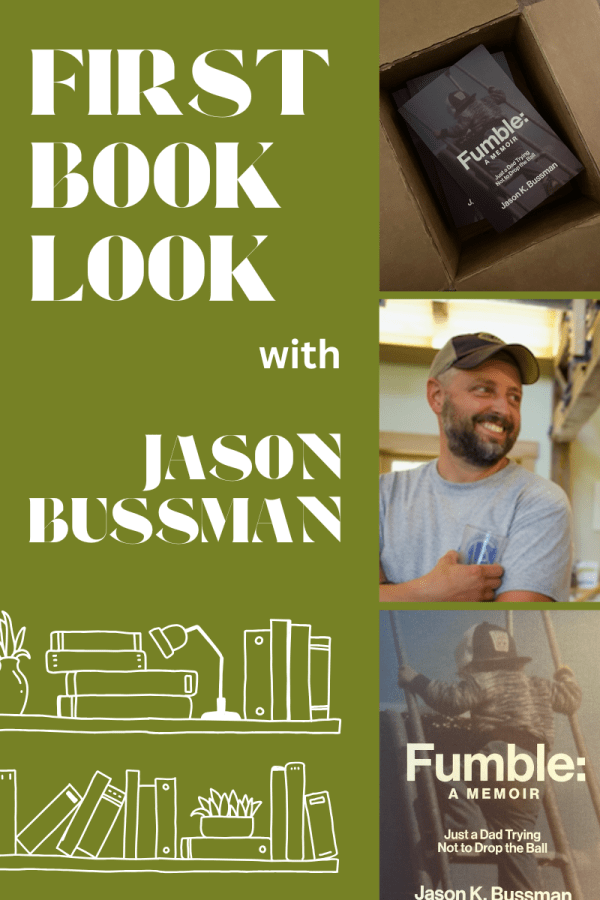
FIRST BOOK LOOK: Jason Bussman’s FUMBLE

First Book Look is an ongoing interview series that gives new authors a chance to talk about their debut titles.


Q: What is your new book called, and what is it about?

A: Fumble: Just a Dad Trying Not to Drop the Ball is a memoir about moments in my life when I have either dropped the ball or stumbled in some way as a parent. The first half of the book consists of standalone essays from fatherhood: moments when I learned a valuable lesson on how to interact with my kids. The second half is a compilation of moments from my childhood when I learned something. The hope is that these stories help shine a light on the dad I wrote about being in the first handful of essays. These two halves are separated by a halftime of sorts: two stories in which my wife is the key piece. 

Q: What was your biggest challenge in writing this book or in getting it published? 

A: The biggest challenge for me was perseverance. The constant state of rejection that you live in as a writer is something overwhelming and can be very unbearable. Luckily for me, I have a solid support system in place both at home and from my friends and colleagues. I just had to keep telling myself: all you need is one person to like it. Once that happens, everything clicks. And it happened. 

Q: What are you hoping readers will get from your story? What do you hope to leave them with?

A: I hope these moments I share are relatable to families: both parents and kids. By embracing my fumbles, I am hoping that people can laugh and embrace their own moments when they may have stumbled as a parent, or a son or daughter, brother or sister. This light-hearted look in the mirror of a memoir is hopefully something that one can walk away from with a smile on their face. 

Q: What has been your favorite part of being a new author, so far? 

A: I have had several conversations on some of the questions I raise in this book, and I find that is one of the most rewarding parts of being published. The conversations about telling my daughter to stand up to the boy who pulled her hair because he “likes” her, or whether or not I truly believe that a Star Wars character was as powerful as I think she was. The amount of support I have received from my community, colleagues, and family has been extremely humbling. 

Q: What are you working on next? 

A: Book Two of the Bussman Saga is currently in progress. I have a working title and a list of moments that I am hoping to convert to another collection of standalone essays. This one will be almost completely centered around me as a stumbling and bumbling father and husband. I also have an idea for one of my unpublished essays to become a much larger book-length piece centered around me as a fifth-grader. But that’s not ready to talk about quite yet….

WEBSITE: jasonkbussman.com

FACEBOOK: Jason K Bussman

INSTAGRAM: @jkbussman

SUBSTACK: @jkbussman

On AuthorCon V & Networking Etiquette

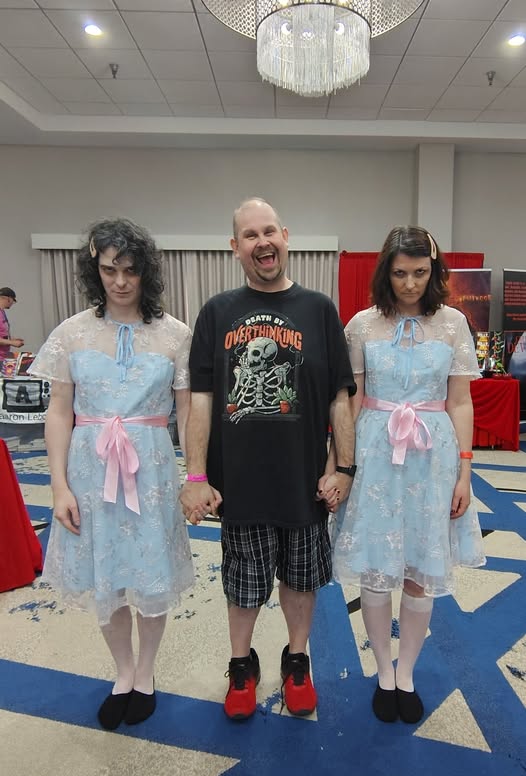
Photo, from left: Jamie Flanagan, James Sabata, and yours truly

This blog post needs to start with thanks. I appreciate, so much, that I got a chance to spend time with dear friends, and to meet readers, and to talk books, and to be just plain silly for a long weekend. Thank you to James Sabata for the invitation and to Scott Bradley and D.M. Guay and Jamie Flanagan for all the Spirited Giving magic; thank you to the con organizers and volunteers and charity coordinators, especially Brian Keene and Joe Ripple and Jake Lerner; thank you to all the attendees; thank you to all my fellow panelists and performers and to the staff at the Doubletree Hilton in Williamsburg, VA (and especially Regan and Chris!). Thank you to Sam Rebelein and Vin for being great tablemates (and for doing math for me). Thank you to all the lovely people I met. Thank you to readers and to folks who bought my books and folks who gave me or sold me their books. Thank you to everyone who helped us raise money for Scares That Care by putting cash in our jar to take pictures with us… I mean, with the twins from The Shining.

One of the panels I had the privilege of joining was on networking etiquette–what to do and not do, both online and in person at events (cons, readings, signings, etc.). This topic is important to me because I have some very strong feelings about it–the first being that I don’t really care for the word “networking.” It has, for me, the connotation of being shallow, self-serving, and fake, though the word’s denotation is more respectable, and hearkens back to (what I think are) its origins: it’s a chance to “work the net” with others–the way fishermen (and -women and -people) did for years. With many hands weaving and tying, together, these folks made one another’s nets bigger, and they mended any holes in the nets. While they sat around mending, they also talked, and got to know each other, and told one another stories of their trials and travels. I bet they laughed a lot, and sometimes cried together.

I use the term “community building” because that is what I’m doing at these events and online, with other writers and readers. It’s why I’m writing this blog post–to be helpful, and to help new writers (and seasoned writers) avoid some of the mistakes I’ve made, and that I’ve seen others make, often innocently or at least unknowingly.

The panel could have gone on longer this past weekend–I had three pages of notes (I’m a gal who brings notes). And while we covered a few topics, we had to (understandably) leave a lot on the table.

So I am writing this, now, to not only cover some of those things, but to reiterate the good points my fellow panelists (Joseph Pesavento: moderator, Rebecca Rowland, Robert Swartwood, Shane McKenzie, B.C. Lienesch, and John Lynch) made. I’ll number them to stay organized.

  1. Know why you are there. People come to conventions and other live events for many reasons. I came to help with a charity event (Spirited Giving) happening at AuthorCon V, to be silly and raise money with my friend (see photo), to spend time with the friends I already had (and miss), to talk to readers about books, to perhaps sell some books (I did!) and to meet other authors who do the thing I do. Yes, there were famous people there. Yes, I said hello to some of them. But, though I am, at times, a fangirl, fangirling wasn’t my intention for the weekend (though I hope I was as polite and respectful and appreciative as I meant to be–these are folks who succeeded at the very thing I am doing, and I look up to them as experts).
  2. Mind your substance consumption. If you like to have a few social cocktails (or whatever), cool, but keep it at that. (This is a mistake I’ve made–not trying to be a hypocrite here!) I have learned that events are way more fun if you know, for a fact, that you didn’t say or do anything you’d be embarrassed about later. Lots of folks get carried away at these things, having fun with their friends, but as my smart pal James Sabata said, if you wouldn’t do something around the coworkers at your day job, don’t do it around your colleagues at a convention. It’s still a professional space.
  3. Say thank you. Say thank you to everyone, all the time. Thank the host. Thank panel attendees and your fellow panelists and your moderator. Thank everyone who buys a book from you–thank everyone who even stops to look at your books or to chat with you. Thank the people from whom YOU buy books, or who give you books or swag. Etc. etc. The old adage applies: “Please” and “thank you” go an awful long way, and actually BEING grateful makes you feel kind of amazing.
  4. It’s okay to introduce yourself. Sometimes I forget this–I feel shy, or I can’t remember if we’ve met before so don’t want to sound silly, or I don’t want to interrupt the conversation happening. But it’s okay to just wave or offer to shake hands and say “Hi, my name is Rebecca. I don’t think we’ve met,” or, “Hi, I’m Rebecca, and I think we’ve met but I’m not certain.” That one is still a struggle for me, but I’m working on it.
  5. If you see someone sitting alone, invite them to your table or to your conversation. But if they say no, thanks, they’re alright, leave it at that. They may be purposefully taking a few minutes to themself, because sensory overload is a definite challenge at a big convention, or they are centering themself for something they are about to do–a reading or a panel or something like that.
  6. You don’t have to meet everyone every single time. It’s fine to say hello, or not, to the bigwigs in your genre. It’s okay to admire from across the room. If you have an opportunity and want to take it, that’s great. Tell them you admire a certain book or story or script–be specific–introduce yourself, and then let them get back to the event. They’re busy and you don’t want to monopolize their time. And if you don’t have an opportunity to meet them, or if you are too shy, or if it feels awkward, let it go. If they are having a closed conversation with their friends, definitely let it go. Remind yourself that it’s possible you’ll get a chance someday in the future to meet them. Overall, remember they are human. They get tired. They get overwhelmed. They get frazzled. They can’t be “on” all the time, nor should we expect them to be.
  7. Don’t prairie-dog. Some people have a cruder term for this, which rhymes with “jar-lucking,” but I won’t use it here. This is the unfortunate behavior I’ve seen exhibited many times whereby lesser-known authors or fans constantly pop their heads up to look around for the most famous person in the room, and make a beeline to them. And then they do it again, leaving that conversation if someone more famous walks in. And then they do it again, and again, and…you get the point. It’s tacky behavior and no one appreciates that kind of attention.
  8. Don’t mix networking with dating. Yes, some people meet at conventions and fall in love and live happily ever after. And that is nice. But most folks there are there to talk books and readings, not to find a bed-warmer for the night. Also, other people notice more than you may think they notice, and you might not want your personal “interactions” to become public gossip.
  9. Give the grace you get. This applies bottom to top. You forget people’s names, so don’t be annoyed or offended if someone forgets yours. If someone doesn’t remember your book’s exact title or cover or publisher, again, it’s not personal, and it happens to all of us. If someone needs to politely excuse themself from a conversation, say thanks and you hope they have a good night–because sometimes you need to politely excuse yourself, too. This applies to reading early review copies and writing blurbs and leaving reviews, too. Our good intentions are always going to outpace our capabilities. If someone thought they could help you and then couldn’t, well, take a look at how high your own TBR pile is before you get bitter about it.
  10. Support others, but do it genuinely. It’s the easiest thing, online, to hit the “share” button to help someone spread good news or promote their work. Share the posts of the successful people you admire, yes, but also share the posts of your peers and of people just starting out. If you have three more seconds, tell them “Congratulations” or “Very cool!” in the comments section. At events, tell readers and panelists they did well, and sincerely compliment what you liked about their performance or presentation. Don’t try to flatter or “kiss up” or gush (or whatever you want to call it) for the purposes of furthering yourself or your reputation. It’s transparently fake and no one is fooled by it, and you will only succeed in making people feel icky.
  11. Have a few conversational questions ready. This one comes from Jamie Flanagan. Instead of running up to people and saying “I love you!” and then going mute with embarassment (did I kind of do that to Jennifer McMahon in an elevator a few years ago? I did), have a few questions ready. They can be simple and should be appropriate. Examples: “What are you working on now?” (For writers.) “What genres do you like to read?” (For readers.) “What’s a good book you’ve read lately?” (For anyone.)
  12. At all costs, avoid public arguments, tantrums, and meltdowns. I don’t have to explain that one.

In summary, be polite to all, and be genuinely kind to anyone with whom you have interactions. If you meet people you admire, be careful not to linger if they are busy or perhaps looking a bit tired. Tell them what you love about their work and then let them get back to their activities. And don’t make every social encounter a transaction, seeing folks only as untapped resources for you to use.

I could go on and on, but for now, for what I wanted to talk about on my panel, for the smart things others said, for what I have noticed around me at many an event, I think that does it! Feel free to comment with anything I missed.

What NOT to say to publishers or editors on social media

I’m writing this post because of comments I have seen recently on social media in response to publishers’ “open submissions” announcements. Of course I will not name names–it’s not a burn post. But many of us have had to learn the submissions process the hard way, and I hope this post will help folks avoid the mistakes I’ve seen and the mistakes I’ve made myself. Now I can’t cover every faux pas here, and most publishers will absolutely overlook small mistakes and mixups. (Like, if someone wrote to “Undertaker Press” by mistake rather than “Undertaker Books,” no biggie.) Here are a few things to try to avoid, though, with some tips on what to say or do instead.

  1. Do not announce yourself like a boxer jogging into the ring.

This imagery comes to you courtesy of Heather Daughrity of Watertower Hill Publishing and Parlor Ghost Press. It’s the perfect analogy for what I have seen on these social media posts and in emails I’ve gotten as an editor.

Some authors, before even mentioning their current project or submission, feel they need to yell through a megaphone, often exaggerating their accomplishments, and generally putting their ego first. Not a good look, I promise you.

The place for information about you is in a short, factual, third-person bio paragraph you would include in a cover letter/email with your submission. Stress on “short.” (And do not put it on social media in a comment on a publisher’s post.) Start that paragraph with a personal note about yourself and follow it up with a few publications/accolades and then where folks can find more information about you (hopefully, your author website).

2. Do not beg, grovel, put yourself/your work down, or share a sob story.

Be friendly, confident, and at least a little bit professional. I have seen statements in the comments section like “I have a book that is like Star Wars meets Anne of Green Gables but you probably wouldn’t want to read it.” Problems: zero confidence makes me think it’s probably not that good, but also, you made up my mind for me, which is kinda rude and presumptuous. So let’s revise that. It would be much better if the person said something like: “I have a novel manuscript ready that could be described as a mashup of Star Wars and Anne of Green Gables. Beta readers have told me it’s a fun read and not like anything else they’ve read. If you’d like to take a look, I’ll send it along.” Of course, only say that if it’s true.

Other cringeworthy comments, which of course I’m paraphrasing/imitating:

“Wow I’m so glad to see this sub call. I haven’t had anything published in over a year because I had to move and then my cat died and I lost my job. I wanted to self-publish but I never really got around to it and I thought I’d never write another thing but hey, I could send something to you!” (TMI, and a weird vibe right away; might also signal to the editor, rightly or wrongly, that you would be difficult to work with and/or clingy.) Instead, how about “This looks like a great submission call and I have something that would fit. I’m excited to send it!”

“Oh cool I love your books! You put out the best books in the industry and I tell everyone you’re the best! Publishing with you would be a dream come true and would be the best thing that ever happened to me!” (Even if that is totally true, it SOUNDS like corny flattery. Compliments are appreciated, but in moderation.) Instead, try “You put out great books and have an impressive reputation. I’m definitely sending you something!”

3. Try not to ask questions in the comments section that could be answered by the publisher’s post itself or by a quick look at their website or social media.

Comments in this category of “Please No” are “What kind of submissions do you want?” (That will be in the post or on the website.) “What books have you published?” (Go to the website.) “Who else has books with you?” (Again, go to the website.)

It is absolutely fine and great to ask questions. Just make sure the questions you are asking can’t be answered by a one-minute review of the post or a quick website search. And, of course, since we all miss things that are right in front of our faces (because I have done this a million times), when you realize your goof, offer a quick apology. “Sorry! That was right in the post. My bad!” Editors and publishers are humans too. But you want them to know you don’t take their time and attention for granted.

4. Do not say rude things.

I cannot count the times I have seen absolute rudeness in response to publishers’ submissions calls: “Why would I even submit to you? You’re a joke.” “My work is worth money. Recognition doesn’t pay my bills!” “You aren’t a professional magazine if you don’t pay writers!”

Lordy. This is one of those “Don’t like it? Keep scrolling” situations. It’s true that editors/publishers should announce whether or not it’s a paying publication. But when it does not pay, or when the payment is token, don’t be nasty, and don’t assume every other writer out there has the same publication goals you do. A friend of mine submits work to non-paying calls, because he’s just trying to meet other authors and folks in the industry, and get his name out there. I have submitted to non-paying calls because the publication’s theme is really cool, or I like what they put out, or it’s for a charity I care about , or because I know the editor to be great, or because I know that publisher submits authors’ work for awards like the Pushcart Prize and Best of the Net. Maybe a writer is just starting out, and getting a story or poem in a non-paying publication would mean the world to them. Do what you want to do, submit or don’t, but keep the vitriol to yourself.

“I’d never submit work to you! You’ve published [author I hate/author who has behaved badly]!”

Okay. I know this is a tricky one. But think before you type.

It could be that yes, a publisher has put out a book by someone who acted badly. We’ve seen it all too often in the horror community. But when did they put out the book? Was it BEFORE the author in question was known to be a jerk? Could the contract have been signed before that point? Contracts are legal documents, and before you type an angry comment to this here post lemme ask you: Are you a lawyer? A judge? If not, still those itchy fingers. Some publishers have what is often called a “behavior clause.” This usually means that, should an author behave badly, in any number of ways, the publisher can immediately cease production of their book and the contract is void. But if a publisher does NOT have this clause, they may be stuck with that author and that book, at least for the duration of the contract, which can range from six months to several years.

Here’s something else that a lot of righteously angry people won’t want to hear: People change. PEOPLE CHANGE. They are capable of personal growth, and learning, and repentance, and behavioral correction. It’s possible that a person did or said something terrible a long time ago, and has since become a better person. (This applies to like, non-felonies, of course–I’m not saying you should forgive every murderer and assaulter out there.) There is an expression I love: “When you know better, do better.” I’m not going to hate anyone because of something they said 20 years ago. I’m sure that I myself said horrible things 20 years ago, when I was young and ignorant and sheltered. I’m sorry for all of them, even the ones I don’t remember saying (because alcohol and I were way too close in my 20s). So I will give people the grace that I hope to receive. People. Change.

I’m going to stop there. Happy posting and happy commenting, everyone.

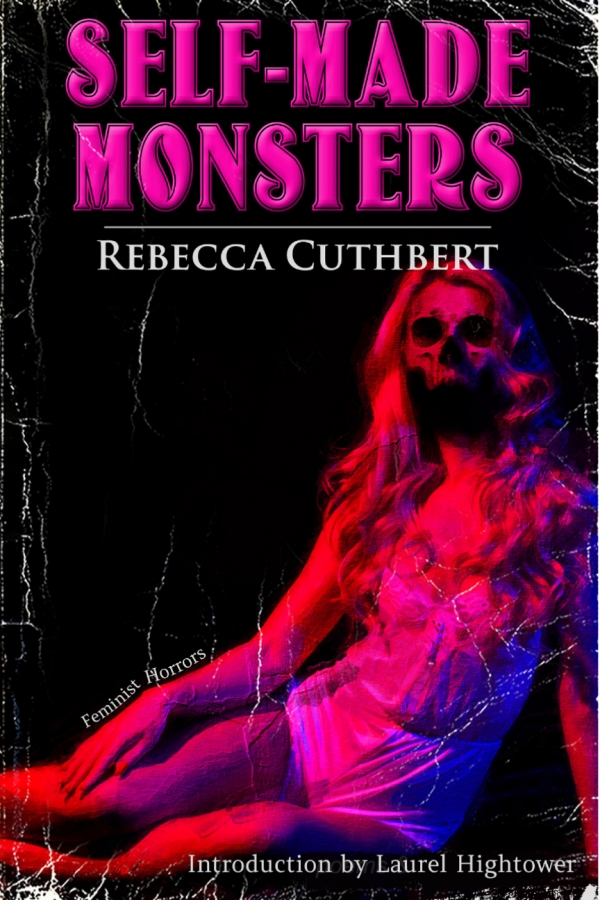
Self-Made Monsters: digital ARCs available for review

Okay, they are actually “galleys,” as they are uncorrected proofs and haven’t been through the final formatting, BUT, people are more familiar with the term “advanced reader copy,” so I used that above.

Small press authors know they have to work their tail feathers off with marketing and promotion, since there are no or very small advertising budgets available. But, surprise: I do not have a marketing degree. I’m just a bumbler. But this bumbler has learned “ARCs good. Advanced reviews good.” So here I go!

Self-Made Monsters will be released in early October of this year–for you locals, we’ll hold a launch party at Downtown Brew in Fredonia on Oct. 5th, and I hope you will come!–and ramping up to that, I’m doing what I can to spread the word. One of those efforts is giving digital galleys of the book to people who are willing to read it and leave ratings and reviews on Goodreads (the page is up now) and eventually on Amazon (look for that in the fall). It would help a great deal if folks clicked the link at the beginning of this paragraph and marked it “Want to read.” If you have done/will do that, thank you!

I will also come up with a Google form, closer to publication, for preorders–that is when you can fill out the form, send money via PayPal or Venmo, and give me your mailing address. When I get my shipment of author copies, I will package up your copy along with some book swag and a special gift, and ship it out to you. (There will be an option for local folks–cost minus any shipping, and you can pick up your book and gift at the launch Oct. 5th at Downtown Brew.)

If you are intrigued about Self-Made Monsters and want to know more, here is a short review from Amelia Gorman, author of the book Field Guide to Invasive Species of Minnesota: Poems:

“‘A smashed marionette,’ ‘a queen of scale and bone,’ a ‘body sculptor’ and her assistant – Self-Made Monsters by Rebecca Cuthbert is a veritable encyclopedia of different ways women can be monsters, victims, heroes, and bystanders. This collection contains multitudes but never loses sight of its clear through-lines. Stories tend to be short and sit alongside several deliciously dark poems, meaning Cuthbert doesn’t waste time getting to the meat of what horror fans crave. Sometimes this comes in the form of violence, other times the pareidolia found in wild places or the temptation of the front door of that spooky house down the street. It’s easy to tell yourself ‘just one more,’ over and over until you realize you’ve devoured the whole book in one sitting.”

If you are interested in being an early reviewer, message me and let’s connect!

Why no author account?

Why I choose not to create separate author accounts on social media

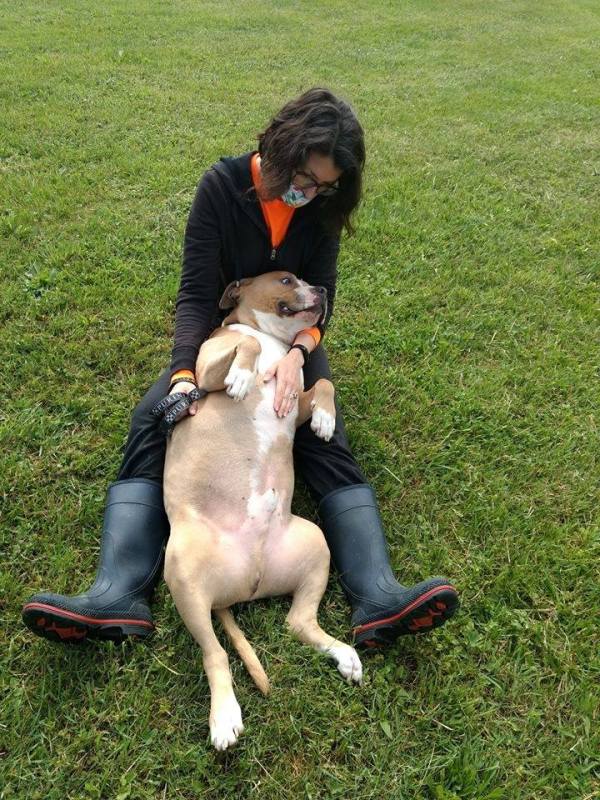
(Picture: This is me, circa 2020, hanging out with Ra, one of the shelter dogs at the place where I volunteer. He loved to cuddle and weighed about 90 pounds.)

I definitely understand why many authors choose to create separate profiles for their writerly selves on social media. For one, many authors write under pen names, so having only personal accounts wouldn’t make any sense–fans and readers couldn’t find them! Some writers have concerns about privacy for safety’s sake, or because their bosses wouldn’t be cool with what they publish. Another reason is that people share family pictures and other “close circle” content on their personal accounts, and to them it doesn’t feel appropriate to combine those with their posts about books and publications. Still another reason, related of course, has to do with “branding.” And for me, that word opens a can of worms.

My brand is me.

I understand branding and its necessity. I understand wanting to convey to readers what your “vibes” are–what you write, what you like, what your literary aesthetics are. But, several years ago I went through some workplace turbulence and, when things settled down, I realized I could no longer hide aspects of myself, or pretend to be what I’m not, for the sake of someone else’s idea of “professionalism.” Instead I opted for a sort of radical honesty when it came to my representation of self. No masks, no layers, no separation. People could take me for me or not take me at all.

And why can’t authenticity BE a brand, anyway? Why shouldn’t my students and coworkers and editors and readers and childhood friends and gardener friends and writer friends and dog-shelter-volunteer friends and family members get the same version of me?

It can; and, no reason.

It’s all in my writing, anyway.

My poetry collection, In Memory of Exoskeletons, is full of my thoughts and experiences–all very personal. There are poems about my grief over losing my mom as a kid, my own mental health struggles, my love for my husband, my feelings about the way society disregards “women’s work,” how much I love dogs, my garden, body dismorphia, and more.

My memoir and craft text, Creep This Way: How to Become a Horror Writer with 24 Tips to Get You Ghouling, rehashes all of my writerly attempts and failures over the course of the last, oh, twenty years. I admit there that a mean editor made me cry. I recount how terrified I was to go to my first StokerCon. My skeletons don’t live in my closet. They dance around the living room.

Any stranger who reads both of my books will pretty much know everything about me.

My friends are my readers.

Maybe I’ll make national book lists at some point in the future and people far and wide will get used to seeing my name on book covers. But, well, probably not and, even if so, that’s a way’s away. For now and maybe forever, the main readership of my books is made up of my friends and family. All those folks in my personal life. Like, my readers wouldn’t have to look up some interview if they had a question about my work. They could just, you know, text me.

I already can’t keep up with my accounts.

I tried TikTok and failed; deleted the app. I tried SnapChat, and same thing. I’m on Twitter, Facebook, Instagram, and Threads. I have a hard enough time dealing with those–the only place I consistently hang out is Facebook, because that is where all of my work threads and friends threads exist. There’s no way I’m adding professional accounts to that list–it’s already too long.

So, if you want to make separate author or professional accounts, do it, especially if you have privacy or safety concerns. But it’s not mandatory!

‘New Press, Who Dis?’ (Undertaker Books is born)

Life is weird and I know it frequently surprises us with heartache and tragedy. But sometimes amazing things happen, kind of out of nowhere, leaving us wondering what we did to deserve such good fortune.

Undertaker Books is one of those amazing things.

At the beginning of 2024, I worked for a different small press (name tactfully withheld; I’m keeping it positive here). There, I met D.L. Winchester and Cyan LeBlanc. We quickly allied ourselves, and then bonded–the three of us had similar work ethics, and acted on the same principles: do a good job for the authors. Conduct ourselves in a way that allows us to respect ourselves. Put out books that make us proud.

Well, that press fell apart. And because phoenix analogies are a little tired, I’ll use a different one: D.L. and Cyan and I looked at the house that had fallen down around us, and we inventoried what we could salvage. Then we hauled it away to a new site, put on our damn overalls, and got to work building something new.

While we planned carefully, the paint on the shutters was still wet when we got our first houseguest: Elizabeth Broadbent, with her breakout Southern Gothic novella Ink Vine. Her stock of copies sold out at AuthorCon III, and Ink Vine topped Amazon’s charts all that weekend (and hovered there afterward). Reviews are still coming in, and they are great! The Horror Tree just gave it five out of five crows. (Do you like sexy scary swamp magic? Then get yourself a copy!)

Quickly, one guest became a whole party, and only a couple months in, our new little publishing house is full to bursting with good people and good cheer. Our calendars for the rest of 2024 AND all of 2025 are full, and the lineup is amazing. Just to name a few, in addition to Eliza, we’ve signed Kathleen Palm, Robert Ottone, Emma Murray, C.M. Saunders, and, through an agreement with anthology guest editor T.J. Price, Christi Nogle, Ai Jiang, Carson Winters, Caleb Stephens, Ivy Grimes, and Erik McHatton. More news is coming soon–watch our social media feeds for signing announcements!

Because the hosts are allowed to celebrate, too, we are also putting out a few of our own books–have a look at Cyan’s new releases, Mastering the Art of Female Cookery and The Taste of Women, and D.L.’s chapbook story collections, Shadows of Appalachia and A Terrible Place (forthcoming). My ghost story collection, The Hauntings Back Home, with an introduction and thirteenth story by Jonathan Gensler, will be out next year.

And if you will allow me to gush about my publishing partners (and who’s gonna stop me? This is my blog. Ha!), I want to say how much I appreciate them. Cyan is our publisher and formatter, and also the handler of most of our marketing. (Wanna get on an ARC/galley list? Message us!) D.L. is our head of business development and manages all of our contracts and our master schedule. He is also our short fiction editor, running most of our anthology calls. (He will also be editing my story collection and a few long fiction projects.) Yours truly is editor in chief–I edit most of our long fiction projects and scout talent (and by that I mean pester people whose work I love–you know who you are–your DMs haven’t seen the last of me). All of us are novice cover designers who are determined to learn new skills and improve. (I still throw out nine of ten designs, but that’s okay–art is all about trial and error.) The three of us work well together, and we’re so excited to be a part of bringing so many wonderful books into the world.

Undertaker Books runs on integrity, professionalism, honesty, and transparency. We communicate openly with our authors and expect them to do the same. We want to sustain our business but we know money doesn’t fall from the sky, so we will work hard to make sure we are successful. We’ve heard from a lot of authors who have been let down by their former publishers–some of those authors have signed with Undertaker, and we vow to be the rebound who makes them believe in love again.

Undertaker Books: Stories You’ll Take To Your Grave (and folks who will be nice to work with).

“Horror allows us to safely explore fear,” an interview with Shadows in the Stacks editor James Sabata

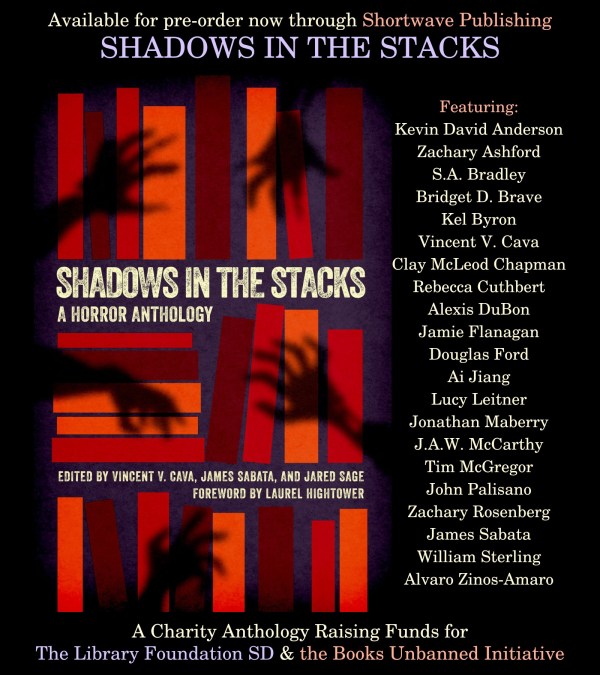
James Sabata, horror author, editor, podcast host, and founder of Spirited Giving, agreed to give us the story behind Shadows in the Stacks, a great anthology that I get to be a part of (yay!). Read on for James’s interview, and see his bio and more information on Spirited Giving and Shadows in the Stacks below.

Q: So what is Shadows in the Stacks? Tell us about it and what it benefits. 
A: Shadows in the Stacks is a charity horror anthology that is a part of our horror-themed fundraiser Spirited Giving. Spirited Giving takes place May 29th at the San Diego Central Library and features author readings, live performances, and book signings, with ticket sales raising money for the Library Foundation SD and the Books Unbanned Initiative.
Shadows in the Stacks is an offshoot of Spirited Giving and another way to raise money to fight censorship and banning books.
Available through Shortwave Publishing and edited by Vincent V. Cava, Jared Sage, and myself, Shadows features short stories from twenty-one authors.
The Books Unbanned initiative is a library program that issues library cards nationwide in order to give electronic access to the library’s digital and audio collections to teens and young adults living in U.S. locations where books are being challenged. The initiative aims to support the rights of teens and young adults to read what they like, discover themselves, and form their own opinions, without being restricted by censorship or political pressure. Many of the books that are banned or challenged are by or about Black, Indigenous, People of Color (BIPOC), or LGBTQ+ people and explore their experiences, stories, histories, and movements. Reading these books can help teens and young adults understand themselves and connect to others, as well as develop critical thinking and intellectual freedom.
The Shadows in the Stacks anthology features themes pulling inspiration from the books that are facing censorship and banning throughout the United States.

Q: Why did you and the other editors choose this theme?
A: I don’t think there was ever a question on what the theme would be. I don’t even remember discussing it much, to be honest. We are running a fundraiser that is generating funds for the Library Foundation and the Books Unbanned Initiative, so it made absolute sense to lean into those social concerns.
At the same time, we left it very open to authors to interpret any way they wanted. We didn’t give them specific topics they could or couldn’t touch, and they kept it varied, interesting, relevant, and respectful.

Q: What is your personal take on horror writing? Why do these stories matter?
A: Horror writers deal in grief and trauma. I have this deeply held belief that the majority of people who write horror experienced a lot of grief and/or trauma in our lives and we were shaped by those experiences. But those are shared experiences. Horror allows us to safely explore fears, anxiety, grief, trauma, etc. while still being on this side of the screen or on this side of the page. We can turn it off or close it if it becomes too much but we’re also able to keep it open and safely explore the darker pieces of reality.
On another level, we are able to explore grief and trauma in a more communal sense. We can share the book or film with one another. We can talk about what we felt with it or what it brought out of us. We can learn how it affected someone else differently and see their side with this shared experience. There’s a whole level of emotion and shared secrets between an author and a reader.
But there’s another aspect that I find fascinating and that’s how much easier we make it for people to privately delve into these explorations without having to talk about it with others. Maybe you’re going through something and you don’t know how to talk to someone else about it or maybe don’t even know what it is to put it into words yet. You
might find something in a story that resonates with you or allows you to understand something about yourself.
That’s my overall take on horror as a genre. It’s also why I’m super lenient in my definition of “what horror is.” Horror is individualized while speaking to a full community. Putting labels on things discounts someone else’s truth. These stories are important because we don’t know who needs to hear them. Writers can reach people they will never meet in person. Readers/viewers can find common ground to start conversations with others. I fully believe that horror is doing a lot of good for people in a world that doesn’t expect that.
With Shadows in the Stacks, we’re hoping to start some conversations. We’re praying that we plant some seeds in the minds of readers and hope that they can’t let go of those ideas. Maybe they will start to see how much is at stake with how things are changing in the world today. Maybe they’ll see why censorship and banning isn’t good. Maybe people who think they aren’t affected will see that they absolutely are.

Q: What would you tell readers who are thinking of picking up a copy of Shadows in the Stacks? What should they know about the stories in the anthology? 
A: The first thing I would say is that these are really good stories, even without the overall context of social commentary. I think you’re going to forget what the theme was and get lost in the lives created on these pages. These stories are all really different while somehow fitting together beautifully. Some are dark. Some are hilarious. Some walk a completely different path and make their own mark that won’t let go of you. When you add back in that context of social commentary and how it plays into the horror in twenty-one stories. These stories don’t hold back. They came to make statements and they did. That doesn’t mean they’re preachy, but they don’t shy away from anything. My buddy, author SA Bradley, always says, “If you want to know what society feared at any given time, look at their horror stories,” and looking at this many different fears really puts into perspective how worried we all are about the future.
As Laurel Hightower said in the introduction: “This anthology is a love letter to the human race. An offering from each of the talented authors who bled on the page for the stories you’re about to read. A dream of what could be, a nightmare of what is. A light in the darkness of a ban on books, hands joined to protect one another and our precious gifts of knowledge. Join them—join us. Hold tight and know the hands that hold yours, be they never so rotted or clawed or slippery with gore, belong to hearts formed of the same swirling nebulae of stardust. No matter how dire things look, be that flame in the dark.”

Q: What were the challenges and rewards of putting together this project? 

A: The single biggest challenge with anything like this is getting people to hear about it and hopefully take a chance on it. We’re relying on word of mouth. We’re relying on author to help us get the word out. We’re relying on people taking a chance and interviewing us on their websites. 😉 (Thank you, Rebecca). It’s rough though. We can’t be everywhere at once and share it with everyone. We know it’s a great book. We know the stories are some of the best you’ll find this year. It’s about getting others to know that. Most of the other challenges I expected never really materialized. It’s been a good journey putting this book together. As of writing this, the book is up for pre-order through Shortwave Publishers (http://bit.ly/ShadowsInTheStacks), but I don’t know how much it will raise for the library or anything at this point. I consider that a “future” reward… so I want to talk about the rewards I have gotten already from this book.

First up would be my relationships with the authors and my fellow editors and the amazing Alan Lastufka at Shortwave Publishing. I’ve probably made Alan insane with countless emails but he has been an absolute dream to work with. Incredibly professional, insightful, and creative. He designed the cover for the anthology and did a great job. I’ve become closer to several of the authors in the book. I have become friends with a couple I had never met or read before. That’s the big reward for me right now; increased community. And that’s what we shoot for overall at Spirited Giving, so it’s fun to see it handed back to me this way. It’s even led to further collaborations, as Vincent V. Cava and I are now launching a new monster book series called Midnight Monster Madness (coming in April). The other reward for me is as a reader. I got to read some of the best stuff I read this past year, read authors I didn’t know before, AND I got to talk to the authors about those stories. That’s a luxury we often do not get and I’m happy to have had it as one of the rewards.

More information:

James Sabata is a horror author, produced screenwriter, and co-host of TheNecronomi.Com, a weekly podcast analyzing horror films as social commentary. TheNecronomi.Com has over one million downloads. James is the founder and director of SPIRITED GIVING, a pop-up horror-themed fundraiser helping local communities. James has written several books and has three more coming out in 2024. His first feature film is reportedly currently in production. He lives in Phoenix, AZ with his wife, daughter, two cats, a tarantula, and the ghost of an older gentleman with a hilarious sense of humor. For more on James and his projects, click these links:

James’s website: JamesSabata.com

TheNecronomi.Com Podcast: TheNecronomi.Com

Sign up for James’s newsletter here.

Sign up for Midnight Monster Madness here.

Shadows in the Stacks releases on May 28th from Shortwave Publishing (http://bit.ly/ShadowsInTheStacks). If you’re attending Spirited Giving or StokerCon, you can have your copy waiting for you there and get it signed by many of the authors, who will be in attendance.

Learn more about Spirited Giving: http://spirited-giving.com
Learn more about The Books Unbanned Initiative here: https://www.bklynlibrary.org/books-unbanned
Learn more about The Library Foundation SD here: https://libraryfoundationsd.org/

Book Reviewers’ Raffle

Just a quick post to thank everyone for their book reviews of IN MEMORY OF EXOSKELETONS on Amazon and Goodreads. When SELF-MADE MONSTERS comes out in 2024, I will enter all the IMOE reviewers’ names into a raffle to win a free signed copy and book swag.

If you would like to leave a review and be entered into the raffle, click on the links above! Thank you!

A WordPress.com Website.

Up ↑