OMG I’m Writing a Novel

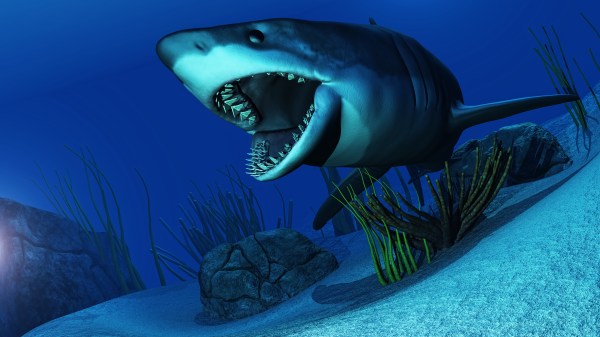
Photo of shark by freepik.com

During NaNoWriMo 2022, I wrote 20,000 words of absolute crap. But for the first time, I took an idea that had been swirling around my brain for a year and put some of it down on paper (the screen).

In December, I returned to an almost-finished novella and revised/edited/proofread hard, getting that sent out before the year’s final clock struck Done. Which meant that in 2023, I was ready to focus almost entirely on that pile-of-shit novel draft. (And Mae Murray’s goal-setting workshop in early January was great!) I got to work. I revised. I deleted (I deleted SO MUCH). I rewrote. I made note cards, which ended up being so helpful.

I signed up for a little writing retreat at the campus where I teach (thank you, Dawn!), and made quick progress. By the time that retreat ended, I had 70-ish pages of worthwhile draft. Not final, but promising.

Then, in an online horror group (sorry can’t share that, it’s Top Secret), I asked if anyone would novel-buddy with me. Because asking someone to slog through your novel draft with you is a HUGE ask–so someone else asking you to do the same makes the whole thing less heavy, and you don’t have to give anyone your first-born child, or in my case, your beloved chubby beagle. It’s a bartering of slogging. And I got a novel buddy! (Thank you, CO!)

To my utter amazement, he LIKED WHAT I HAD. He said it was interesting, engaging, and that the pacing worked. In fact, after he read the chunk I sent him (about 50 pages), his only suggestions were additions and expansions–which was wonderful, because the thing with novels is that you need a lot of words in them, and that can be tricky (you wouldn’t think it would be tricky for me–most of the time I can’t shut the fork up). I added a short scene near the beginning and expanded two others. Then I moved forward, revised some more, and I can’t wait to send him the next chunk–but, I want to hit 100 pages of decent material before I do. Then I will be at roughly the halfway point with the manuscript–I will end up with something like a 60k-word novel. It will not be a 400-pager–I’m a Chatty Cathy, but not that chatty.

In Mae’s workshop on Jan. 6, I wrote out a timeline–goal months by which I would have so many chapters done, because at that time, I thought I would try to get the novel done (a spiffy draft to send out to publishers for consideration) by the end of the year.

Now I have moved up those goals. I want to finish this sucker by the end of the summer. And I think I will actually do it. And that thought has had me floating around for a week.

I’m writing a novel.

I’m writing a novel.

I’m writing a novel.

(And it’s the first of a trilogy.)
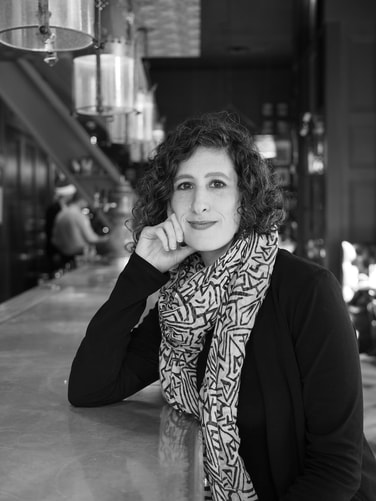
“We don’t create feminist horror; it imposes itself upon us,” an interview with Lindsay Merbaum

Lindsay Merbaum is a queer feminist author, workshop leader, high priestess of home mixology, editor, and more. Her debut novel, The Gold Persimmon, is available now.

Q: Feminist Horror is not new, but it does seem to be experiencing a bit of a renaissance. Can you tell us a little about the genre and its unique opportunities, and why people are celebrating it right now?

A: Feminist horror is borne from the experience of femmes and/or the female-bodied. Often our first encounter with real-life horror involves subtle interactions with imposed gender norms, or not-so-subtle acts of violence such as bullying, assault, and rape. In this sense, we don’t create feminist horror, it imposes itself upon us. In a time of renewed fascism, where the right to abortion access is disappearing before our eyes, where rates of domestic violence have soared during the pandemic, as the Earth continues to heat up, causing death and destruction, there is a renewed interest in finding ourselves in the stories that employ speculative and horror elements to address real-life occurrences. Fiction often expresses the unspeakable and, in this case, feminist horror explores the monstrous nature of misogyny in all its forms. 

Q: Your novel The Gold Persimmon has just debuted, to rave reviews, and is unlike any other work out there. Helen Phillips said “The Gold Persimmon is a place where grief, sex, and mystery mingle,” and the novel has been called “dark,” “experimental,” “queer,” “feminist,” “horror,” “eerie,” “atmospheric,” and more. How did you conceptualize this? Did you consider its classification as the story developed, or did you leave all of that to sort itself out later? 

A: I spent many years writing and re-writing The Gold Persimmon, but the only classification I applied to it was fiction. Of course I knew it was a queer book, but I didn’t realize others would see it as experimental, or even feminist horror, until it started to reach a wider audience outside of my editors and former agent. I think I wrote it the only way I could, in the only way that made sense to me. It turns out what I wrote is shocking to some, and deeply unsettling not only in content, but form as well. Readers find the shift from Part I to Part II to be jarring. They find themselves lost at times. To me, this contributes to its effect as a work of horror. I also believe that every reader’s experience of the text is valuable and interesting, regardless of whether or not they pick up on the connection between the two narratives the book contains. 

Q: In addition to being an author, you are also a mixologist and a workshop leader. How do these different parts of your life fit together?

A: I like to say I have two passions in life: books and booze. Mixology provides an outlet for bringing the two together, as I continue building a library of booktails: cocktails and mocktails inspired by books of all kinds. This work actually involves so many more passions, however, like photography, sculpture, and playing with food. I’ve got white chocolate skulls and marzipan teeth lying around, not to mention all the pounds of sugar I’ve dyed and scattered about. What I read is now largely dictated by what drinks I want to make, or by the authors who commission me to booktail-ize their work. As a result, I’ve gotten the chance to expand the scope of my reading and delve into genres I’d never explored deeply, like romance and sci-fi. It is an expensive project, though, both in terms of time and materials.

[To find out more about Lindsay’s booktails, including personalized potions, Ostara cards, recipe packages, and book + recipe bundles, go to her website.]

Q: What are you working on right now? Why are you excited about it (or them)? 

A: I’m slowly building a proposal for a book of booktails. My next novel is also currently out with beta readers. It’s about a magical midwestern queer bar, a locus for the riotous convergence of witches and goddesses. Though I pull from several mythologies, Sumerian myth looms largest, with the goddess Inanna taking center stage. Fun fact: the earliest recorded poetry was composed by Enheduanna, a Sumerian high priestess of Inanna. Born around 2300 B.C.E., Enheduanna was the high priestess of the most important temple in Ur, a city in the south of Sumer that embodied the culture of the time. She lived eleven hundred years before Homer–around five hundred before Abraham–and wrote her poetry about three hundred years after the cuneiform vocabulary had just developed to a point where poetic phrase was even possible. 

My next-next novel was inspired by Sami ancestor worship and the belief in an afterlife that is right under our feet, our steps mirrored toe-for-toe by those who came before. It’s the story of a lesbian marriage and it’s kind of like a combination of Outlander and Being John Malkovich.

A WordPress.com Website.

Up ↑