Book Launch!

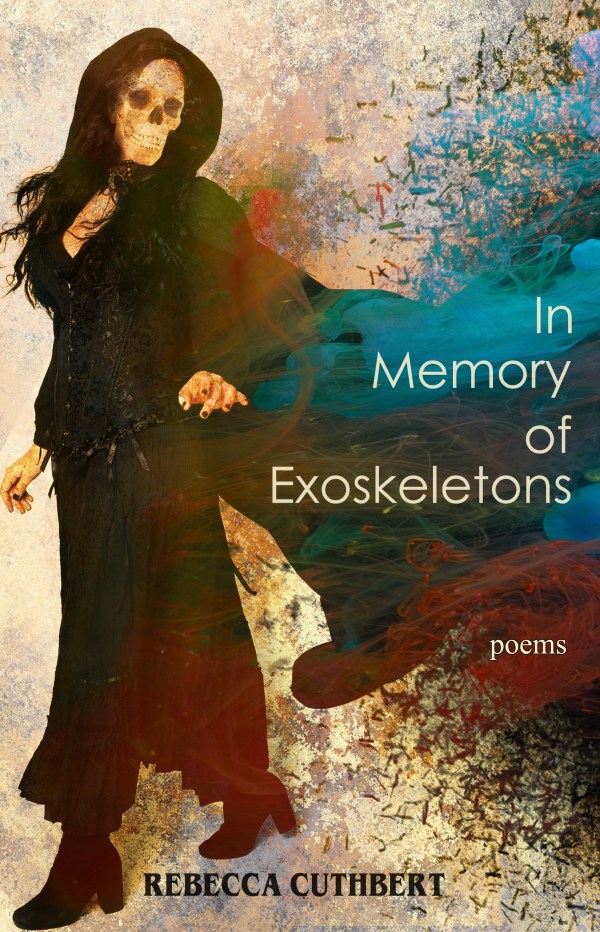
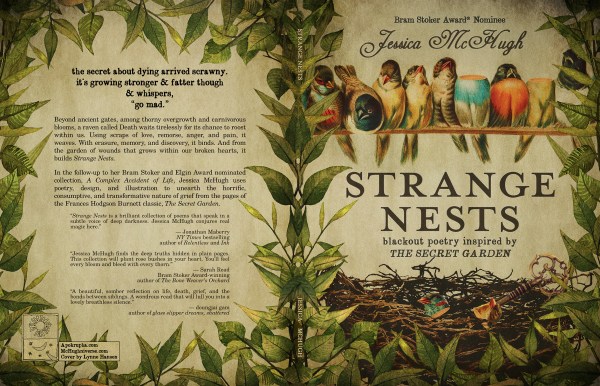
The day is here–and like most long-anticipated events, ot came on slowly and then all at once. I have a book in the world. It’s real. It exists. People are ordering it. (You can too: click here!)

Stephen King says, in On Writing, that publishing books requires talent, desire, ambition, and luck.

Luck.

He’s right. And I’m a lucky gal.

The collection only exists because, by chance, I saw a submission call from Mausoleum Press for their 2022 chapbook contest. I realized I had enough poems to form a little collection, and sent it in. While I didn’t win the contest, the editors wrote to me to say I made their shortlist (that’s like a final round, to some degree), which was very kind and also encouraging. I thought, why not send it to some other presses?

And I sent it to something like ten of them. Not long after I did, the publisher at Alien Buddha Press wrote back to me to say he’d like to publish it. When I opened that email I went into a kind of elation-panic. I was so happy that I was short-circuiting (I do that a lot, emotionally). I didn’t know what to DO.

But, luck gave me many wonderful friends in the writing community, and they guided me through what to say and send to whom, and in what order (I had to notify the other presses that I’d had an offer, give them a chance to make one or cut me loose, all while assuring Alien Buddha Press that I was excited and eager to get back to them). All was taken care of in a week or a bit more, and I signed a contract with ABP!

More luck: I’d come across the lovely cover art of Chad Lutzke, and it turns out that a cover I liked was available.

More luck: Every single person I asked to read an early copy of the collection and write me a blurb said yes. So I ended up with something like eleven or twelve blurbs that make me want to cry, they’re so kind.

More luck: The publisher at ABP just happens to be endlessly patient, and worked through lots of formatting questions and adjustments with me.

More luck: I have lots of supportive friends and family members, and as soon as they could, many of them ordered a copy. One friend ordered five copies!

Thank you to each and every person who has made these fabulous things happen for me, and who has cheered me on throughout the process (especially Joel). You all are my good luck.

OMG I’m Writing a Novel

Photo of shark by freepik.com

During NaNoWriMo 2022, I wrote 20,000 words of absolute crap. But for the first time, I took an idea that had been swirling around my brain for a year and put some of it down on paper (the screen).

In December, I returned to an almost-finished novella and revised/edited/proofread hard, getting that sent out before the year’s final clock struck Done. Which meant that in 2023, I was ready to focus almost entirely on that pile-of-shit novel draft. (And Mae Murray’s goal-setting workshop in early January was great!) I got to work. I revised. I deleted (I deleted SO MUCH). I rewrote. I made note cards, which ended up being so helpful.

I signed up for a little writing retreat at the campus where I teach (thank you, Dawn!), and made quick progress. By the time that retreat ended, I had 70-ish pages of worthwhile draft. Not final, but promising.

Then, in an online horror group (sorry can’t share that, it’s Top Secret), I asked if anyone would novel-buddy with me. Because asking someone to slog through your novel draft with you is a HUGE ask–so someone else asking you to do the same makes the whole thing less heavy, and you don’t have to give anyone your first-born child, or in my case, your beloved chubby beagle. It’s a bartering of slogging. And I got a novel buddy! (Thank you, CO!)

To my utter amazement, he LIKED WHAT I HAD. He said it was interesting, engaging, and that the pacing worked. In fact, after he read the chunk I sent him (about 50 pages), his only suggestions were additions and expansions–which was wonderful, because the thing with novels is that you need a lot of words in them, and that can be tricky (you wouldn’t think it would be tricky for me–most of the time I can’t shut the fork up). I added a short scene near the beginning and expanded two others. Then I moved forward, revised some more, and I can’t wait to send him the next chunk–but, I want to hit 100 pages of decent material before I do. Then I will be at roughly the halfway point with the manuscript–I will end up with something like a 60k-word novel. It will not be a 400-pager–I’m a Chatty Cathy, but not that chatty.

In Mae’s workshop on Jan. 6, I wrote out a timeline–goal months by which I would have so many chapters done, because at that time, I thought I would try to get the novel done (a spiffy draft to send out to publishers for consideration) by the end of the year.

Now I have moved up those goals. I want to finish this sucker by the end of the summer. And I think I will actually do it. And that thought has had me floating around for a week.

I’m writing a novel.

I’m writing a novel.

I’m writing a novel.

(And it’s the first of a trilogy.)

Hard Work Works (thank you 2022!)

This is basically a “part two” to my recent “Failing at NaNoWriMo & Winning at Rejections” post.

This year (2022) has been pretty incredible. I’ve met dozens of cool writers, joined writers’ groups, and I’ve gotten more acceptances than I have in several past years combined. What made this magic? I worked my ASS off.

Which is really good news. That there is nothing ethereal or fate based that leads to writing success. Just good old-fashioned sweat and tears. And that also means there are no shortcuts (at least not for most folks).

Success is relative, I know. And people take different paths to the same or similar places. Mine went like this:

-Joined the Horror Writers Association in early 2022 (March?) after earning an Honorable Mention in the 2021 Etched Onyx Winter Contest. That story, “A Bargain at Twice the Price,” (a ghost story) earned enough that I qualified to join the HWA as an Affiliate Member.

-After joining, figured “What the hell? I’ll go to StokerCon” (May). I knew no one. I mean no one. But I had the best time there, and met so many wonderful people, from big-name authors like Brian Keene to other people like me, struggling to find a path.

-Was so inspired by StokerCon—the people and the presentations and the panels—that I decided on the way home to quit my second job as the managing editor of Leapfrog Press. I deserved time to write, and my writing deserved my time and attention. This realization hit me with a stunning clarity at about midnight on the plane from Atlanta to Buffalo.

-Wrote. Wrote and wrote and wrote. I produced so much new content in 2022, especially over the summer, when I was finishing up with Leapfrog and before the fall semester started (I teach at SUNY Fredonia).

-But I didn’t just write. I joined a workshop with other writers in the horror community who ended up with me the same way folks end up owning cats—I was dumb and hungry; they were kind. I started another workshop with a few people I’d met at StokerCon. I workshopped with other students from Lindsay Merbaum’s independent studies (we are her happy little cult members). And I continued to workshop with my friends from grad school. Outside of those groups, I also beta read for people who needed it and joined social media groups of people with similar goals. I learned so much from those other writers, by reading their work, getting feedback on my own stuff, and sharing our successes and challenges.

-Took every chance I got for affordable independent education. With Lindsay, I learned about Feminist Horror and Queer Speculative Realism, and more recently, witches. I’ll be taking another independent study with her in 2023 on ghosts. (If you are interested in joining us, let me know and I’ll connect you with Lindsay.) I paid for a few developmental editing sessions with an awesome writer and friend. I took workshops through Defunkt Magazine’s Litfest. And I went to other one-off virtual workshops and panel discussions I found through Event Brite.

-Along with all that, I submitted a ton, too. My goal for 2020 was #100rejections. That meant I’d have to submit over 100 times, because I had to factor in the likelihood of a few acceptances. I just hit 150 submissions, with about a ten percent acceptance rate. I sailed past 100 rejections. A friend called submitting work “sending tiny missives of hope out into the universe,” and that’s exactly what it feels like.

-Finished my manuscript of speculative and slipstream stories—you can call it quiet horror or eerie horror or feminist horror or dark fiction. It’s a collection of 13 stories, and I’m currently trying to find a home for it. Some of those stories patiently waited to be revised for ten years. I’m so glad I kept my faith in them.

-I also put together a poetry chapbook manuscript, after being surprised I had enough poems to do so. (I’m primarily a fiction writer.) But I saw a chapbook contest being advertised by Mausoleum Press, and I took a chance. My poetry made their shortlist, but did not ultimately get selected. Getting that far, though, told me my poems had merit. That was further proved by Nocturne Magazine nominating my poem “Still Love” for a Pushcart Prize. The second press that got my poetry manuscript said it came close. Then I got an acceptance! More on that when I have details to share.

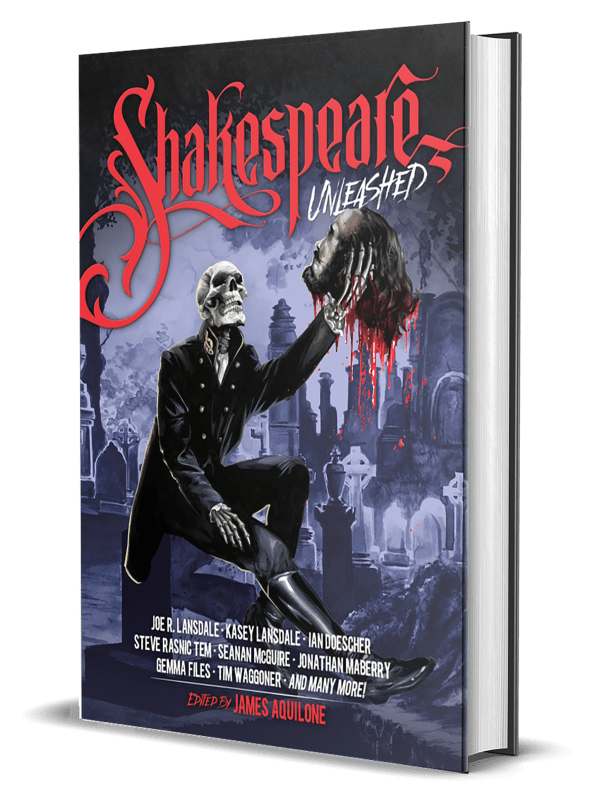
-There were so many “firsts” for me in 2022. In addition to being nominated for the Pushcart Prize, I was nominated for a teaching award at work. I was invited to be a part of an upcoming anthology-magazine hybrid (and my story was accepted). I was invited to be a guest on a podcast (still in the works, so no details right now). I made it into a dream anthology that I thought was such a longshot (Shakespeare Unleashed). And of course, there’s the to-be-published poetry collection that I’m so happy about.

-Oh! And I started and abandoned a novella, then started another novella that I’m happy with (and still need to finish), and the novel notes I mentioned before from my first NaNoWriMo.

I’ve got big hopes for 2023. I hope to get my collection picked up. I hope to finish my novella (spicy ghosty gothic), “Forgive Us Our Trespasses.” I hope to make lots of progress on the novel I tried to start during NaNoWriMo.

And I hope I will get another #100rejections.

Happy Writing to you all!

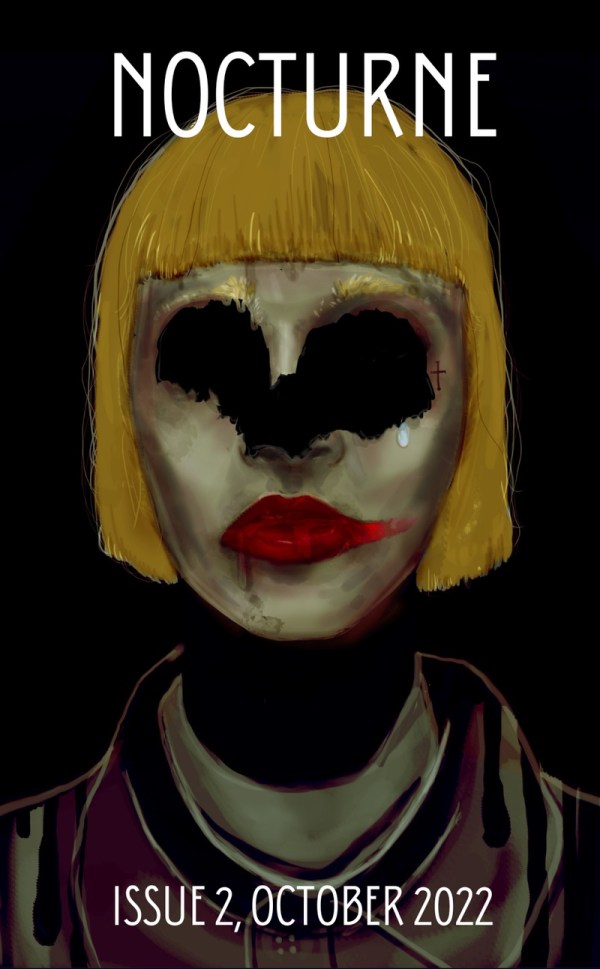
“Still Love”

Published in Nocturne Horror Literary Magazine, Issue 2, Fall 2022, and nominated for a Pushcart Prize

***

When my left hand turned to stone—
whorled gray marble smooth
as a promise, fingers fused in a cold clenched fist
too heavy for my husband to hold
he just switched sides, he loved me
still, we stayed connected
at the movies, the farmers market, shadows
melting into one wide shadow
stretching across the sun-dried pavement.

Visit Nocturne to keep reading!

“Dear Editor, thank you for considering…”

(Image: www.freepik.com)

I have 42 submissions out.

I want to say something about Schrodinger’s cat here, but I’m shit at anything to do with math or science, and would probably screw it up. My point is that I have 42 unknowns floating in the universe. They could get accepted, rejected, or languish in an abandoned email folder.

(Running total for the year is 70-something, with a handful of acceptances. Your girl can take rejection.)

All I want to do is write and revise, or chat with my writer friends about writing and revising, or read cool books. Every sub call sparks an idea, several of which I actually try to draft because I’m finally making time for it. I stay up late, ignore other obligations, and put off chores. I work with a mentor, enroll in classes and workshops, and have applied for a poetry scholarship. I have one story ready to go on the first, and another under construction for a different sub call.

And ideas for 4-5 book-length manuscripts, that I’ll write fuck-knows-when.

(This week, I’ve spent head time with a monster in a hotel, two women flirting over a fresh corpse, an amorous portrait, an Irish sea creature, and other creeps, I guess making me the biggest creep of the bunch.)

I hope there’s quality in all this quantity.

My “become a writer” game plan has three prongs. 1. Write and submit so damn much that by laws of probability, some stuff has to get accepted. 2. Write so much that my craft improves bit by bit. 3. Don’t stop.

Submitting work to magazines and anthologies is a demonstration of hope and stubbornness (and once or twice for me, spite). At this point, stubborness is in the lead.

Go, stubborness, go.

On Becoming a Writer and Learning To Be Vulnerable: Guest post by Carol Weis  

Carol Weis is the author of the memoir, STUMBLING HOME: Life Before and After That Last Drink, published by Heliotrope Books in NYC. She also wrote the Simon & Schuster picture book, When the Cows Got Loose, and the poetry chapbook, DIVORCE PAPERS. Her writing has appeared in the New York Times, Washington Post, AARP, Independent, Salon, ESPN, Guideposts, Cosmo, and numerous other venues and has been read as commentary on NPR.

Unlike many of my writing peers, I never dreamed of being a writer. I mean, I barely made it through college. As a former actor, professional cook and baker, I seemed to have a penchant for creative pursuits, but becoming a writer was never one I considered. Then I got sober. And found I had so much I needed to say. Words in the form of primitive poetry started making their way onto whatever scrap of paper was available. And upon mastering the art of revision, I soon had enough decent poems to submit for a chapbook. 

After unearthing some of my childhood trauma in therapy, I started writing children’s books to appease that ever-present three-year-old still squirming inside of me, the one who was abandoned by a mom sick with tuberculosis for a painfully long time. Her constant need for attention dominated my life and called the shots for many years. 

Writing kid’s books seemed to assuage some of her long-ignored angst. 

At least for awhile.

But when I realized there was always an addicted character showing up in my middle grade and young adult manuscripts, I sensed I needed to shift gears and write about myself. In an achingly honest way. At first, it came in the form of  journaling, and since my daughter had reached her teen years and our fights were more frequent and ferocious, I suggested she journal with me, which turned into a mother/daughter memoir project that still seeks a publisher. And thanks to my daughter’s incessant prodding, after years of telling my wild stories at family reunions and other gatherings, I started a memoir of my own, having no idea where it would take me. So frantic to get down all the memories as they rushed in, I finished the first draft in four months, something I would never advise anyone to do. 

I wrote mostly from my bed, which at the time I called my office. The vulnerability I felt from the words and scenes that poured forth made me want to hide forever beneath the covers. During that time, my body broke out in a vicious rash, with my legs, arms, and back erupting in what I surmised was the rage I felt from the writing. Exposing things I had buried for years. Things I’d even hidden from myself. It got to the point, I only wanted to take walks at night, so I wouldn’t run into any of my neighbors or friends who knew about my book project. I hadn’t felt that kind of vulnerability since I was a kid, or since I first got sober. 

I was writing the same way the memoirists that I loved to read wrote. In a way that made me connect with what they were saying, that took me to the pit of my darkest self. In a way that helped me let go of some of the shame I carried for so many years. In a way that made me feel a lot less alone. And as I wrote for those painful four months, and revised those equally painful four years, I hoped my words would do the same for others. Because making ourselves vulnerable on the page does just that.  

And after all, isn’t that the reason we write? 

“[B]e surprised by the process,” an interview with Jessica McHugh

Jessica McHugh is a novelist, a 2x Bram Stoker Award®-nominated poet, and an internationally-produced playwright running amok in the fields of horror, sci-fi, young adult, and wherever else her peculiar mind leads. She’s had twenty-five books published in thirteen years, including her bizarro romp, The Green Kangaroos, her YA series, The Darla Decker Diaries, and her Elgin Award-nominated blackout poetry collection, A Complex Accident of Life. For more info about publications and blackout poetry commissions, please visit McHughniverse.com.

Here, she answers a few questions about her art, and how she got involved with blackout poetry.

Q: How is the experience of reading/absorbing blackout poetry different than that of traditionally written poetry?

A: I think the main difference is the amount of time you spend reading the piece, especially if the “blackout” portion is more complex and/or takes on the personality of the poem, which is what I try to do with my work. If the source material is apparent, I might spend even more time reading and re-reading, because the blackout poem sometimes honors and uplifts the original piece, whether it was intentional or not. And while I prefer to include a typed version of the poem with my pieces, not everyone does that, and if the blackout art doesn’t create a legible path for the eye, the poem might be more difficult to read/interpret and require a little more work to enjoy.

Otherwise, I think it’s a pretty similar experience. I’ve written poetry and monologues using blackout poetry techniques without actually creating a blackout piece, and I don’t think most readers would know I used a nontraditional method if I didn’t mention it. It’s an incredibly fun and versatile art form.

Q: With your unique work, you have carved out a niche in the horror writing community. How has the support of that community bolstered both your books/work and your sense of self as an artist?

A: It’s been an interesting journey, for sure. Since my first novel publication in 2008, I’ve had ups and down with my career and seen several iterations of the horror community. I’ve seen folks band together, I’ve seen them devour each other, I’ve seen people lose relevance due to an unwillingness to change with the times, and I’ve seen people going through darkness flourish with the support of their peers and come out better and brighter on the other side.

I count myself incredibly lucky to have found lifelong friends in this community and support throughout the phases of my career. Despite experimenting with playwrighting, my young adult series, and other mediums, I remained focused on horror novels and short stories and thought I’d stay on that trajectory. I never would’ve guessed that after 14 years and 25 published books, I’d be a 2x Bram Stoker Award nominee for my poetry, but I also never expected to fall in love with blackout art so quickly after I started playing around with it in early 2019. Nor did I expect such an outpouring of support from the community. While I will continue to write in whatever genre and format strike my fancy, the way blackout poetry rekindled my artistic passion after a long period of doubt, and how my horror friendos lifted me out of my gloom and doom to embrace my new artistic endeavors, makes me think blackout poetry will be a massive part of my life forever

Q: Can you tell us more about your Little Women blackout poetry? How it compares to or differs from your work in Strange Nests and A Complex Accident of Life?

A: Absolutely! My 3rd as-yet-untitled blackout poetry collection, inspired by Louisa May Alcott’s Little Women, is definitely my most ambitious project so far. It will have 155 poems to coincide with the novel’s 155th anniversary in 2023, which is triple the number of poems in both A Complex Accident of Life and Strange Nests. That wasn’t my original intention, but I’ve come to realize that “original intentions” don’t matter much when it comes to these collections. A Complex Accident of Life only became a collection because Jacob Haddon of Apokrupha saw me posting Frankenstein blackout poetry and reached out about compiling the pieces. Strange Nests wasn’t planned either; it was more of a coping mechanism after my brother passed away in January 2021 and transformed into something so much more. So I’ve rolled with the punches and allowed myself to be surprised by the process. Deciding to make a lot more poems from Little Women has opened up the narrative in a huge way and allowed me to explore weirder paths, giving the collection more of a cosmic horror feel while remaining a fierce tale of sisterhood, selfhood, and feminine rage. While an official release date has not been set yet, it will probably be available from Apokrupha around April 2023. 

Q: Finally, is there a text you have your eye on for a future project? Are you willing to share what that is?

A: For collections, I’ll likely keep using classics written by women for as long as possible, and while I’d have to verify these are in the public domain, I’d love to play with Rebecca by Daphne Du Maurier, A Wrinkle in Time by Madeleine L’Engle, and pretty much any Agatha Christie. Outside of that theme, I’m also eager to make some creepy holiday pieces from A Christmas Carol. But really, I’m open to giving anything and everything a shot. I’ve found beautiful poetry in the most unlikely places, and I never get tired of discovering the hidden treasures within. 

To commission your own blackout poem, contact Jessica here.

Writing Ninety-Nine Fire Hoops: Guest Post from Allison Hong Merrill

The blog took a spring break, but is back with Allison Hong Merrill, author of the bestselling and award-winning memoir Ninety-Nine Fire Hoops. Here, Allison tells us about the process of rebuilding and restructuring her memoir after receiving beta reader feedback, and shares some of her best writing tips. Thank you, Allison!

When reading a book, I like to see the hook, setting, character, and conflicts of the story set up within the first few pages. So I make sure to offer my reader the same gift.

Originally, my memoir, Ninety-Nine Fire Hoops, was written in a nonlinear structure. But several of my beta readers suggested that I revamp the entire manuscript and change the narrative into a chronological timeline, so I did. It was a huge undertaking. The manuscript went through twelve full revisions. On average, each pass took two weeks. And when I say, “I revamped the entire manuscript,” I mean I even changed the title. It went from Grafted Mandarin to Ninety-Nine Fire Hoops because the new structure is in ninety-nine short sections. But even after this major overhaul and subsequent edits, the first ten pages remained unchanged from the first draft to the published book. It’s because the inciting incident, setting, main characters, and conflicts of the story are established within those pages.

When writing a book, I like to do the following:

1. Imagine my book adapted into a film, then I write scenes and dialogue as if describing them from the movie.

2. Do book research and save images on pinterest.com to create a mood board for reference. For a visual person like myself, this method works really well.

3. I make myself a different writing-related promise and a reward every week. This is not a goal; it’s a promise. A goal is for reference, a promise is to be kept. Some examples of my promises are: write an hour every day, revise a chapter, create social media content. If I keep my promise that week, I reward myself. My top three rewards are: watch a movie, buy a cute notebook, sleep in on Sunday morning. If, for any reason, I fail to keep my promise, then I give myself a second chance in the following week to restore my integrity and try again. Sometimes it’s necessary to promise myself to practice the art of self-care. I’ll take a week off from writing to recharge my creative energy. I work with another writer as accountability sisters. We check in every Saturday morning to support each other and to celebrate our victories, big and small.

4. I’m a memoirist. To dive deeper into my memory, I keep a tin box of NIVEA crème on my desk. Its distinctive scent takes me back to my childhood years and, from there, I get to explore the past and find inspirations for my writing projects. Smell triggers memory. If you’re writing about your past, please consider keeping something (lotion, soap, shampoo, perfume, scented candle, essential oil, etc.) on your desk with a scent that reminds you of the olden days.

5. Because I’m a visual person, instead of setting a timer on my phone, I flip over a sixty-minute hourglass on my desk to help me stay focused on one-uninterrupted-hour of writing.

I hope you find these tips helpful. Happy writing!

Juggling WIPs

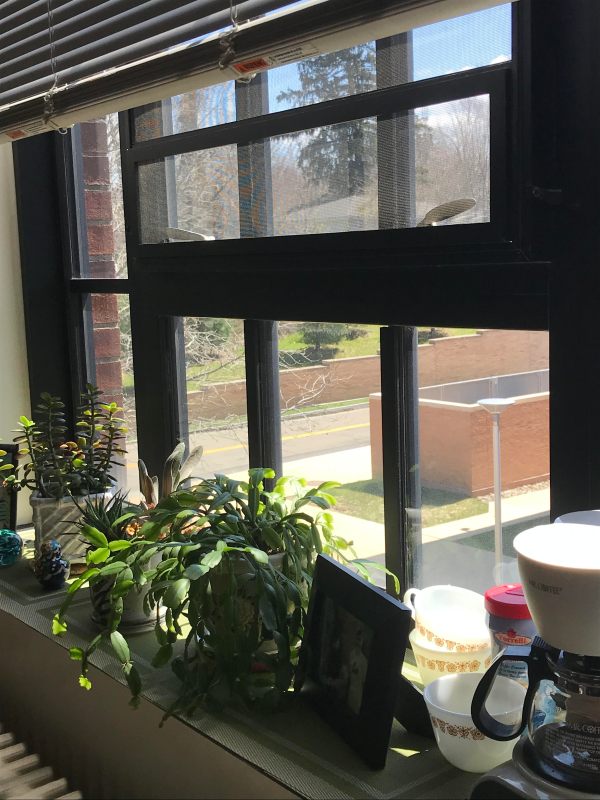
The view from my office window.

This is not trying to be instructional. This is more or less a rambling cry for help.

How do you decide what to work on and when, if you have lots of writing projects started? Especially if demands in your life are all grabbing at your legs like toddlers? (Some of you likely have actual toddlers grabbing at your legs.) I have to get a lesson plan ready for Intro to CW class at 4 today and proofread a typeset novel for my other job. But I’m distracted by thoughts of the last two stories I need to finish for my speculative fiction collection, and the poem that’s almost done but not quite, and the essay about writing I started yesterday that today I’m thinking might be garbage (and if it is, how much time I spent on it).

I also saw a sub call yesterday for ghost stories (Can I write one by the end of May?) and a horror poetry collection that doesn’t accept simsubs (Where do I have that one poem out? Must remember to check my sub list). There are several titles I’m trying to read before StokerCon, too, so, of course, add reading to the to-do list.

How do you focus? How do you organize your projects? Do you have an order of importance, and if so, is that by deadline or by interest? I’m excited about everything, and I love having a lot going on, but instead of doing any of it, I’m staring out the window.

“We don’t create feminist horror; it imposes itself upon us,” an interview with Lindsay Merbaum

Lindsay Merbaum is a queer feminist author, workshop leader, high priestess of home mixology, editor, and more. Her debut novel, The Gold Persimmon, is available now.

Q: Feminist Horror is not new, but it does seem to be experiencing a bit of a renaissance. Can you tell us a little about the genre and its unique opportunities, and why people are celebrating it right now?

A: Feminist horror is borne from the experience of femmes and/or the female-bodied. Often our first encounter with real-life horror involves subtle interactions with imposed gender norms, or not-so-subtle acts of violence such as bullying, assault, and rape. In this sense, we don’t create feminist horror, it imposes itself upon us. In a time of renewed fascism, where the right to abortion access is disappearing before our eyes, where rates of domestic violence have soared during the pandemic, as the Earth continues to heat up, causing death and destruction, there is a renewed interest in finding ourselves in the stories that employ speculative and horror elements to address real-life occurrences. Fiction often expresses the unspeakable and, in this case, feminist horror explores the monstrous nature of misogyny in all its forms. 

Q: Your novel The Gold Persimmon has just debuted, to rave reviews, and is unlike any other work out there. Helen Phillips said “The Gold Persimmon is a place where grief, sex, and mystery mingle,” and the novel has been called “dark,” “experimental,” “queer,” “feminist,” “horror,” “eerie,” “atmospheric,” and more. How did you conceptualize this? Did you consider its classification as the story developed, or did you leave all of that to sort itself out later? 

A: I spent many years writing and re-writing The Gold Persimmon, but the only classification I applied to it was fiction. Of course I knew it was a queer book, but I didn’t realize others would see it as experimental, or even feminist horror, until it started to reach a wider audience outside of my editors and former agent. I think I wrote it the only way I could, in the only way that made sense to me. It turns out what I wrote is shocking to some, and deeply unsettling not only in content, but form as well. Readers find the shift from Part I to Part II to be jarring. They find themselves lost at times. To me, this contributes to its effect as a work of horror. I also believe that every reader’s experience of the text is valuable and interesting, regardless of whether or not they pick up on the connection between the two narratives the book contains. 

Q: In addition to being an author, you are also a mixologist and a workshop leader. How do these different parts of your life fit together?

A: I like to say I have two passions in life: books and booze. Mixology provides an outlet for bringing the two together, as I continue building a library of booktails: cocktails and mocktails inspired by books of all kinds. This work actually involves so many more passions, however, like photography, sculpture, and playing with food. I’ve got white chocolate skulls and marzipan teeth lying around, not to mention all the pounds of sugar I’ve dyed and scattered about. What I read is now largely dictated by what drinks I want to make, or by the authors who commission me to booktail-ize their work. As a result, I’ve gotten the chance to expand the scope of my reading and delve into genres I’d never explored deeply, like romance and sci-fi. It is an expensive project, though, both in terms of time and materials.

[To find out more about Lindsay’s booktails, including personalized potions, Ostara cards, recipe packages, and book + recipe bundles, go to her website.]

Q: What are you working on right now? Why are you excited about it (or them)? 

A: I’m slowly building a proposal for a book of booktails. My next novel is also currently out with beta readers. It’s about a magical midwestern queer bar, a locus for the riotous convergence of witches and goddesses. Though I pull from several mythologies, Sumerian myth looms largest, with the goddess Inanna taking center stage. Fun fact: the earliest recorded poetry was composed by Enheduanna, a Sumerian high priestess of Inanna. Born around 2300 B.C.E., Enheduanna was the high priestess of the most important temple in Ur, a city in the south of Sumer that embodied the culture of the time. She lived eleven hundred years before Homer–around five hundred before Abraham–and wrote her poetry about three hundred years after the cuneiform vocabulary had just developed to a point where poetic phrase was even possible

My next-next novel was inspired by Sami ancestor worship and the belief in an afterlife that is right under our feet, our steps mirrored toe-for-toe by those who came before. It’s the story of a lesbian marriage and it’s kind of like a combination of Outlander and Being John Malkovich.

A WordPress.com Website.

Up ↑