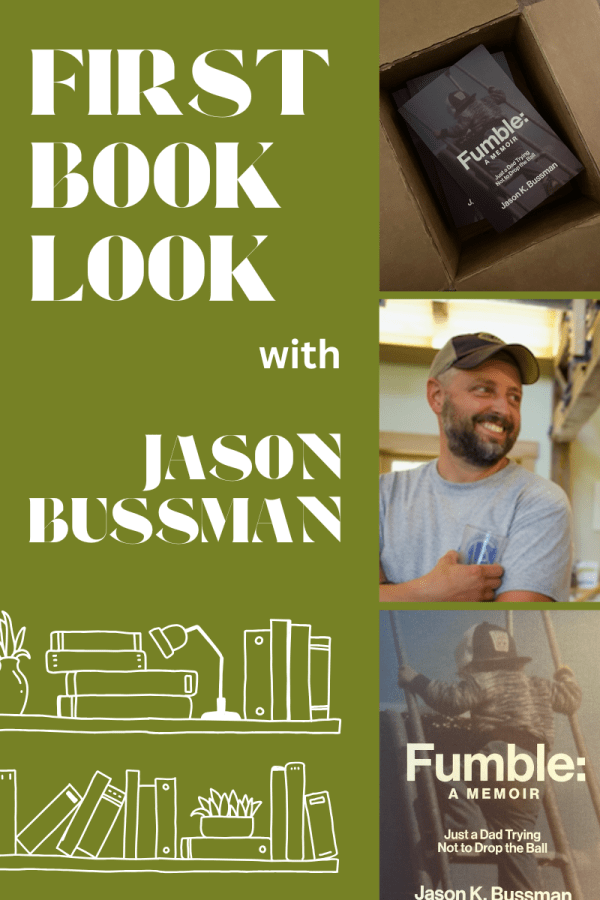
FIRST BOOK LOOK: Jason Bussman’s FUMBLE

First Book Look is an ongoing interview series that gives new authors a chance to talk about their debut titles.


Q: What is your new book called, and what is it about?

A: Fumble: Just a Dad Trying Not to Drop the Ball is a memoir about moments in my life when I have either dropped the ball or stumbled in some way as a parent. The first half of the book consists of standalone essays from fatherhood: moments when I learned a valuable lesson on how to interact with my kids. The second half is a compilation of moments from my childhood when I learned something. The hope is that these stories help shine a light on the dad I wrote about being in the first handful of essays. These two halves are separated by a halftime of sorts: two stories in which my wife is the key piece. 

Q: What was your biggest challenge in writing this book or in getting it published? 

A: The biggest challenge for me was perseverance. The constant state of rejection that you live in as a writer is something overwhelming and can be very unbearable. Luckily for me, I have a solid support system in place both at home and from my friends and colleagues. I just had to keep telling myself: all you need is one person to like it. Once that happens, everything clicks. And it happened. 

Q: What are you hoping readers will get from your story? What do you hope to leave them with?

A: I hope these moments I share are relatable to families: both parents and kids. By embracing my fumbles, I am hoping that people can laugh and embrace their own moments when they may have stumbled as a parent, or a son or daughter, brother or sister. This light-hearted look in the mirror of a memoir is hopefully something that one can walk away from with a smile on their face. 

Q: What has been your favorite part of being a new author, so far? 

A: I have had several conversations on some of the questions I raise in this book, and I find that is one of the most rewarding parts of being published. The conversations about telling my daughter to stand up to the boy who pulled her hair because he “likes” her, or whether or not I truly believe that a Star Wars character was as powerful as I think she was. The amount of support I have received from my community, colleagues, and family has been extremely humbling. 

Q: What are you working on next? 

A: Book Two of the Bussman Saga is currently in progress. I have a working title and a list of moments that I am hoping to convert to another collection of standalone essays. This one will be almost completely centered around me as a stumbling and bumbling father and husband. I also have an idea for one of my unpublished essays to become a much larger book-length piece centered around me as a fifth-grader. But that’s not ready to talk about quite yet….

WEBSITE: jasonkbussman.com

FACEBOOK: Jason K Bussman

INSTAGRAM: @jkbussman

SUBSTACK: @jkbussman

On AuthorCon V & Networking Etiquette

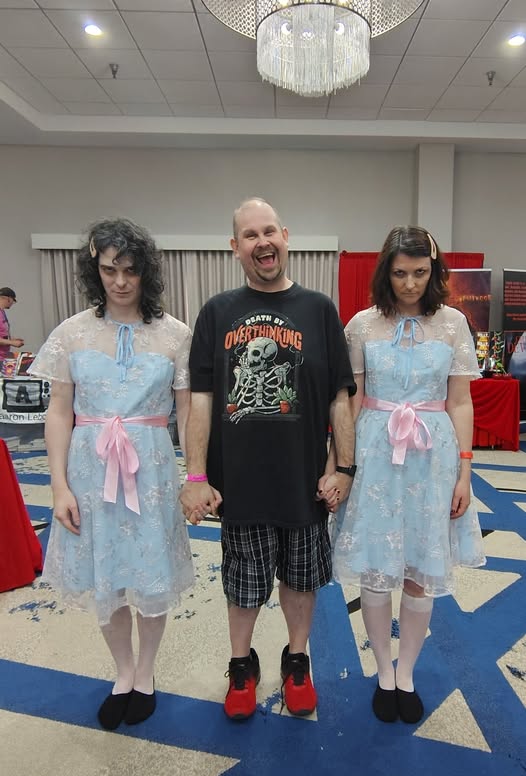
Photo, from left: Jamie Flanagan, James Sabata, and yours truly

This blog post needs to start with thanks. I appreciate, so much, that I got a chance to spend time with dear friends, and to meet readers, and to talk books, and to be just plain silly for a long weekend. Thank you to James Sabata for the invitation and to Scott Bradley and D.M. Guay and Jamie Flanagan for all the Spirited Giving magic; thank you to the con organizers and volunteers and charity coordinators, especially Brian Keene and Joe Ripple and Jake Lerner; thank you to all the attendees; thank you to all my fellow panelists and performers and to the staff at the Doubletree Hilton in Williamsburg, VA (and especially Regan and Chris!). Thank you to Sam Rebelein and Vin for being great tablemates (and for doing math for me). Thank you to all the lovely people I met. Thank you to readers and to folks who bought my books and folks who gave me or sold me their books. Thank you to everyone who helped us raise money for Scares That Care by putting cash in our jar to take pictures with us… I mean, with the twins from The Shining.

One of the panels I had the privilege of joining was on networking etiquette–what to do and not do, both online and in person at events (cons, readings, signings, etc.). This topic is important to me because I have some very strong feelings about it–the first being that I don’t really care for the word “networking.” It has, for me, the connotation of being shallow, self-serving, and fake, though the word’s denotation is more respectable, and hearkens back to (what I think are) its origins: it’s a chance to “work the net” with others–the way fishermen (and -women and -people) did for years. With many hands weaving and tying, together, these folks made one another’s nets bigger, and they mended any holes in the nets. While they sat around mending, they also talked, and got to know each other, and told one another stories of their trials and travels. I bet they laughed a lot, and sometimes cried together.

I use the term “community building” because that is what I’m doing at these events and online, with other writers and readers. It’s why I’m writing this blog post–to be helpful, and to help new writers (and seasoned writers) avoid some of the mistakes I’ve made, and that I’ve seen others make, often innocently or at least unknowingly.

The panel could have gone on longer this past weekend–I had three pages of notes (I’m a gal who brings notes). And while we covered a few topics, we had to (understandably) leave a lot on the table.

So I am writing this, now, to not only cover some of those things, but to reiterate the good points my fellow panelists (Joseph Pesavento: moderator, Rebecca Rowland, Robert Swartwood, Shane McKenzie, B.C. Lienesch, and John Lynch) made. I’ll number them to stay organized.

  1. Know why you are there. People come to conventions and other live events for many reasons. I came to help with a charity event (Spirited Giving) happening at AuthorCon V, to be silly and raise money with my friend (see photo), to spend time with the friends I already had (and miss), to talk to readers about books, to perhaps sell some books (I did!) and to meet other authors who do the thing I do. Yes, there were famous people there. Yes, I said hello to some of them. But, though I am, at times, a fangirl, fangirling wasn’t my intention for the weekend (though I hope I was as polite and respectful and appreciative as I meant to be–these are folks who succeeded at the very thing I am doing, and I look up to them as experts).
  2. Mind your substance consumption. If you like to have a few social cocktails (or whatever), cool, but keep it at that. (This is a mistake I’ve made–not trying to be a hypocrite here!) I have learned that events are way more fun if you know, for a fact, that you didn’t say or do anything you’d be embarrassed about later. Lots of folks get carried away at these things, having fun with their friends, but as my smart pal James Sabata said, if you wouldn’t do something around the coworkers at your day job, don’t do it around your colleagues at a convention. It’s still a professional space.
  3. Say thank you. Say thank you to everyone, all the time. Thank the host. Thank panel attendees and your fellow panelists and your moderator. Thank everyone who buys a book from you–thank everyone who even stops to look at your books or to chat with you. Thank the people from whom YOU buy books, or who give you books or swag. Etc. etc. The old adage applies: “Please” and “thank you” go an awful long way, and actually BEING grateful makes you feel kind of amazing.
  4. It’s okay to introduce yourself. Sometimes I forget this–I feel shy, or I can’t remember if we’ve met before so don’t want to sound silly, or I don’t want to interrupt the conversation happening. But it’s okay to just wave or offer to shake hands and say “Hi, my name is Rebecca. I don’t think we’ve met,” or, “Hi, I’m Rebecca, and I think we’ve met but I’m not certain.” That one is still a struggle for me, but I’m working on it.
  5. If you see someone sitting alone, invite them to your table or to your conversation. But if they say no, thanks, they’re alright, leave it at that. They may be purposefully taking a few minutes to themself, because sensory overload is a definite challenge at a big convention, or they are centering themself for something they are about to do–a reading or a panel or something like that.
  6. You don’t have to meet everyone every single time. It’s fine to say hello, or not, to the bigwigs in your genre. It’s okay to admire from across the room. If you have an opportunity and want to take it, that’s great. Tell them you admire a certain book or story or script–be specific–introduce yourself, and then let them get back to the event. They’re busy and you don’t want to monopolize their time. And if you don’t have an opportunity to meet them, or if you are too shy, or if it feels awkward, let it go. If they are having a closed conversation with their friends, definitely let it go. Remind yourself that it’s possible you’ll get a chance someday in the future to meet them. Overall, remember they are human. They get tired. They get overwhelmed. They get frazzled. They can’t be “on” all the time, nor should we expect them to be.
  7. Don’t prairie-dog. Some people have a cruder term for this, which rhymes with “jar-lucking,” but I won’t use it here. This is the unfortunate behavior I’ve seen exhibited many times whereby lesser-known authors or fans constantly pop their heads up to look around for the most famous person in the room, and make a beeline to them. And then they do it again, leaving that conversation if someone more famous walks in. And then they do it again, and again, and…you get the point. It’s tacky behavior and no one appreciates that kind of attention.
  8. Don’t mix networking with dating. Yes, some people meet at conventions and fall in love and live happily ever after. And that is nice. But most folks there are there to talk books and readings, not to find a bed-warmer for the night. Also, other people notice more than you may think they notice, and you might not want your personal “interactions” to become public gossip.
  9. Give the grace you get. This applies bottom to top. You forget people’s names, so don’t be annoyed or offended if someone forgets yours. If someone doesn’t remember your book’s exact title or cover or publisher, again, it’s not personal, and it happens to all of us. If someone needs to politely excuse themself from a conversation, say thanks and you hope they have a good night–because sometimes you need to politely excuse yourself, too. This applies to reading early review copies and writing blurbs and leaving reviews, too. Our good intentions are always going to outpace our capabilities. If someone thought they could help you and then couldn’t, well, take a look at how high your own TBR pile is before you get bitter about it.
  10. Support others, but do it genuinely. It’s the easiest thing, online, to hit the “share” button to help someone spread good news or promote their work. Share the posts of the successful people you admire, yes, but also share the posts of your peers and of people just starting out. If you have three more seconds, tell them “Congratulations” or “Very cool!” in the comments section. At events, tell readers and panelists they did well, and sincerely compliment what you liked about their performance or presentation. Don’t try to flatter or “kiss up” or gush (or whatever you want to call it) for the purposes of furthering yourself or your reputation. It’s transparently fake and no one is fooled by it, and you will only succeed in making people feel icky.
  11. Have a few conversational questions ready. This one comes from Jamie Flanagan. Instead of running up to people and saying “I love you!” and then going mute with embarassment (did I kind of do that to Jennifer McMahon in an elevator a few years ago? I did), have a few questions ready. They can be simple and should be appropriate. Examples: “What are you working on now?” (For writers.) “What genres do you like to read?” (For readers.) “What’s a good book you’ve read lately?” (For anyone.)
  12. At all costs, avoid public arguments, tantrums, and meltdowns. I don’t have to explain that one.

In summary, be polite to all, and be genuinely kind to anyone with whom you have interactions. If you meet people you admire, be careful not to linger if they are busy or perhaps looking a bit tired. Tell them what you love about their work and then let them get back to their activities. And don’t make every social encounter a transaction, seeing folks only as untapped resources for you to use.

I could go on and on, but for now, for what I wanted to talk about on my panel, for the smart things others said, for what I have noticed around me at many an event, I think that does it! Feel free to comment with anything I missed.

What NOT to say to publishers or editors on social media

I’m writing this post because of comments I have seen recently on social media in response to publishers’ “open submissions” announcements. Of course I will not name names–it’s not a burn post. But many of us have had to learn the submissions process the hard way, and I hope this post will help folks avoid the mistakes I’ve seen and the mistakes I’ve made myself. Now I can’t cover every faux pas here, and most publishers will absolutely overlook small mistakes and mixups. (Like, if someone wrote to “Undertaker Press” by mistake rather than “Undertaker Books,” no biggie.) Here are a few things to try to avoid, though, with some tips on what to say or do instead.

  1. Do not announce yourself like a boxer jogging into the ring.

This imagery comes to you courtesy of Heather Daughrity of Watertower Hill Publishing and Parlor Ghost Press. It’s the perfect analogy for what I have seen on these social media posts and in emails I’ve gotten as an editor.

Some authors, before even mentioning their current project or submission, feel they need to yell through a megaphone, often exaggerating their accomplishments, and generally putting their ego first. Not a good look, I promise you.

The place for information about you is in a short, factual, third-person bio paragraph you would include in a cover letter/email with your submission. Stress on “short.” (And do not put it on social media in a comment on a publisher’s post.) Start that paragraph with a personal note about yourself and follow it up with a few publications/accolades and then where folks can find more information about you (hopefully, your author website).

2. Do not beg, grovel, put yourself/your work down, or share a sob story.

Be friendly, confident, and at least a little bit professional. I have seen statements in the comments section like “I have a book that is like Star Wars meets Anne of Green Gables but you probably wouldn’t want to read it.” Problems: zero confidence makes me think it’s probably not that good, but also, you made up my mind for me, which is kinda rude and presumptuous. So let’s revise that. It would be much better if the person said something like: “I have a novel manuscript ready that could be described as a mashup of Star Wars and Anne of Green Gables. Beta readers have told me it’s a fun read and not like anything else they’ve read. If you’d like to take a look, I’ll send it along.” Of course, only say that if it’s true.

Other cringeworthy comments, which of course I’m paraphrasing/imitating:

“Wow I’m so glad to see this sub call. I haven’t had anything published in over a year because I had to move and then my cat died and I lost my job. I wanted to self-publish but I never really got around to it and I thought I’d never write another thing but hey, I could send something to you!” (TMI, and a weird vibe right away; might also signal to the editor, rightly or wrongly, that you would be difficult to work with and/or clingy.) Instead, how about “This looks like a great submission call and I have something that would fit. I’m excited to send it!”

“Oh cool I love your books! You put out the best books in the industry and I tell everyone you’re the best! Publishing with you would be a dream come true and would be the best thing that ever happened to me!” (Even if that is totally true, it SOUNDS like corny flattery. Compliments are appreciated, but in moderation.) Instead, try “You put out great books and have an impressive reputation. I’m definitely sending you something!”

3. Try not to ask questions in the comments section that could be answered by the publisher’s post itself or by a quick look at their website or social media.

Comments in this category of “Please No” are “What kind of submissions do you want?” (That will be in the post or on the website.) “What books have you published?” (Go to the website.) “Who else has books with you?” (Again, go to the website.)

It is absolutely fine and great to ask questions. Just make sure the questions you are asking can’t be answered by a one-minute review of the post or a quick website search. And, of course, since we all miss things that are right in front of our faces (because I have done this a million times), when you realize your goof, offer a quick apology. “Sorry! That was right in the post. My bad!” Editors and publishers are humans too. But you want them to know you don’t take their time and attention for granted.

4. Do not say rude things.

I cannot count the times I have seen absolute rudeness in response to publishers’ submissions calls: “Why would I even submit to you? You’re a joke.” “My work is worth money. Recognition doesn’t pay my bills!” “You aren’t a professional magazine if you don’t pay writers!”

Lordy. This is one of those “Don’t like it? Keep scrolling” situations. It’s true that editors/publishers should announce whether or not it’s a paying publication. But when it does not pay, or when the payment is token, don’t be nasty, and don’t assume every other writer out there has the same publication goals you do. A friend of mine submits work to non-paying calls, because he’s just trying to meet other authors and folks in the industry, and get his name out there. I have submitted to non-paying calls because the publication’s theme is really cool, or I like what they put out, or it’s for a charity I care about , or because I know the editor to be great, or because I know that publisher submits authors’ work for awards like the Pushcart Prize and Best of the Net. Maybe a writer is just starting out, and getting a story or poem in a non-paying publication would mean the world to them. Do what you want to do, submit or don’t, but keep the vitriol to yourself.

“I’d never submit work to you! You’ve published [author I hate/author who has behaved badly]!”

Okay. I know this is a tricky one. But think before you type.

It could be that yes, a publisher has put out a book by someone who acted badly. We’ve seen it all too often in the horror community. But when did they put out the book? Was it BEFORE the author in question was known to be a jerk? Could the contract have been signed before that point? Contracts are legal documents, and before you type an angry comment to this here post lemme ask you: Are you a lawyer? A judge? If not, still those itchy fingers. Some publishers have what is often called a “behavior clause.” This usually means that, should an author behave badly, in any number of ways, the publisher can immediately cease production of their book and the contract is void. But if a publisher does NOT have this clause, they may be stuck with that author and that book, at least for the duration of the contract, which can range from six months to several years.

Here’s something else that a lot of righteously angry people won’t want to hear: People change. PEOPLE CHANGE. They are capable of personal growth, and learning, and repentance, and behavioral correction. It’s possible that a person did or said something terrible a long time ago, and has since become a better person. (This applies to like, non-felonies, of course–I’m not saying you should forgive every murderer and assaulter out there.) There is an expression I love: “When you know better, do better.” I’m not going to hate anyone because of something they said 20 years ago. I’m sure that I myself said horrible things 20 years ago, when I was young and ignorant and sheltered. I’m sorry for all of them, even the ones I don’t remember saying (because alcohol and I were way too close in my 20s). So I will give people the grace that I hope to receive. People. Change.

I’m going to stop there. Happy posting and happy commenting, everyone.

Why no author account?

Why I choose not to create separate author accounts on social media

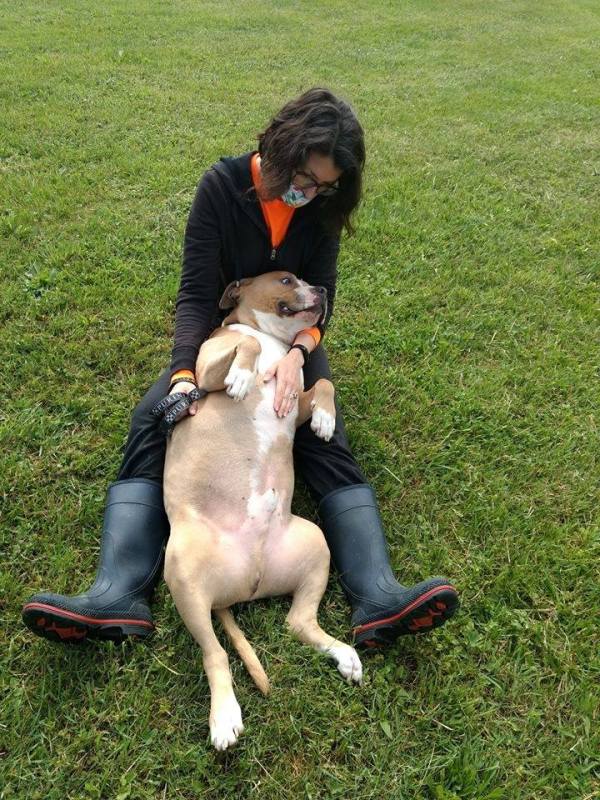
(Picture: This is me, circa 2020, hanging out with Ra, one of the shelter dogs at the place where I volunteer. He loved to cuddle and weighed about 90 pounds.)

I definitely understand why many authors choose to create separate profiles for their writerly selves on social media. For one, many authors write under pen names, so having only personal accounts wouldn’t make any sense–fans and readers couldn’t find them! Some writers have concerns about privacy for safety’s sake, or because their bosses wouldn’t be cool with what they publish. Another reason is that people share family pictures and other “close circle” content on their personal accounts, and to them it doesn’t feel appropriate to combine those with their posts about books and publications. Still another reason, related of course, has to do with “branding.” And for me, that word opens a can of worms.

My brand is me.

I understand branding and its necessity. I understand wanting to convey to readers what your “vibes” are–what you write, what you like, what your literary aesthetics are. But, several years ago I went through some workplace turbulence and, when things settled down, I realized I could no longer hide aspects of myself, or pretend to be what I’m not, for the sake of someone else’s idea of “professionalism.” Instead I opted for a sort of radical honesty when it came to my representation of self. No masks, no layers, no separation. People could take me for me or not take me at all.

And why can’t authenticity BE a brand, anyway? Why shouldn’t my students and coworkers and editors and readers and childhood friends and gardener friends and writer friends and dog-shelter-volunteer friends and family members get the same version of me?

It can; and, no reason.

It’s all in my writing, anyway.

My poetry collection, In Memory of Exoskeletons, is full of my thoughts and experiences–all very personal. There are poems about my grief over losing my mom as a kid, my own mental health struggles, my love for my husband, my feelings about the way society disregards “women’s work,” how much I love dogs, my garden, body dismorphia, and more.

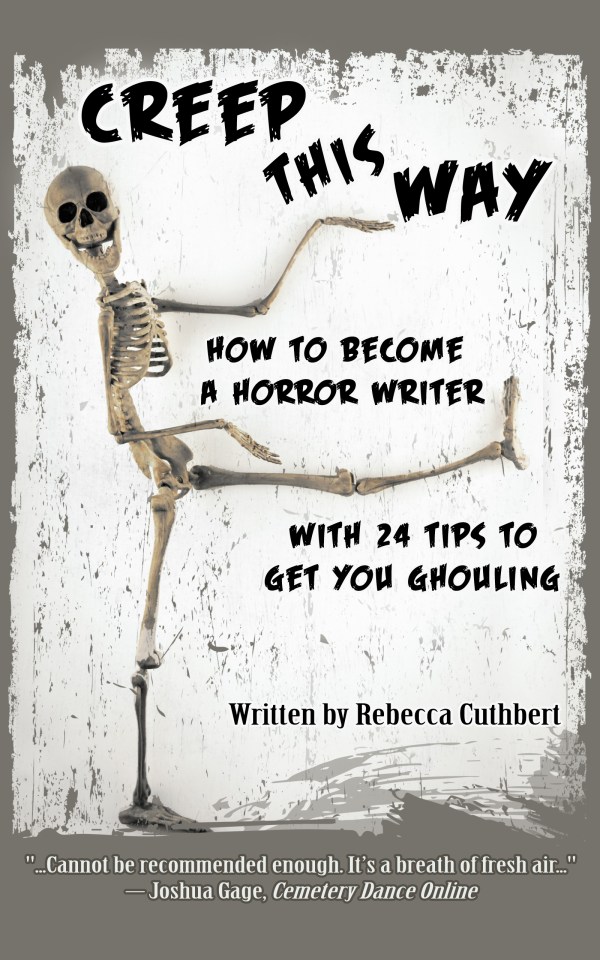
My memoir and craft text, Creep This Way: How to Become a Horror Writer with 24 Tips to Get You Ghouling, rehashes all of my writerly attempts and failures over the course of the last, oh, twenty years. I admit there that a mean editor made me cry. I recount how terrified I was to go to my first StokerCon. My skeletons don’t live in my closet. They dance around the living room.

Any stranger who reads both of my books will pretty much know everything about me.

My friends are my readers.

Maybe I’ll make national book lists at some point in the future and people far and wide will get used to seeing my name on book covers. But, well, probably not and, even if so, that’s a way’s away. For now and maybe forever, the main readership of my books is made up of my friends and family. All those folks in my personal life. Like, my readers wouldn’t have to look up some interview if they had a question about my work. They could just, you know, text me.

I already can’t keep up with my accounts.

I tried TikTok and failed; deleted the app. I tried SnapChat, and same thing. I’m on Twitter, Facebook, Instagram, and Threads. I have a hard enough time dealing with those–the only place I consistently hang out is Facebook, because that is where all of my work threads and friends threads exist. There’s no way I’m adding professional accounts to that list–it’s already too long.

So, if you want to make separate author or professional accounts, do it, especially if you have privacy or safety concerns. But it’s not mandatory!

“Horror allows us to safely explore fear,” an interview with Shadows in the Stacks editor James Sabata

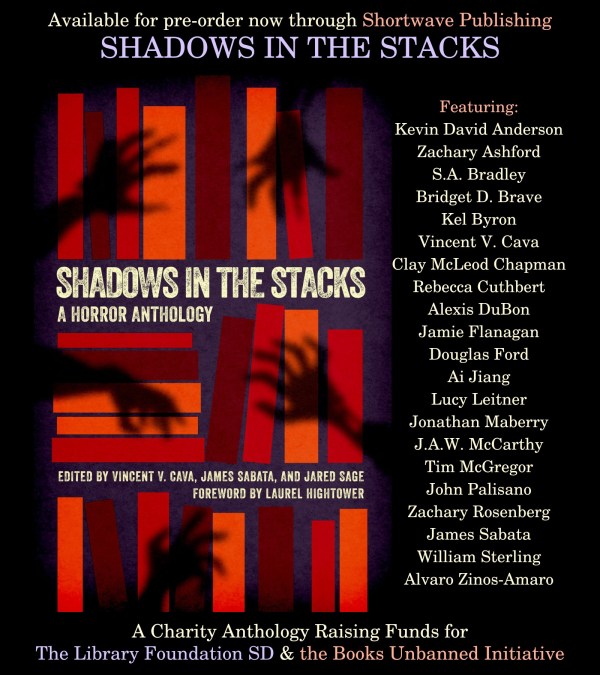
James Sabata, horror author, editor, podcast host, and founder of Spirited Giving, agreed to give us the story behind Shadows in the Stacks, a great anthology that I get to be a part of (yay!). Read on for James’s interview, and see his bio and more information on Spirited Giving and Shadows in the Stacks below.

Q: So what is Shadows in the Stacks? Tell us about it and what it benefits. 
A: Shadows in the Stacks is a charity horror anthology that is a part of our horror-themed fundraiser Spirited Giving. Spirited Giving takes place May 29th at the San Diego Central Library and features author readings, live performances, and book signings, with ticket sales raising money for the Library Foundation SD and the Books Unbanned Initiative.
Shadows in the Stacks is an offshoot of Spirited Giving and another way to raise money to fight censorship and banning books.
Available through Shortwave Publishing and edited by Vincent V. Cava, Jared Sage, and myself, Shadows features short stories from twenty-one authors.
The Books Unbanned initiative is a library program that issues library cards nationwide in order to give electronic access to the library’s digital and audio collections to teens and young adults living in U.S. locations where books are being challenged. The initiative aims to support the rights of teens and young adults to read what they like, discover themselves, and form their own opinions, without being restricted by censorship or political pressure. Many of the books that are banned or challenged are by or about Black, Indigenous, People of Color (BIPOC), or LGBTQ+ people and explore their experiences, stories, histories, and movements. Reading these books can help teens and young adults understand themselves and connect to others, as well as develop critical thinking and intellectual freedom.
The Shadows in the Stacks anthology features themes pulling inspiration from the books that are facing censorship and banning throughout the United States.

Q: Why did you and the other editors choose this theme?
A: I don’t think there was ever a question on what the theme would be. I don’t even remember discussing it much, to be honest. We are running a fundraiser that is generating funds for the Library Foundation and the Books Unbanned Initiative, so it made absolute sense to lean into those social concerns.
At the same time, we left it very open to authors to interpret any way they wanted. We didn’t give them specific topics they could or couldn’t touch, and they kept it varied, interesting, relevant, and respectful.

Q: What is your personal take on horror writing? Why do these stories matter?
A: Horror writers deal in grief and trauma. I have this deeply held belief that the majority of people who write horror experienced a lot of grief and/or trauma in our lives and we were shaped by those experiences. But those are shared experiences. Horror allows us to safely explore fears, anxiety, grief, trauma, etc. while still being on this side of the screen or on this side of the page. We can turn it off or close it if it becomes too much but we’re also able to keep it open and safely explore the darker pieces of reality.
On another level, we are able to explore grief and trauma in a more communal sense. We can share the book or film with one another. We can talk about what we felt with it or what it brought out of us. We can learn how it affected someone else differently and see their side with this shared experience. There’s a whole level of emotion and shared secrets between an author and a reader.
But there’s another aspect that I find fascinating and that’s how much easier we make it for people to privately delve into these explorations without having to talk about it with others. Maybe you’re going through something and you don’t know how to talk to someone else about it or maybe don’t even know what it is to put it into words yet. You
might find something in a story that resonates with you or allows you to understand something about yourself.
That’s my overall take on horror as a genre. It’s also why I’m super lenient in my definition of “what horror is.” Horror is individualized while speaking to a full community. Putting labels on things discounts someone else’s truth. These stories are important because we don’t know who needs to hear them. Writers can reach people they will never meet in person. Readers/viewers can find common ground to start conversations with others. I fully believe that horror is doing a lot of good for people in a world that doesn’t expect that.
With Shadows in the Stacks, we’re hoping to start some conversations. We’re praying that we plant some seeds in the minds of readers and hope that they can’t let go of those ideas. Maybe they will start to see how much is at stake with how things are changing in the world today. Maybe they’ll see why censorship and banning isn’t good. Maybe people who think they aren’t affected will see that they absolutely are.

Q: What would you tell readers who are thinking of picking up a copy of Shadows in the Stacks? What should they know about the stories in the anthology? 
A: The first thing I would say is that these are really good stories, even without the overall context of social commentary. I think you’re going to forget what the theme was and get lost in the lives created on these pages. These stories are all really different while somehow fitting together beautifully. Some are dark. Some are hilarious. Some walk a completely different path and make their own mark that won’t let go of you. When you add back in that context of social commentary and how it plays into the horror in twenty-one stories. These stories don’t hold back. They came to make statements and they did. That doesn’t mean they’re preachy, but they don’t shy away from anything. My buddy, author SA Bradley, always says, “If you want to know what society feared at any given time, look at their horror stories,” and looking at this many different fears really puts into perspective how worried we all are about the future.
As Laurel Hightower said in the introduction: “This anthology is a love letter to the human race. An offering from each of the talented authors who bled on the page for the stories you’re about to read. A dream of what could be, a nightmare of what is. A light in the darkness of a ban on books, hands joined to protect one another and our precious gifts of knowledge. Join them—join us. Hold tight and know the hands that hold yours, be they never so rotted or clawed or slippery with gore, belong to hearts formed of the same swirling nebulae of stardust. No matter how dire things look, be that flame in the dark.”

Q: What were the challenges and rewards of putting together this project? 

A: The single biggest challenge with anything like this is getting people to hear about it and hopefully take a chance on it. We’re relying on word of mouth. We’re relying on author to help us get the word out. We’re relying on people taking a chance and interviewing us on their websites. 😉 (Thank you, Rebecca). It’s rough though. We can’t be everywhere at once and share it with everyone. We know it’s a great book. We know the stories are some of the best you’ll find this year. It’s about getting others to know that. Most of the other challenges I expected never really materialized. It’s been a good journey putting this book together. As of writing this, the book is up for pre-order through Shortwave Publishers (http://bit.ly/ShadowsInTheStacks), but I don’t know how much it will raise for the library or anything at this point. I consider that a “future” reward… so I want to talk about the rewards I have gotten already from this book.

First up would be my relationships with the authors and my fellow editors and the amazing Alan Lastufka at Shortwave Publishing. I’ve probably made Alan insane with countless emails but he has been an absolute dream to work with. Incredibly professional, insightful, and creative. He designed the cover for the anthology and did a great job. I’ve become closer to several of the authors in the book. I have become friends with a couple I had never met or read before. That’s the big reward for me right now; increased community. And that’s what we shoot for overall at Spirited Giving, so it’s fun to see it handed back to me this way. It’s even led to further collaborations, as Vincent V. Cava and I are now launching a new monster book series called Midnight Monster Madness (coming in April). The other reward for me is as a reader. I got to read some of the best stuff I read this past year, read authors I didn’t know before, AND I got to talk to the authors about those stories. That’s a luxury we often do not get and I’m happy to have had it as one of the rewards.

More information:

James Sabata is a horror author, produced screenwriter, and co-host of TheNecronomi.Com, a weekly podcast analyzing horror films as social commentary. TheNecronomi.Com has over one million downloads. James is the founder and director of SPIRITED GIVING, a pop-up horror-themed fundraiser helping local communities. James has written several books and has three more coming out in 2024. His first feature film is reportedly currently in production. He lives in Phoenix, AZ with his wife, daughter, two cats, a tarantula, and the ghost of an older gentleman with a hilarious sense of humor. For more on James and his projects, click these links:

James’s website: JamesSabata.com

TheNecronomi.Com Podcast: TheNecronomi.Com

Sign up for James’s newsletter here.

Sign up for Midnight Monster Madness here.

Shadows in the Stacks releases on May 28th from Shortwave Publishing (http://bit.ly/ShadowsInTheStacks). If you’re attending Spirited Giving or StokerCon, you can have your copy waiting for you there and get it signed by many of the authors, who will be in attendance.

Learn more about Spirited Giving: http://spirited-giving.com
Learn more about The Books Unbanned Initiative here: https://www.bklynlibrary.org/books-unbanned
Learn more about The Library Foundation SD here: https://libraryfoundationsd.org/

CREEP THIS WAY has launched!

Today I am excited to share that CREEP THIS WAY: How to Become a Horror Writer with 24 Tips to Get You Ghouling, is officially out in paperback and ebook format from Seamus & Nunzio Productions.

If you would like to get a copy for yourself, here’s the link!

CREEP THIS WAY is half memoir, half craft text, with advice on how writers can get a foot in the door of the horror genre. Lots of the advice and vignettes are relevant to all writers, though, and Christopher Ryan (the publisher) and I hope that many writers at all levels will find something useful in the book’s pages.

As with my first book, In Memory of Exoskeletons, anyone who reviews CREEP on Goodreads or Amazon will be entered in a drawing to win a copy of my hybrid collection, Self-Made Monsters, set to be released this fall from Alien Buddha Press.

An in-person book launch celebration is planned for March 28th on the SUNY Fredonia campus, hosted by the Department of English. The event will include a reading and book signing, with copies of CREEP THIS WAY available for purchase, along with copies of In Memory of Exoskeletons, The Start (RebellionLit), Soul Scream Antholozine (Seamus & Nunzio), The Crow’s Quill (Quill & Crow Publishing), and poetry broadsides. Swag free with book purchase, of course!

Submission Etiquette for Writers & Editors

Most writers and editors have received more than their fair share of less-than-polite treatment: from getting ghosted to being cursed in social media posts to finding angry email replies in their inboxes. Recently, I have been stunned by a mean rejection email and disappointed by the sound of crickets in the wake of follow-up queries. I thought it would be helpful to ask seasoned writers and editors for their thoughts, in hopes that this little blog post can help us all be kinder to one another. (Also, reading this is better than learning through trial and error, as I have!)

Manners for Writers:

Follow submissions guidelines. Yes, we all make mistakes, myself included–overlooking a detail or not double-checking the news from one of those submissions round-ups–but do make an effort to read the rules and follow them.

From Leon Perniciaro, Editor of Haven Spec Magazine and reader for Uncanny Magazine: “[M]ake sure you follow our guidelines, whether for Uncanny or Haven Spec, and make sure that the cover letter is addressed to the right person and that you get people’s names and pronouns right.”

Do not respond to rejections, unless it’s a “Revise & Resubmit” situation. Take the R and move on.

From Alexis DuBon, co-editor of No Trouble at All by Cursed Morsels Press: “Please don’t respond to rejections. Don’t ask why. Don’t ask for feedback that wasn’t offered. Once a story is rejected, the interaction is over and your story is free to send back out. If you’re curious how it could be improved, seek out beta readers who will give you honest and helpful suggestions. This is not the job of an editor who has rejected hundreds of other stories that they also haven’t given feedback on. It’s only fair.”

From Evelyn Freeling, editor of Les Petites Morts by Ghost Orchid Press: “[Responding to rejections with] demands about why your story was rejected, why it took so long to get a response, etc.–isn’t okay. At the end of the day, most editors also have day jobs so be respectful of their time and energy.”

And if you do get an R&R, appreciate it for the opportunity that it is.

Perniciaro: “If you get a rewrite request, work through the story in good faith (editors can always tell half-assed edits!) and don’t be afraid to ask clarifying questions.”

-Do not tweet (X?) or post about a specific editor who rejects your story. I admit it was super hard not to publicly post the name of the press who told me writers like me are a dime a dozen. (I absolutely told my friends in a closed thread!) By the next day I didn’t feel so bad about it, and I would have regretted a public tantrum.

DuBon: “Authors, please don’t tag publishers when tweeting about story rejections. It’s super awkward.”

Be patient. If the press or publication states that the wait time might be eight months, give them eight months. Give them nine. Then send a polite query if you still haven’t heard back–and to make it easy on them to answer you, include the title of your submission, its genre, and the date on which you sent it.

From Julie Stevens, editor of Deathcap & Hemlock: “I suppose just being a bit patient with us is my favorite thing. I have batches of acceptances to publish and so sometimes people scheduled later on don’t hear from me for a bit.”

Include reader advisories if and where the editors ask for them. Lots of folks call these “content warnings,” though at work (I teach college creative writing classes) I learned that the word “warning” is problematic, as it implies readers may not be in control of their own feelings and reactions. The word “advisory” is neutral and acknowledges the reader’s power of self.

Send only edited, proofread work. Mistakes and typos distract editors and slow down reading. Swap drafts with writer friends so they can catch what you didn’t.

Ask before announcing. This is another thing I had to learn along the way. Sometimes editors want to make their own big TOC announcements, or perhaps they haven’t made it through all the subs yet, so putting the news out there yourself can step on their toes.

Perniciaro: “[I]f you get a story accepted, shout it from the rooftops as soon as the editor gives you the go-ahead! They are just as excited to see your story out in the world as you are.”

Manners for Editors:

Communicate with authors. Fortunately, many editors are already great at this. Those who aren’t might find good advice here.

Jonathan Gensler, author (stories in Cosmic Horror Monthly, Soul Scream Antholozine 2, etc.): “I appreciate it when they notify you that your submission has been received (not all do that, even in this digital age); I appreciate knowing if/when a first reader has passed a story along for a second round of consideration; and if a story doesn’t quite make it to publication, but was close, I appreciate any notes about what might have made the story a better contender.”

Freeling: “Because I’m a writer, I did try to provide generalized feedback [for rejected Les Petites Morts submissions] on why the piece was being rejected–typically it was pacing, atmosphere, or not meeting the call somehow–not erotic enough, not directly or obviously inspired by a fairy tale/myth/folklore. I also tried to name something I did enjoy about the piece in every rejection because again, I’m a writer and I know rejections sting.

Perniciaro: “For Uncanny, we try to respond to every submission within 30 days, either with a hold notice or a pass. For Haven Spec, we try to reply within 10 weeks, and at this point, we manage that for about 95% of submissions. Some months are tougher than others, though.”

Stevens: “My very first submission as a writer a few years ago was one where I got no response, and only found out when I saw the TOC on Twitter. I can’t do much about the sting of rejection but I absolutely would never want to put someone in that position–it did not feel like my work had been valued. I read every word, I’m thankful I’ve been sent what I’ve been sent.”

Christopher Ryan, editor of Soul Scream Antholozine: “I explained all of my intentions [to Soul Scream contributors], and then I repeated them in our contract that expressly says I am buying one time rights to publish, and they own the copyright and everything else. I’ve researched several different contracts to make sure I had fair and very clear contract language that would protect the writers and, of course, protect my company and myself.”

And provide updates when possible. Writers know time is limited, but even a quick mass email of “We haven’t forgotten about you; we’re still reading!” is great. And if it’s a contest, let readers know where they can find results as soon as they are posted.

Perniciaro: “For Uncanny and Haven Spec, everyone who submits gets a receipt acknowledgement, with Uncanny having a system for letting people know where they are in the queue (and if their piece is under review, if rewrites have been requested, if it’s been rejected, etc.).”

Stevens: “One thing I think that has helped communication is that I now send a note after the contract is signed to let authors know what to expect next. I’m sure some more seasoned writers get that email and wonder why I am over-explaining but I think it helps newer writers not feel like they’re missing something!”

Ryan: “[W]hen adjustments were made [in the Soul Scream publication timeline], I sent out emails so that people could stay current with what the situation was.”

Avoid publicizing impossible timelines.

DuBon: “[D]on’t advertise timelines you can’t adhere to. Don’t set dates that you might not meet. Only announce when people should expect something to happen once you are certain. […] I say that because it creates unnecessary stress on both sides.”

Ryan: “I was very careful not to give a specific timeline, because I know that it is easy for small independent companies to run into difficulty with, for example, Amazon or other platforms. I needed to have that flexibility.”

Please accept simultaneous submissions. Unless you are promising to have responses out within a week of submission (see above), it’s crummy to tie up people’s work and hold them back from other opportunities. Responses take a long time and rejection is the most likely result: Allow writers to cast a wide net.

DuBon: No simultaneous submission is archaic and unreasonable and unless you’re The Dark, no one is taking it seriously.

If you can, pay authors, and be upfront about that information.

Gensler: “[T]he biggest thing I appreciate is when a publisher values your work enough to pay, even a token rate. Publication for free copies, or perhaps even for mere ‘visibility,’ seems to devalue the whole writing process, and helps contribute to the situation we are in, where even the most financially successful creative outlets in the world feel empowered to devalue the creations of writers. Even a token payment [goes] a long way to establishing the inherent value in our work as writers.”

Don’t send mean rejections. I won’t explain more; adults should know better.

How the word “NO” made me a writer

Advisory 1: These thoughts are based on my own experiences; I am not a mental health professional. But if any of this sounds familiar, I encourage you to get professional help.

Advisory 2: This is a long story.

I’m a recovering people pleaser.

For those who don’t speak therapy, that means that I put others’ needs before my own, had a hard time saying no, and felt guilty when I did. I was overcommitted, but not to things I actually wanted to do.

I was miserable. And I came to resent the people around me.

Still, it took therapy to help me see this, and then, to make changes.

#

People pleasers are the way we are because long ago, often as children, we learned that our value (to others) came from being “good,” from not making trouble, and from helping whenever possible. It got us attention and recognition and love. Our self-worth came to depend on others being happy with us, and the way to make others happy with us was to smile, say yes, and never complain.

But what happens after decades of living this way, every day?

Negative returns.

I felt like a doormat. I WAS a doormat. I had trained people—friends, coworkers—how to treat me. Of course everyone asked me to do favors for them—I always said yes! And it’s important to note here, because friends might be reading this: they didn’t mean me harm. What’s a favor request here and there? To them, no big deal. But when ten of your friends are asking, it becomes a really big deal. It ruins your fucking life.

I’m not being dramatic.

I was ruining.

My own.

Life.

#

I don’t have my doctor’s permission to mention her name, so I’m going to call her Dr. Smith.

Dr. Smith asked me how saying yes to every request made me feel.

My answer? Used.

I resented my friends and coworkers. I resented the constant asks, even the invitations. I had very little time to myself, or to do the things I really wanted to do—hang out with my husband. Garden. Write.

“So why do you keep saying yes?” Dr. Smith asked.

“Because I feel bad saying no. Because I don’t really have anything else I have to do. Because he/she/they need me. Because he/she/they have no one else to ask. Because it’s only an hour/two hours/a day/the weekend…”

“But is there something you’d rather be doing?” she asked.

“Yes.”

“Then say no.”

Easier said than done. But I worked at it. We role played. At first, I said no with excuses or hedged my responses. Dr. Smith said no excuses—I needed to learn to say “No” or “No thanks” without feeling like I had to justify my response.

She taught me to give myself permission to have my own priorities. That not just my needs, but my wants, were more important than doing whatever other people were trying to get me to do. That the life choices they wanted my help with were not my life choices.

I worried people would like me less if I said no. I worried they would be mad.

“So?” Dr. Smith said.

Because, she explained, if they liked me less for having my own life, they weren’t my real friends to begin with. Also, if they were disappointed when I said no to favors and invitations, that was—and this blew my mind—okay.

I’ll say that again, for you and for me: It’s okay if people are disappointed.

And what she said next changed my life. It was like a thousand pounds fell off my shoulders:

“Your friends are allowed to have their own feelings,” Dr. Smith said. “But it’s not your job to manage those feelings for them.”

I cried then, mostly with relief, and with a little bit of sorrow for myself, too: at all the years I spent carrying what I didn’t have to.

#

Now, a little warning: If you have never had boundaries, and you start establishing them, there will be pushback. Some folks will be not just disappointed, but mad. Why are you saying no to everything all the sudden? Why don’t you want to do this or that favor, or go on this or that social outing? Why are you “ditching” them to just stay home? Ugh.

But, keep to your course. Do not give in to this pressure. Doing so will put you right back where you started.

(Oh! Know what I found out? Yes, I’m an introvert—which means while I like people, and can have fun out and about with others, it exhausts me—but I’m not antisocial. I socialize plenty. But these days, a lot of that socialization is online, through chatting with my writer friends in message threads or on group pages, or attending virtual workshops and classes with other writers, or exchanging feedback. These interactions give me energy rather than taking it away.)  

#

Saying no became easier and easier, and my life got better and better.

With encouragement from my husband (“Why not? Do it. Go.”) I applied for membership into the HWA in March of 2022 and got in, then went to my first StokerCon two months later, where I met a ton of fabulous people (who accepted me wholesale) and found so much inspiration.

So. Much. Inspiration.

So much that, on the plane ride home, at about midnight, realization hit me like a blessed punch to the face: If I was going to be a writer, I needed to prioritize that; to prioritize writing, I needed to quit my (stressful) part-time editing job.

This was a little scary, but I knew it was the right decision. I’d worked two or more consecutive jobs since I was a young adult, and money would now be tighter. (I grew up in a household that struggled with financial security, but that, and “class jumping,” is another topic.) It took me a few months to extract myself for a number of reasons, but in August of 2022, I was free.

And I threw myself into my craft. I took online classes, independent studies, and virtual workshops. I wrote and wrote and wrote (and revised and revised and revised).

It’s now July of 2023, and here’s what I have to show for it (since March ’22):

-Eighteen stories accepted and published/to be published in magazines, journals, anthologies, and read on podcasts

-Four Poems published in magazines, journals, and anthologies

-Two nonfiction pieces accepted; one published on a website and one read on a podcast

-A poem nominated for a Pushcart Prize (“Still Love,” by Nocturne Magazine)

-A win for Story of the Week (“Emissaries,” 50-Word Stories)

-A story chosen for a “Best of” anthology (“Falling to Pieces,” Defunkt Magazine; We’re Here: The Best Queer Speculative Lit 2022, Neon Hemlock Press)

-A collection of poetry (In Memory of Exoskeletons) accepted and published by Alien Buddha Press (My first book!)

-A second hybrid collection (Self-Made Monsters, fiction and poetry) accepted for publication by ABP in fall of 2024

-Plans for a co-edited anthology in the early stages (more news on this when I have it!)

-A novel more than halfway written (the first of a planned trilogy)

-A genre-blending, trope-celebrating novella manuscript written that’s now out on submission (Forgive Us Our Trespasses)

-Another novella halfway written (I’ll get back to it after I sell my other one)

-Two writers’ trips taken

-Two StokerCons attended

-Tickets bought for VoidCon and AuthorCon

-& more in the works!

#

None of these things would have happened if I hadn’t (with Dr. Smith’s help) taken a hard look at my life, realized what I was doing to actively harm myself (and what I was doing to allow others to harm me), taken responsibility, and decided to make changes—even when that was hard.

The best part of my recovery is that my self-esteem is now high and real. It doesn’t depend on anyone else’s valuation of me. I’m actually proud of myself for my own accomplishments (and my failures, too). I’m more resilient, I catastrophize less, and when bad stuff does happen, I can put it in perspective.

So much power in such a little word.

On not self-rejecting…

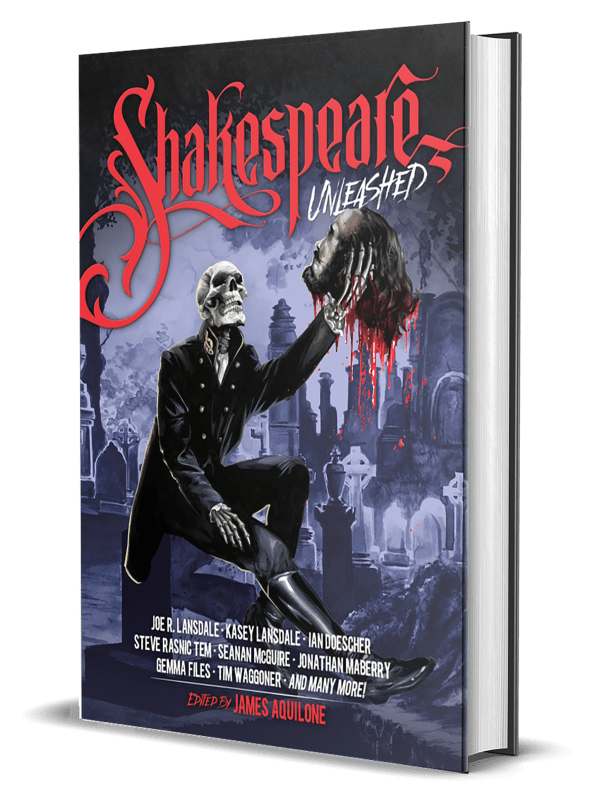
Photo: Shakespeare Unleashed, edited by James Aquilone for Monstrous Books and Crystal Lake Publishing, which I submitted to AND THEY LET ME IN!

It’s mid March, the sun is shining, I’m in a relatively good mood, and I’m thinking about self-rejecting–or, more accurately, NOT self-rejecting.

I hear a lot, and I used to say sometimes, “I’m not going to bother submitting to that. I’ll never get in.” Now I’m like, “How do YOU know? You aren’t the editor. Submit that story!” (Or poem or essay or manuscript.)

Have you ever submitted a story to a submissions call that seemed like it was MADE for your story? Like they were a perfect match–everything the editors wanted, your story had? And then, your story got rejected anyway? And you were thinking, WTF, I gave you everything! Yeah. I think we’ve all been there.

So here’s the thing: IT WORKS THE OTHER WAY AROUND, TOO.

You might think your piece isn’t “good enough,” or that it doesn’t quite fit a theme, or does in a WAY, but not in all the ways. Maybe you think the editor has a pronounced different style or aesthetic.

But. Like. What if your piece is just the variety they need? What if they don’t have that narrative arc or subject or theme in any of the other stories they chose?

Jenny Kiefer, author of That Wretched Valley (Quirk Books, 2024) and owner of the popular Kentucky horror bookshop Butcher Cabin Books, has gotten several publications with just that line of though. “Honestly most of my acceptances have been things where I just sent a story to a market I didn’t think would like it. I’ve experienced rejections more when I’ve thought it was perfect for the place I submitted to. I was recently accepted to F&SF for a body horror story–I would have never thought they would like it, but I submitted anyway.”

Especially if there is no submission fee (and whoa should I write a post just about submission fees), SEND IT. There is, for real, no risk. And, see blog post about #100rejections for why we should be trying to send out enough submissions to rack up 100 Rs by the end of the year, be they form or personal.

Rae Knowles, whose novel The Stradivarius will be out soon with Brigid’s Gate Press, knows this, too. “There was a pro-pay call that I knew was getting a ton of submissions,” she said. “It was outside of my usual genre, and I wrote a story, tweaked it, tweaked it, and tweaked it some more. I stressed so much, feeling it had NO chance of being accepted, but on one of the last days of the submission window, decided to send it in. To my SHOCK, it was accepted. Lesson learned, never self-reject!”

Author and editor Alexis DuBon keeps a hand over the mouth of her inner critic:

“Try to think about whose voice it is telling you your story doesn’t work,” she recommended. “Is it your own? Or is the reason you’re hesitant something other than ‘Yeah, this story about biblically accurate angels probably doesn’t fit this call about swamp monsters.’ We bring a lot of baggage into decisions where it doesn’t belong.”

Waylon Jordan, author, horror journalist, and EIC of Off Limits Press, talks over his self-rejection impulses; he drowns them out. “I don’t know how many times I’ve had to tell myself, ‘You have just as much right to submit your story as anyone else.’ I see authors invited to calls and talk myself out or submitting because I’m not ‘in their league.’ The imposter syndrome is alive and well and I deal with it all the time. The other thing I have to tell myself is: I’m not Stephen King (or whoever famous author your want to insert). I can’t do what he does. But you know what? He can’t do what I can. Someone wants to read what I can give them.”

Author Katherine Silva (The Wild Oblivion series) picks what she submits to carefully–if she needs to get other things done, or needs to take time for herself, she’ll skip a sub call. So, ask yourself: Are you self-rejecting because of a low-self-esteem day, or, do you just have other things that need to come first?

Zach Rosenberg, author of the forthcoming Hungers As Old As This Land, gives himself a pep talk: “This is a story only you can tell and it should be told.”

Also, related to the topic self-rejection, remember that if you burn yourself out or get too discouraged by a particularly rough R (or a volley of them), and you decide to QUIT writing altogether, you are self-rejecting from the entire world of publishing.

Kiefer has a way to manage that feedback–because yes, you will get more rejections than acceptances. That’s just reality. But, if you don’t want to see those Rs every day, do what she does:

“What did help [with rejections] though was to set up a separate author email address, so I could control how much I saw. At one point I even had a friend who would monitor it and only tell me good news so I could submit without having to see the waves of rejections.”

Final decisions on publication come down to the EIC or a small team. So, it’s not like the industry voted on your work. It’s one person’s subjective decision, in most cases. And subjectivity could mean anything: maybe they’re sick of zombies or whatever tropes your narrative features. Maybe they already have something similar for that issue or anthology. Maybe they just–and this sucks, but it’s also OKAY–didn’t’ like your story enough to put it in.

But someone else will.

Unless you don’t send it to them because you self-reject.

I guess what it comes down to is this, which I said to more than one struggling writing friend: Does writing (and everything that comes with the process–drafing and revision and feedbacking and submissions and rejections) bring you more pain or more joy?

If it’s the first one, go ahead and quit. Life is short. Find something you like better.

But if it’s the second one…

DRAFT, REVISE, EDIT, and SEND IT!!

OMG I’m Writing a Novel

Photo of shark by freepik.com

During NaNoWriMo 2022, I wrote 20,000 words of absolute crap. But for the first time, I took an idea that had been swirling around my brain for a year and put some of it down on paper (the screen).

In December, I returned to an almost-finished novella and revised/edited/proofread hard, getting that sent out before the year’s final clock struck Done. Which meant that in 2023, I was ready to focus almost entirely on that pile-of-shit novel draft. (And Mae Murray’s goal-setting workshop in early January was great!) I got to work. I revised. I deleted (I deleted SO MUCH). I rewrote. I made note cards, which ended up being so helpful.

I signed up for a little writing retreat at the campus where I teach (thank you, Dawn!), and made quick progress. By the time that retreat ended, I had 70-ish pages of worthwhile draft. Not final, but promising.

Then, in an online horror group (sorry can’t share that, it’s Top Secret), I asked if anyone would novel-buddy with me. Because asking someone to slog through your novel draft with you is a HUGE ask–so someone else asking you to do the same makes the whole thing less heavy, and you don’t have to give anyone your first-born child, or in my case, your beloved chubby beagle. It’s a bartering of slogging. And I got a novel buddy! (Thank you, CO!)

To my utter amazement, he LIKED WHAT I HAD. He said it was interesting, engaging, and that the pacing worked. In fact, after he read the chunk I sent him (about 50 pages), his only suggestions were additions and expansions–which was wonderful, because the thing with novels is that you need a lot of words in them, and that can be tricky (you wouldn’t think it would be tricky for me–most of the time I can’t shut the fork up). I added a short scene near the beginning and expanded two others. Then I moved forward, revised some more, and I can’t wait to send him the next chunk–but, I want to hit 100 pages of decent material before I do. Then I will be at roughly the halfway point with the manuscript–I will end up with something like a 60k-word novel. It will not be a 400-pager–I’m a Chatty Cathy, but not that chatty.

In Mae’s workshop on Jan. 6, I wrote out a timeline–goal months by which I would have so many chapters done, because at that time, I thought I would try to get the novel done (a spiffy draft to send out to publishers for consideration) by the end of the year.

Now I have moved up those goals. I want to finish this sucker by the end of the summer. And I think I will actually do it. And that thought has had me floating around for a week.

I’m writing a novel.

I’m writing a novel.

I’m writing a novel.

(And it’s the first of a trilogy.)

A WordPress.com Website.

Up ↑